
Survey First Fixes for Thermal Bridging Mould in UK Homes
Survey First Fixes for Thermal Bridging Mould in UK Homes
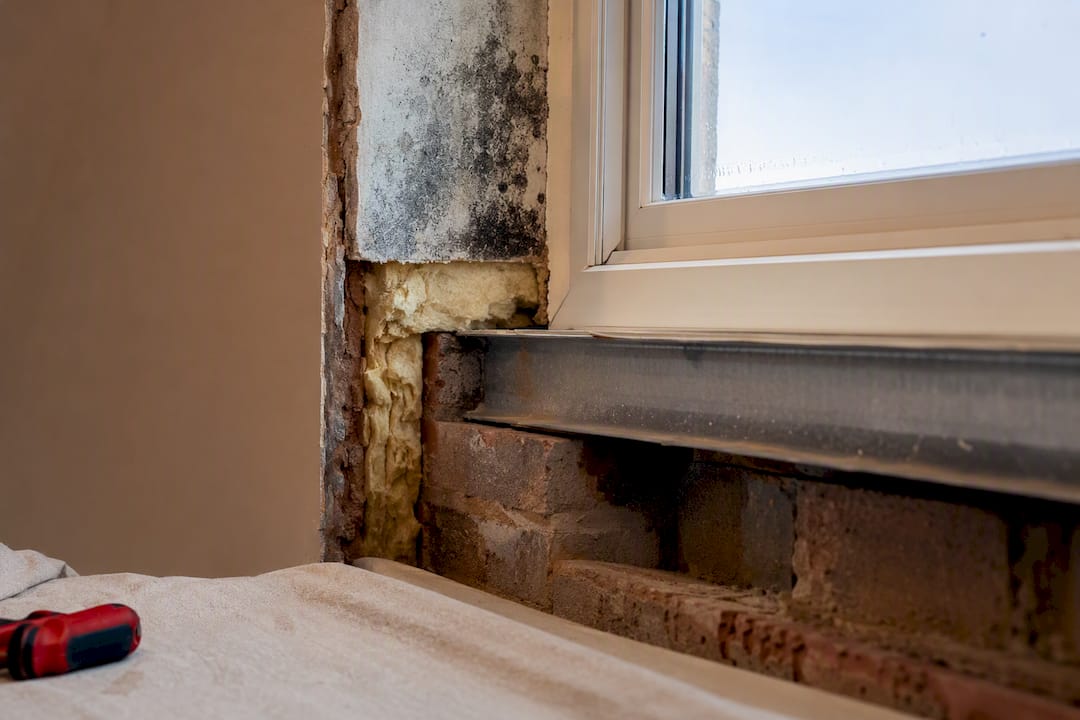
Yes, thermal bridging causes mould. Cold spots form where insulation is broken or thin, internal surface temperatures drop below the room’s dew point, and condensation forms on that surface. Left for long enough, that dampness allows mould spores to germinate. Fixing it properly means restoring insulation continuity and managing ventilation, not just cleaning off the black spores you can see.
TL;DR:
- Thermal bridges are common at window reveals, lintels, balconies, and wall-to-floor junctions, where insulation is interrupted or thin.
- Persistent mould in the same spot indicates a structural cold point, not just dirt, especially if it traces a linear pattern aligned with a building element.
- Proper diagnosis involves visual pattern recognition, surface temperature checks, moisture metering, and thermal imaging before any remedial work.
- External wall insulation and continuous loft insulation are key design fixes, while retrofit tactics include insulated plasterboard and careful environmental control measures.
- Homeowners should consult a professional when mould reappears quickly after cleaning or if mould follows a structural line, to ensure they address the actual cause.
Table of Contents
- What is thermal bridging mould, and how does condensation form?
- Where thermal bridges commonly occur and how to spot them
- Why thermal bridging impacts health, comfort and energy bills
- Diagnosing thermal-bridge mould: what a proper survey looks for
- Thermal bridging solutions: practical fixes and prevention
- When to call a professional for thermal bridging condensation
- Practical priorities when tackling thermal-bridge mould
- Get a proper diagnosis before you pay for treatment
- Further technical reading on thermal bridging and mould
- Sources
What is thermal bridging mould, and how does condensation form?
A thermal bridge (also called a cold bridge) is any point in a building’s fabric where heat escapes faster than through the surrounding structure, usually because insulation is interrupted, thinner, or missing. Steel lintels, concrete floor slabs, and window reveals are classic culprits, since they conduct heat far more readily than the wall or ceiling around them.
The physics is straightforward. Warm, moist air inside a room touches a surface that’s colder than the surrounding wall. Once that surface temperature drops below the dew point, water vapour condenses out of the air and onto the wall, window reveal, or ceiling.
Mould doesn’t need standing water to establish itself. Sustained surface relative humidity above approximately 70 to 75% is enough for spores to germinate, which is exactly the condition a cold bridge creates for hours or days at a time.
- Heat escapes through a weak point in the insulation
- The internal surface cools below the dew point
- Water vapour condenses on that cold surface
- Surface relative humidity stays high for extended periods
- Mould spores germinate and colonise the damp surface
Where thermal bridges commonly occur and how to spot them
Cold bridges tend to appear in predictable places, which makes them easier to check for than many homeowners assume.
- Window and door reveals, where wall thickness is reduced around the frame.
- Lintels, particularly older steel or concrete lintels with no thermal break.
- Balconies and canopy slabs that project through the external wall as a continuous piece of concrete.
- Wall-to-floor and wall-to-roof junctions, where insulation layers often fail to meet cleanly.
- Dormer cheeks and loft junctions, common weak points in roof conversions.
- Behind radiators, wardrobes, and fitted furniture, where reduced air movement lets surface temperatures drop further.
The pattern usually gives it away. Mould due to thermal bridging tends to appear as a localised patch tracing the shape of the cold element, a lintel line above a window, a triangle at a ceiling corner, or a vertical stripe down a reveal, rather than the tide-mark banding typical of rising damp or the isolated staining linked to a specific leak. A simple touch test on a cold morning often confirms it. Thermal imaging cameras (available for short-term hire) or a moisture meter used comparatively across a wall can back up what your hand already suspects.
Why thermal bridging impacts health, comfort and energy bills
Recurring mould isn’t just cosmetic. Damp indoor environments are linked to respiratory symptoms and can trigger asthma and allergic reactions, particularly in children and older occupants, which is why persistent black mould on external walls deserves more than a wipe with bleach.
Thermal bridging can account for up to 30% of a dwelling’s total heat loss, according to BRE Group guidance, which uses Ψ-values and surface temperature factors to quantify the risk at specific junctions.
That figure explains why a well-insulated home can still feel draughty and grow mould in the same few spots year after year. Loft and cavity insulation raise the average performance of a wall or roof, but if the junctions where materials meet aren’t detailed correctly, those junctions stay cold regardless of how much insulation surrounds them.
Diagnosing thermal-bridge mould: what a proper survey looks for
Homeowners often assume any patch of black mould on an external wall means a leak, and treat it with a waterproof sealant or a fresh coat of paint. That’s usually the wrong call, and it can mask a cold-bridging problem while it keeps getting worse behind the new finish.
A survey-led diagnosis works through the evidence in sequence rather than jumping to treatment:
- Visual pattern recognition first, checking whether staining follows a structural line (bridging) or a random damp patch (a leak)
- Surface-temperature checks at the suspect area compared against the surrounding wall
- Selective moisture-metering, since condensation-driven dampness typically shows high surface readings while the wall fabric behind stays comparatively dry, unlike rising or penetrating damp
- Thermal imaging where the pattern is ambiguous
- Documented findings before any remedial work is scoped
Pro Tip: If mould keeps returning in exactly the same spot after cleaning, treat that as a diagnostic clue, not a cleaning failure. Recurring localised mould almost always points to a structural cold spot rather than poor housekeeping. Read more on why black mould keeps returning. A credible remedial scope should state exactly what was found, why, and what work will fix it, backed by a written guarantee rather than a verbal assurance.
Thermal bridging solutions: practical fixes and prevention
Treating the mould you can see does nothing if the cold surface underneath is untouched. Effective thermal bridging prevention works on three fronts at once: insulation continuity, vapour management, and how the room is heated and ventilated.
Design-level fixes matter most where the bridge is structural. External wall insulation wraps the cold element on the outside, which is generally the more reliable route for lintels, floor slabs, and balcony junctions. For balconies specifically, comparative research suggests thermal breaks inserted into the structure itself often outperform simply wrapping the slab in insulation, since they interrupt the conductive path rather than just slowing it.
Retrofit tactics for existing buildings include insulated plasterboard on affected walls, insulating window reveals where cold frames meet plaster, and ensuring loft insulation runs continuously over wall plates rather than stopping short. Internal wall insulation can help, but it changes how moisture moves through the wall and needs proper hygrothermal assessment before it goes in. Fitting it without that assessment is one of the more common causes of a “new” mould problem appearing months later, since poorly designed retrofit insulation can create fresh cold spots elsewhere in the wall.
Environmental measures support the fabric fixes rather than replace them: extract fans in kitchens and bathrooms, mechanical ventilation with heat recovery (MVHR) in well-sealed homes, and steady low-level background heating rather than short, intense bursts that let walls cool between uses.
- Avoid trapping moisture behind impermeable membranes or vinyl paints on solid walls
- Keep furniture slightly clear of external walls to allow air movement
- Have any internal insulation retrofit checked against a hygrothermal model before installation
Pro Tip: Where a wall has been insulated externally, don’t assume the moisture risk has disappeared. Insulated wall-to-floor junctions can develop uneven, localised high-moisture pockets even as the wall’s average dampness falls, so junction detailing still needs checking after the main insulation work is done.
When to call a professional for thermal bridging condensation
DIY checks are useful for narrowing down the cause, but certain signs mean it’s time to bring in a surveyor rather than keep experimenting.
- Mould returns within weeks of cleaning, in the same location, despite improved ventilation.
- Staining follows a structural line such as a lintel or floor junction rather than a random patch.
- You’ve already tried extractor fans and dehumidifiers without lasting improvement.
- You’re planning retrofit insulation and need to know whether existing junctions will cope with it.
A competent damp and timber survey should produce a written report covering surface temperature readings, comparative moisture-meter data, photographs of the affected areas, and a clearly scoped set of recommended works, backed by a guarantee rather than a verbal promise. Quay Point Plastering’s approach follows that sequence: inspect, measure, document, then propose a scope, so you know exactly what’s being fixed and why before any work begins.
Practical priorities when tackling thermal-bridge mould
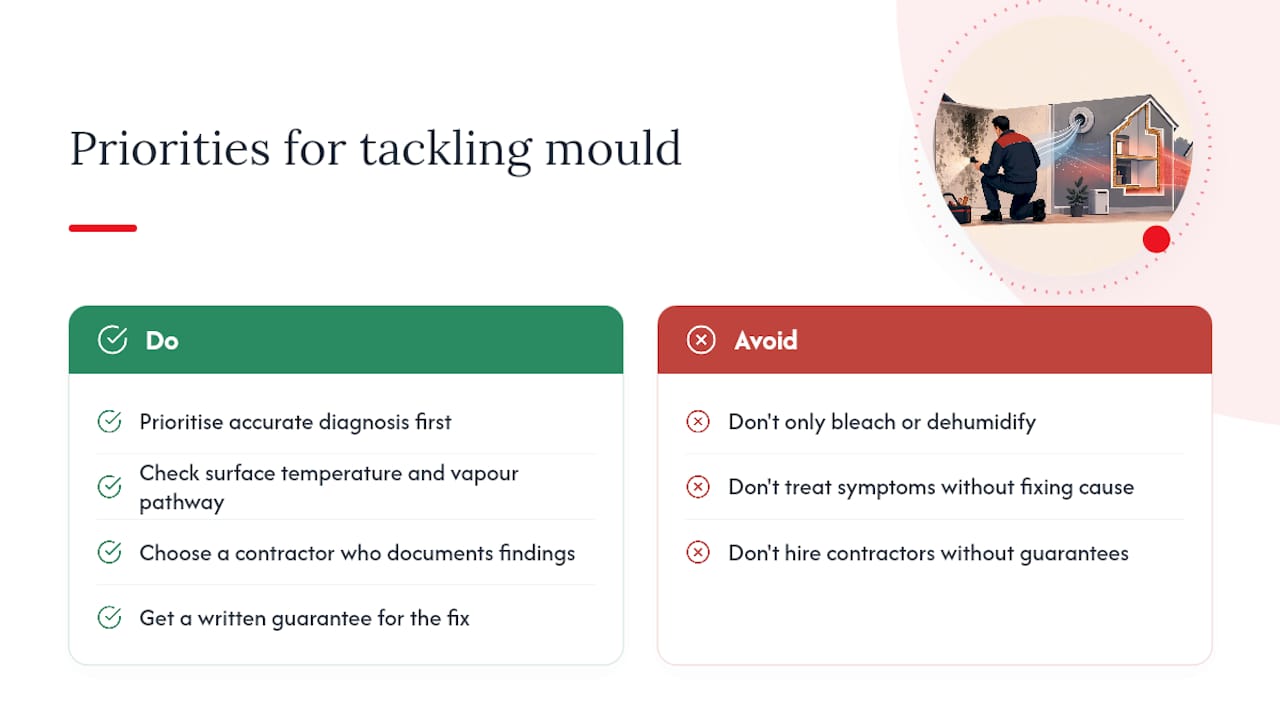
Chasing the black spots with bleach and a dehumidifier treats the symptom, not the cause. In most cases we look at, the surface temperature and vapour pathway matter more than any surface treatment applied afterwards.
Accurate diagnosis has to come before treatment, every time. Choose a contractor who documents what they find and puts a written guarantee behind the fix, not just the clean-up.
— Quay
Get a proper diagnosis before you pay for treatment
A specialist company offers an alternative to a guess-and-bleach approach for mould linked to cold bridging: every job starts with a survey, not a treatment, so you only pay for work that matches a documented cause.

That matters because thermal-bridge mould looks similar to several other damp problems on the surface, and treating the wrong one wastes money and lets the real issue keep going. Quay Point’s damp and timber survey checks surface temperatures, moisture readings, and structural patterns before recommending any remedial work, and every job comes with a written scope and guarantee rather than a verbal assurance. If you’re dealing with recurring mould around a lintel, reveal, or balcony junction, or a leak on condensation and black mould that keeps coming back, book a survey and get a documented answer before spending on treatment that might not address the actual cause.
Further technical reading on thermal bridging and mould
For readers who want the underlying technical detail rather than the practical summary:
- BRE Group’s guidance on thermal bridging explains Ψ-values and surface temperature factors used to quantify bridge severity.
- The PMC study on wall-to-floor thermal bridges models how insulation retrofits change moisture distribution at junctions.
- Guidance Note No. 23 on cold bridges sets out practical construction details to avoid them.
- The Standard Assessment Procedure on gov.uk covers national energy performance methodology relevant to thermal detailing.
This article is general information, not a substitute for advice from a qualified doctor. Consult a qualified healthcare professional about your own circumstances before acting on anything here.
Sources
- Residentialsurveying
- Moisture distribution in wall-to-floor thermal bridges (PMC)
- The importance of thermal bridging — BRE Group
- Guidance Note No. 23 — Cold Bridges