
Kitchen condensation UK: 6 quick fixes and when to book a survey
Kitchen condensation UK: 6 quick fixes and when to book a survey
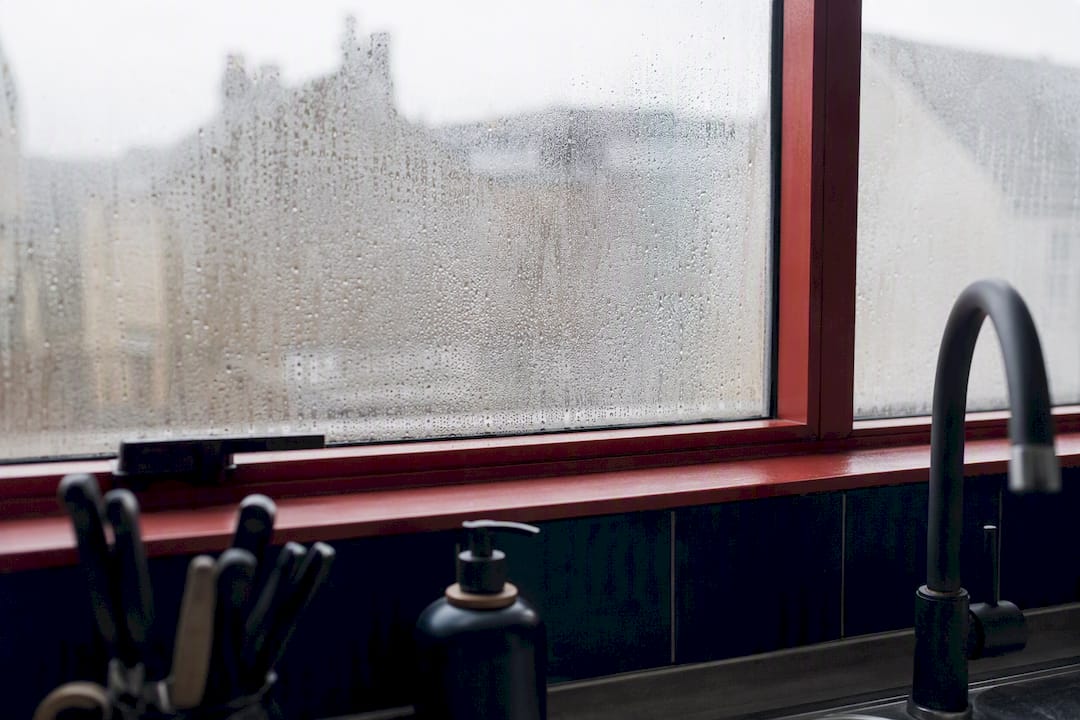
Kitchen condensation happens when warm, moist air from cooking, kettles and washing up hits cold surfaces like windows and tiled walls. The fix is straightforward in most homes: cut the moisture at source and improve how the room ventilates. Put lids on pans, run your extractor fan outdoors if available, crack a window while cooking, and wipe down wet surfaces afterwards. If mould keeps returning despite doing all this, that’s your signal to stop treating symptoms and get a proper survey.
TL;DR:
- Proper diagnosis requires a professional survey to distinguish between condensation, rising damp, and penetrating damp, preventing costly mistakes.
- Persistent mould or recurring damp patches despite good ventilation and regular cleaning indicates an underlying issue that needs targeted repair or treatment.
- Failing sealed windows often produce interior condensation that can only be fixed by replacing the unit, not DIY sealant or dehumidifiers.
- Installing or repairing external ventilation like properly ducted extractor fans and trickle vents significantly reduces moisture build-up over time.
- Long-term control involves maintaining steady heating, not blocking ventilation, and avoiding furniture placement that blocks airflow behind external walls.
Table of Contents
- What causes kitchen condensation
- Spotting the early signs of a persistent moisture problem
- Quick cooking-time fixes you can use today
- Improving ventilation and heating for long-term control
- When double glazing itself is the problem
- Cleaning mould safely and knowing when it’s not a cleaning job
- When to get a specialist survey
- Why treating the cause always wins
- Book a damp and condensation survey with Quaypointplastering
- Sources
What causes kitchen condensation
Warm air holds more moisture than cold air. When that warm, humid air touches a cold surface, such as a window pane or an external wall, it cools instantly and releases water as droplets. That’s condensation, and a kitchen produces more moisture than almost any other room in the house.
Cooking, kettles, dishwashers, and drying laundry indoors all add water vapour to the air. An average gas cooker alone can release roughly a litre of moisture per hour during use. Add two or three people breathing and moving about, and a small kitchen can become saturated with vapour within minutes.

Modern homes complicate this. Draught-proofing and double glazing seal a property tightly, which is good for heating bills but bad for trapped moisture if there’s no deliberate ventilation to replace it. Cold bridging, where heat escapes through a thermally weak spot like a window frame or lintel, creates a cold patch that condensation gravitates towards. Glass and Glazing Federation guidance is blunt about this: sealing draughts without adding ventilation often makes condensation worse, not better.
Spotting the early signs of a persistent moisture problem
A little mist on a cold window after boiling pasta is normal. A problem that returns daily, or spreads beyond the glass, is not.
Check these spots each morning before you open a window or wipe anything down:
- Window panes and sills, especially in the corners
- External walls, particularly behind furniture pushed close to them
- The space behind tall units or wardrobes on outside walls
- Ceiling corners, where cold air pools
Patterns worth taking seriously include water pooling on sills every single morning, paint that’s started to bubble or peel, black mould that keeps reappearing in the same spot after cleaning, or white, crystalline salt deposits on plaster. That last one is a useful diagnostic: salts usually point to rising or penetrating damp rather than condensation, since they’re left behind as groundwater or driven rain evaporates through masonry. Condensation, by contrast, tends to appear and disappear with cooking and weather, and it sits on the surface rather than staining from within the wall.
Quick cooking-time fixes you can use today
Most kitchen condensation is preventable in the moment, before the moisture ever gets into the air.
- Lid the pan before you turn up the heat. A covered pan releases a fraction of the steam an open one does, and it heats water faster too.
- Turn down a vigorous boil. Once water’s boiling, you rarely need it much hotter to cook food through.
- Switch the extractor fan on before you start cooking, not partway through, and make sure it vents to the outside rather than recirculating through a charcoal filter alone.
- No extractor? Open a window a few centimetres while cooking and for ten minutes afterwards, and keep the kitchen door shut so the steam doesn’t migrate into colder rooms.
- Dry tea towels and cloths outdoors or on an airer in a ventilated room rather than draping them over a radiator in the kitchen.
- Wipe down worktops, splashbacks and windows once you’ve finished cooking, while the surfaces are still warm and the moisture hasn’t had time to soak into grout or plaster.
Pro Tip: Keep the kitchen door closed while cooking, even if it feels antisocial. Moist air that’s confined to one room is easy to vent outside; moist air that spreads through the house ends up condensing on cold surfaces in bedrooms and hallways too.
Improving ventilation and heating for long-term control
Cooking-time habits deal with the moment. Ventilation deals with the pattern.
An extractor fan ducted outside removes moist air at source rather than pushing it into a wall cavity or loft, which just relocates the problem. If your current fan vents into a cupboard or the roof space, that’s worth correcting before anything else. Trickle vents, the small slots built into window frames, allow background airflow even with windows shut, and GGF guidance is clear that sealed, well-fitted windows without this kind of controlled ventilation can trap humidity rather than release it.
Heating matters more than people expect:
- Keep a low, steady background heat through cold months rather than letting rooms swing cold and warm
- Avoid placing furniture directly against external walls, so air can circulate behind it
- In a kitchen that stays consistently damp despite good ventilation, a dehumidifier is worth running overnight
Local authority advice reinforces the same principle: vent kitchens and bathrooms directly to the outside and use extractor fans as the primary control against mould and excess moisture.
Pro Tip: Open a window in the kitchen daily for a short period, even in winter, and leave a small gap between furniture and outside walls. Both cost nothing and make a measurable difference over a few weeks. For a broader look at ventilation upgrades across a whole property, this home ventilation guide covers options worth considering alongside kitchen-specific fixes.
When double glazing itself is the problem
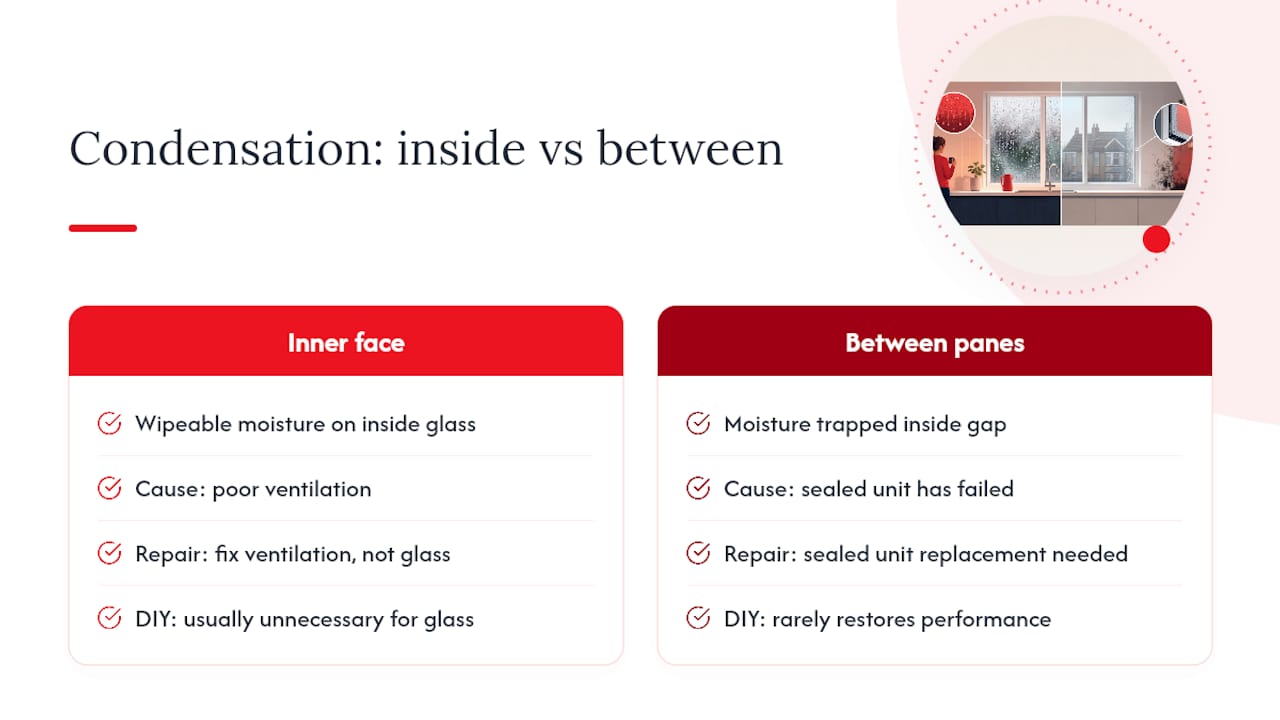
Condensation on the inside face of your window, the side you can wipe with a cloth, is almost always a ventilation issue rather than a fault with the glass. Condensation trapped between the panes is different: it means the sealed unit has failed and moist air has got inside the gap where it can’t be wiped away.
That distinction determines what you do next. A failed sealed unit generally needs replacing rather than repairing; DIY fixes rarely restore the unit’s performance, and delaying just means living with permanent misting until it’s sorted.
Temporary measures like sealant around a failed unit or a dehumidifier pointed at the window buy time but don’t solve the underlying seal failure. If you’re unsure which category your windows fall into, this guide to window condensation causes walks through the visual differences in more detail.
Cleaning mould safely and knowing when it’s not a cleaning job
Small patches of black mould on a windowsill or tile grout are manageable yourself. Wear gloves, use a proper detergent or a labelled anti-mould product rather than diluted bleach on porous surfaces, open a window while you work, and dry the area thoroughly once you’ve finished.
Call in a professional instead when:
- The affected area is larger than roughly a sheet of A4 paper
- The mould followed a leak, flooding, or anything involving sewage
- Anyone in the household has asthma, a compromised immune system, or is very young or elderly
- You’ve cleaned the same patch more than once and it keeps coming back
That last point matters most. Repeated regrowth after cleaning means the moisture source hasn’t been dealt with, only the visible symptom. A professional mould removal service pairs the clean with a diagnosis of why it’s returning.
When to get a specialist survey
Persistent mould despite good ventilation, damp patches with no obvious cooking-related cause, or a pattern you can’t explain are all reasons to bring in a survey rather than guess further.
A proper damp and timber survey gives you a visual diagnosis, documented findings, and a defined scope of work, backed by a written guarantee, rather than a verbal opinion and a quote. Crucially, it separates true condensation from rising or penetrating damp, which look similar on plaster but need entirely different repairs. Getting that diagnosis right the first time is what prevents paying twice.
Why treating the cause always wins
Wiping mould off a windowsill feels like progress, but it rarely is. The moisture that grew it is still in the air, and it’ll condense somewhere again within days. Ventilation faults and failed glazing units don’t fix themselves with a cloth and some spray.
That’s why a documented survey and a written guarantee matter more than another tub of mould remover. Quay Point Plastering’s approach exists precisely because guessing costs homeowners more, in repeat call-outs and repainted walls, than diagnosing the fault once.
— Quay
Book a damp and condensation survey with Quaypointplastering
Quaypointplastering is the alternative to guesswork and repeat mould removal: instead of another cleaning product or a fan fitted without diagnosis, you get a survey-led inspection that tells you exactly why the condensation keeps coming back and what it’ll take to stop it for good.

Our surveyors assess the pattern of moisture in your kitchen, check whether ventilation, cold bridging, or a failed sealed unit is behind it, and rule out rising or penetrating damp before recommending any work. You receive a written report, a clear scope of works, and a guarantee on anything we carry out, so there’s no ambiguity about what’s been diagnosed or what’s covered. If the survey identifies mould that’s already taken hold, our black mould removal treatment deals with it alongside the root cause rather than instead of it.
If your kitchen has had condensation problems for more than a season, book a damp and timber survey with Quaypointplastering across Dorset, Hampshire, and Wiltshire, and get a documented answer instead of another guess.
Sources
- Glass and Glazing Federation — Ventilation and trickle vents
- Oxford City Council — Preventing damp and mould: condensation