
Homeowners: stop summer condensation with 24 hour tape test and 50% RH
Homeowners: stop summer condensation with 24 hour tape test and 50% RH
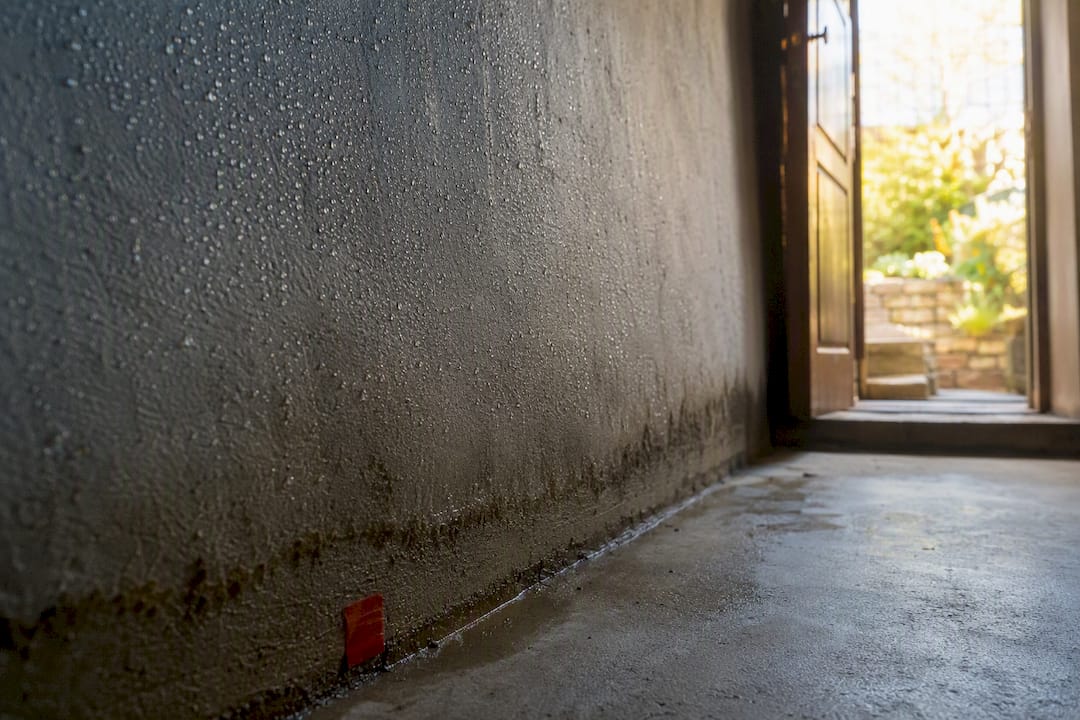
Summer condensation happens when warm, humid air meets a cooler surface, such as a concrete floor or a chilled window, and reaches its dew point. The immediate step is to check your indoor relative humidity and bring it under control: close vulnerable windows on humid days and run extraction or a dehumidifier. Left above a moderate level of relative humidity, that moisture can lead to mould growth within a short time.
TL;DR:
- Condensation is likely to occur if indoor surfaces remain below dew point temperature because of poor insulation or thermal bridging, especially in basements or unheated outbuildings.
- Using a hygrometer to keep indoor relative humidity below 50% and avoiding unnecessary window opening can significantly reduce condensation risks.
- Moisture trapped behind plastic films indicates water ingress rather than condensation and requires professional assessment and targeted repair.
- Persistent condensation above 55-60% RH or recurring mold suggests the need for a detailed survey to check ventilation, thermal bridging, and potential water entry issues.
- Fixing condensation effectively depends on diagnosing whether it’s caused by humidity, cold surfaces, or water intrusion, not just applying superficial or cosmetic solutions.
Table of Contents
- How summer condensation happens: the practical physics
- Where summer condensation shows up and how to tell it from a leak
- Practical prevention and immediate fixes to reduce summer condensation
- When to book a survey-led inspection and what that looks like
- A damp specialist’s short perspective on summer condensation
- How Quay Point Plastering can help with persistent condensation
- Sources
- FAQ
How summer condensation happens: the practical physics
Warm air holds more moisture than cold air. When that warm, humid air touches a surface cooler than its dew point, the excess moisture drops out as liquid water. This is exactly the same mechanism that puts dew on your car windscreen overnight, but in summer it happens indoors, often to homeowners’ surprise, because most people associate condensation with cold weather.
Basements, concrete slabs and ground-contact walls stay cool relative to the air above them, even in a heatwave, because the ground insulates them from the day’s heat. When humid outdoor air gets into that cooler space, it meets a surface below its dew point and condenses on the spot. Air conditioning makes matters worse in a different way: it chills glazing, frames and nearby wall surfaces, sometimes low enough to reach the local dew point even when the room feels comfortable.
Modern homes complicate the picture further. Tighter, better-insulated buildings hold heat in winter but also hold moisture in during summer, because there is less incidental airflow to carry it away. That reduces what surveyors call the fabric’s drying capacity.
Three variables decide whether you get condensation on any given day:
- The outdoor dew point (how humid the air actually is, not just how warm)
- The surface temperature of walls, floors and glazing indoors
- How much moist air is getting in through gaps, open windows or mechanical ventilation
Where summer condensation shows up and how to tell it from a leak
Condensation has favourite spots. Basements and cellars are the most common, closely followed by concrete or slab ground floors, window reveals, flat roof soffits, and summerhouses left unheated and unventilated for weeks at a time. Outbuildings are particularly vulnerable because they heat and cool faster than the main house, swinging past the dew point more often.
The trouble is that condensation and water ingress look almost identical on a damp wall. Building-standards guidance recommends ruling out fabric defects before assuming the cause is airborne moisture, and the quickest way to do that yourself is a simple test:
- Dry the suspect area thoroughly with a cloth or fan.
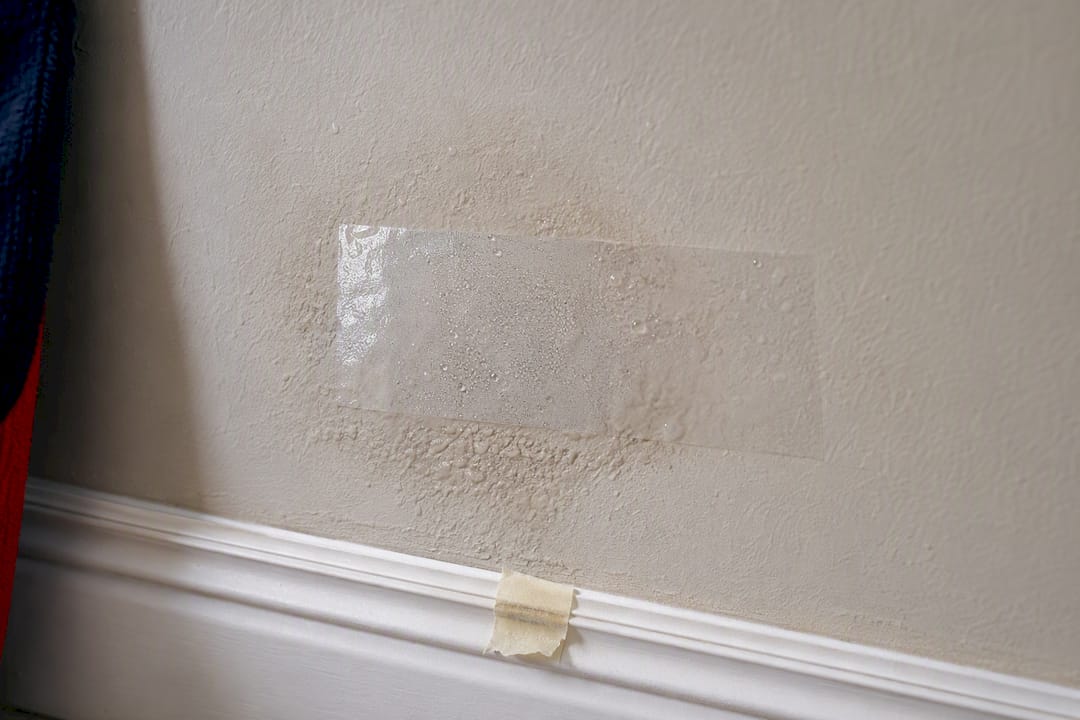
- Tape a piece of clear plastic film or kitchen foil firmly to the wall, sealing all four edges.
- Leave it for 24 hours.
- Check which side the moisture has formed on.
If droplets form on the room-facing side of the foil, it’s condensation. If moisture appears trapped behind the foil, against the wall itself, you are dealing with water ingress, and no amount of ventilation will fix that. Efflorescence (a white, powdery salt deposit), staining that worsens specifically after rain, or damp that tracks along a masonry joint all point towards intrusion rather than condensation.
Pro Tip: Never paint over a damp patch with a “waterproof” or masonry sealant paint before you’ve run the tape test. If the cause is condensation, sealing the surface traps moisture inside the wall build-up rather than solving anything, and if it’s a leak, you’ve just hidden the evidence a surveyor needs.
Practical prevention and immediate fixes to reduce summer condensation
Everyday habits do most of the heavy lifting. Run a dehumidifier in persistently damp rooms, keep extraction fans on in bathrooms and kitchens, and set air conditioning to a sensible temperature rather than the coldest setting available. Buy a hygrometer, they cost little, and aim to keep relative humidity under roughly 50%. Building-standards guidance links prolonged relative humidity above 70% to conditions that actively support mould germination and growth, so 50% is a comfortable working target well below the danger zone.
Counterintuitively, opening windows during a humid spell often makes things worse, not better, because you’re inviting more moisture-laden air into a space with cool surfaces. Sensible use of dehumidifiers and extraction, rather than flinging windows open, keeps humidity down without the trade-off.
Cold spots deserve specific attention. Insulating exposed pipework, sealing gaps around rim joists and window reveals, and addressing thermal bridging at lintels and sills all raise surface temperatures above the dew point, which stops condensation forming there in the first place. For persistent domestic condensation, positive input ventilation systems provide a steady, gentle whole-house airflow that many homeowners find solves the problem without constant manual management.
Basements need their own routine:
- Run dehumidification continuously, not just when you notice damp
- Seal obvious air paths, gaps around service pipes and old vents
- Check external drainage carries water away from the foundation, not towards it
Avoid two common mistakes: don’t reach for waterproof paint as a first fix, and don’t treat window-opening as a default cooling strategy on a humid day.
When to book a survey-led inspection and what that looks like
Persistent relative humidity above 55 to 60%, mould that keeps returning after cleaning, or condensation that continues despite dehumidifiers and sealed windows are all signs the problem has outgrown DIY measures. At that point, guesswork gets expensive, because treating the wrong cause wastes money and leaves the real issue untouched.
A proper survey looks at the building as a system rather than a single damp patch. Expect a surveyor to check:
- Thermal bridging at lintels, sills, and window and floor junctions
- Whether existing ventilation is actually moving enough air
- Interstitial condensation risk within wall or roof build-ups, not just on visible surfaces
- Signs of rising or penetrating damp that could be masquerading as, or compounding, a condensation problem
Ignoring the symptoms or reaching for superficial fixes rarely resolves the underlying cause, which is why a documented survey, with photographs and written findings, matters more than it might seem. It gives you a defined scope of work before any money is spent on treatment, and protects your plaster and finishes from repeat damage down the line.
A damp specialist’s short perspective on summer condensation

Repeat visits almost always trace back to the same mistake: someone treated the symptom, not the cause. A wall gets repainted, a window gets left open on a humid afternoon “to air the room out,” and the mould is back within a month. Cosmetic fixes buy you weeks, not solutions.
What actually changes outcomes is diagnosis before treatment. Establish whether you’re looking at condensation, thermal bridging, or something entering the wall from outside, document it, then scope the work against that finding. Anything else is a guess dressed up as a repair.
— Quay
How Quay Point Plastering can help with persistent condensation
For those whose condensation keeps returning despite dehumidifiers and closed windows, specialist damp and timber survey services are available to provide clearer diagnosis and scope of work before any repair begins. Rather than quoting for treatment on a first visit, many specialist services start with a survey that photographs the affected areas, documents the actual cause, and sets out a defined scope of work before any repair begins.

That matters most in cases where condensation and true water ingress look similar, because treating the wrong one wastes your money and leaves the real problem untouched. A booked damp and timber survey checks thermal bridging, ventilation performance and interstitial condensation risk, then hands you written findings you can act on with confidence. Where treatment is needed, from black mould removal to positive input ventilation, the work carries a written guarantee. If your condensation has outlasted a dehumidifier and a season of closed windows, book a survey through Quay Point Plastering and get a documented answer instead of another guess.
Sources
FAQ
Why does my house have condensation during the summer?
Warm, humid air is meeting a surface cooler than its dew point, commonly a basement wall, concrete floor, or chilled window near an air conditioning unit, and depositing moisture on contact.
How do I stop condensation in a summerhouse?
Keep the structure ventilated on dry days, run a small dehumidifier during humid spells, and avoid leaving it sealed and unheated for long stretches, since unheated outbuildings swing past the dew point more often than the main house.
What can I put on windows to stop condensation overnight?
Nothing applied directly to the glass fixes the cause; closing windows on humid evenings, running extraction, and keeping the room’s relative humidity under roughly 50% with a hygrometer to check it addresses the actual moisture problem.
Does condensation mean my house is too cold?
Not necessarily in summer. It usually means a specific surface, a cold basement wall, a poorly insulated reveal, or an air-conditioned window, is colder than the moist air around it, which is why Quay Point Plastering checks for thermal bridging rather than assuming a general heating problem.