
Mould on ceilings: how to clean, stop and when to call a pro
Mould on ceilings: how to clean, stop and when to call a pro
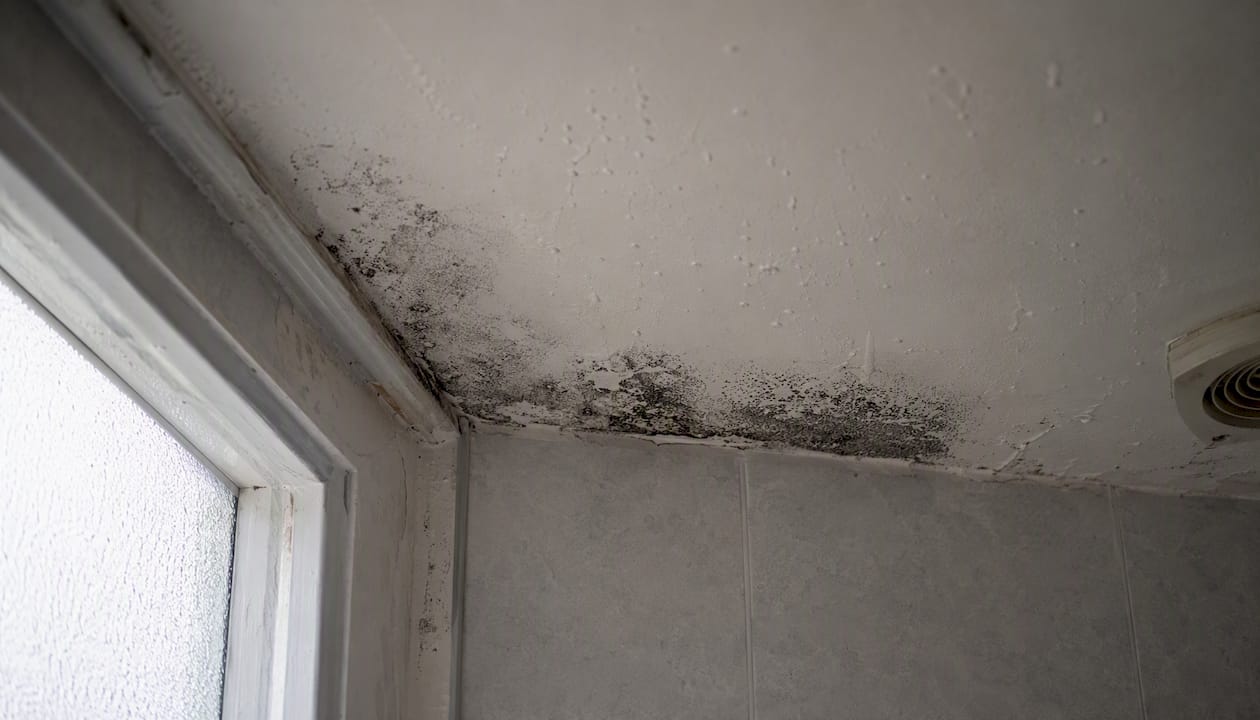
If you’ve spotted mould on a ceiling, the first move is simple: isolate the room, open a window, or run the extractor, and resist the urge to scrub it dry or sand it back. A cautious surface clean is reasonable if the patch is small and the board underneath feels firm. It is not reasonable if the patch is bigger than roughly 1 m², the ceiling feels soft or is sagging, or the mould keeps coming back after you’ve cleaned it. That last point matters more than most people realise: cleaning without fixing the moisture source guarantees recurrence, often within weeks.
Before you touch anything:
- Wear an N95 or P2 respirator, not a paper dust mask.
- Keep children, older people, and anyone with asthma out of the room while you work.
- Never dry-sand mouldy plasterboard, whatever size the patch.
Mould on a ceiling is a symptom. Treat the cleaning as step one, not the whole job, and check what’s driving the moisture before you pick up a sponge.
Key Takeaways
Mould on a ceiling is a moisture problem first and a cleaning problem second, and treating only the visible growth guarantees it returns.
| Point | Details |
|---|---|
| Diagnose before cleaning | Check whether the patch is condensation speckling or a leak-driven tide line before choosing a fix. |
| Keep DIY to small patches | Clean only firm, painted ceilings under roughly 1 m², wearing a respirator and avoiding dry-sanding. |
| Fix the fan, not just the mould | Use the toilet-paper test to confirm your extractor actually vents outside, not into the loft. |
| Never paint over active mould | Painting traps moisture underneath; use an encapsulating primer only after full remediation. |
| Call Quaypointplastering past the threshold | For patches over 1 m², soft boards, or recurring mould, book a survey-led inspection with a written guarantee. |
Table of Contents
- How do you safely remove mould from a bathroom ceiling?
- What actually stops mould coming back?
- What health risks does ceiling mould carry?
- When should you call in a professional instead of DIY?
- If you need professional help: how Quay Point Plastering can assist
- Sources
How do you safely remove mould from a bathroom ceiling?
Small, surface-level mould on a firm, painted ceiling can usually be cleaned safely by a competent DIYer. Government guidance treats this as reasonable only for patches under about 10 square feet, where the substrate itself hasn’t started to fail. Anything larger, softer, or recurring belongs to a professional, covered in the next section.
Here’s the sequence that works:
- Suit up. Respirator, gloves, and eye protection. Open a window if you can.
- Contain the room. Close the door, cover the bath and any fixtures below the patch with a dust sheet.
- Mist lightly before you touch it. A light water spray on the mould stops loose spores becoming airborne the moment you start working.
- Apply a suitable cleaner. Diluted white vinegar or a proprietary anti-fungal spray, not neat bleach.
- Agitate gently. A soft brush or cloth, working outward from the centre of the patch.
- Lift residue with a HEPA vacuum or damp wipe, rather than dry brushing it into the air.
- Dry thoroughly. Run the extractor or a dehumidifier for 20 to 30 minutes after you finish, and check the board feels dry, not just visually clean.
Bleach is the default reach for most people, and it’s usually the wrong one. On a painted, porous ceiling, bleach tends to bleach out the surface staining while leaving the deeper hyphae intact, which is exactly why so many bathroom ceilings look “cleaned” for a fortnight and then relapse. Sanding is worse: it aerosolises spores and does nothing to the roots growing into the paper facing of the plasterboard.
Pro Tip: Check your extractor fan is actually pulling air before you finish the job. Hold a small square of toilet paper against the grille while the fan runs; if it doesn’t cling flat against the vent, the ducting is blocked, crushed, or venting into the loft instead of outside.
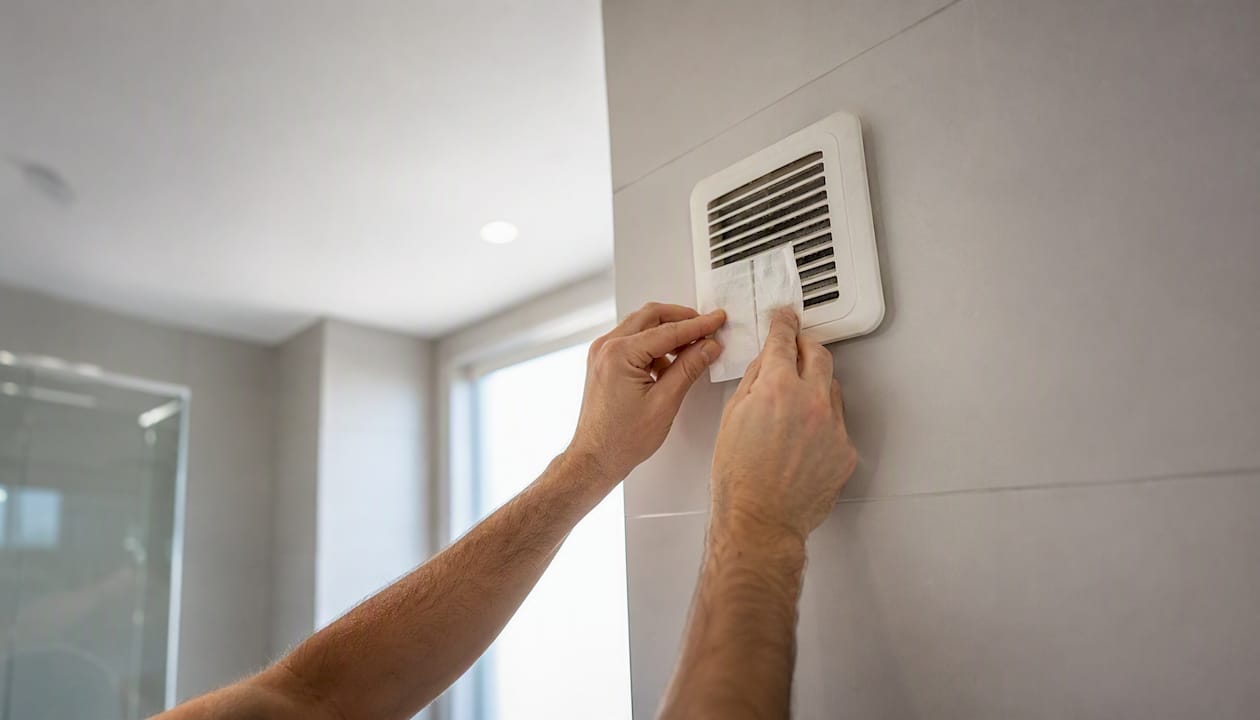
Watch the spot for two to four weeks after cleaning. Mould spores can germinate within a few days on a consistently damp surface, so if the patch reappears within that window, the moisture problem hasn’t been fixed, and cleaning again won’t help.
What actually stops mould coming back?
Prevention isn’t about cleaning more often. It’s mechanical: getting moist air out of the room before it condenses, and keeping the ceiling surface warm enough that condensation can’t form there in the first place. Warm, moist air meets a cold ceiling and turns to water on contact, which is precisely why bathroom ceilings above showers are the most common site for condensation-driven mould growth.
What genuinely works:
- A correctly sized, ducted extractor fan that vents outside, not into the loft space.
- A humidity sensor or run-on timer, so the fan keeps clearing air after you’ve left the room.
- Keeping indoor humidity below recommended safe levels, checked with a cheap hygrometer.
- Insulating cold ceilings, particularly under flat roofs or loft hatches, to remove the cold surface condensation needs.
- Fixing roof or plumbing leaks promptly, rather than living with a damp patch.
- Drying laundry outside or in a vented tumble dryer, not on radiators indoors.
Passive trickle vents and opening a window occasionally aren’t enough in a working bathroom; choosing the right options is important when considering which doors are best for bathrooms. Mechanical extraction and insulation are the only reliable long-term fix for a room that generates as much steam as a shower does daily.
Pro Tip: A fan that “runs” isn’t the same as a fan that works. It’s common to find extractors ducted into a loft void rather than through the roof or wall to fresh air, which just moves the moisture problem upstairs instead of removing it.
If the ceiling has a persistent cold spot, a leaking roof, or plasterboard that’s already failed, no amount of ventilation will fix it. That’s when replastering or roof repair becomes the actual prevention step, not an optional extra.
What health risks does ceiling mould carry?
Mould on a ceiling raises indoor spore counts, and that can worsen asthma, trigger allergic reactions, and irritate airways, particularly in children, older adults, and anyone with a weakened immune system. People with asthma and immunocompromised individuals face higher risk from mould exposure than a healthy adult breathing the same air.
Don’t judge the risk by colour. Black staining looks alarming, but the visible colour of mould doesn’t reliably indicate species or toxicity. A pale, patchy growth can be just as much a symptom of unresolved damp as a dense black patch.
Watch for worsening cough, wheeze, or skin and eye irritation in anyone using the room regularly. If symptoms persist after the mould is removed and the moisture fixed, see a GP rather than assuming it’s unrelated.
- Read more on the specific concerns around black mould and household health.
When should you call in a professional instead of DIY?
Call a professional once the patch exceeds a small surface area, the ceiling feels soft or is sagging, mould keeps returning after cleaning, or it’s sitting near a vent, loft hatch, or insulation. Those are the same thresholds government guidance sets for safe DIY limits, and they exist because beyond that scale, cleaning stops being the solution.
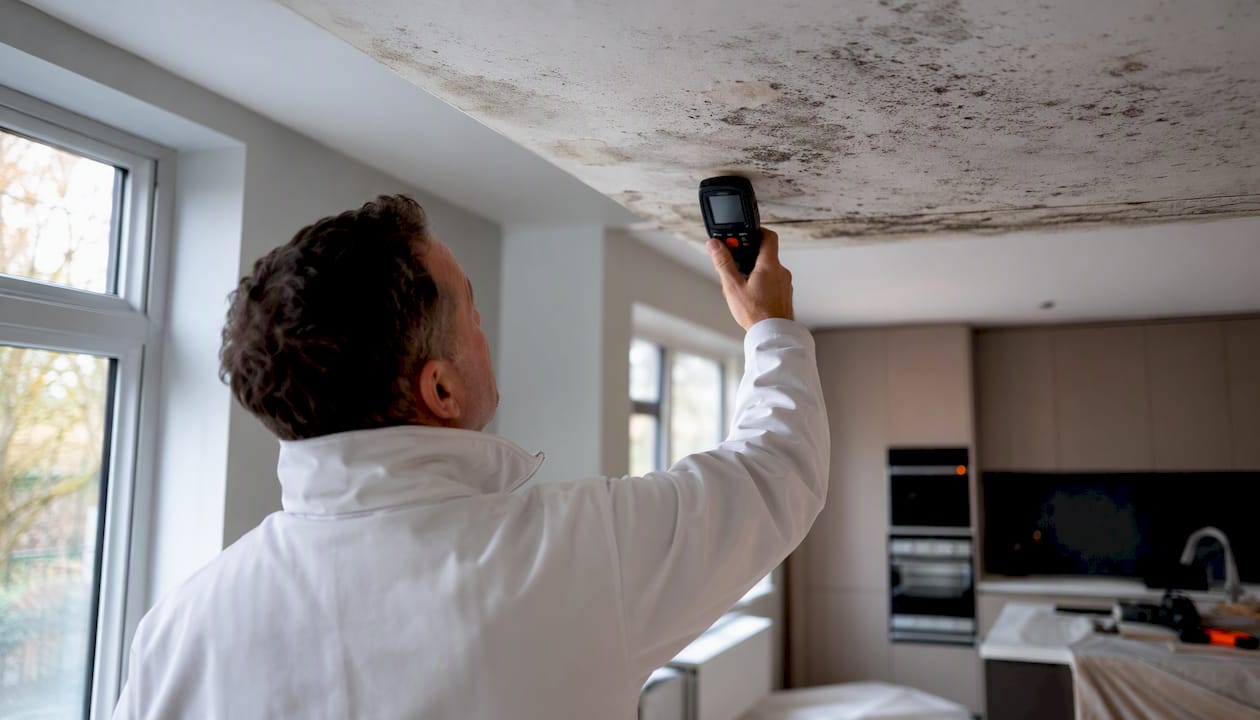
A proper survey-led remediation process starts with a visual inspection, moisture readings on the ceiling and surrounding structure, and a check of the loft or roof void above the affected area. That leads to a written report, a defined scope of work, and a quotation, before any treatment happens. The actual remedial steps typically involve containment to stop spores spreading, removal of any compromised plasterboard, treatment of exposed timbers or joists, a fungicidal treatment on the remaining structure, and reinstatement with moisture-resistant board and an encapsulating primer where the substrate demands it.
Pro Tip: Ask any contractor for a written report with moisture readings, not just a verbal quote. If they can’t explain where the moisture is coming from, they’re guessing at a cleaning job rather than diagnosing the actual problem.
Before you sign anything, ask for a written guarantee on the workmanship, before-and-after photos from similar jobs, and evidence of local experience with the same type of property.
Can you paint over mould?
No. Painting over active mould traps moisture behind the paint film, and the mould returns, often within weeks. An encapsulating primer only belongs on a ceiling after the mould has been properly removed and the substrate confirmed dry, never as a shortcut over an active patch.
- Painting alone is cosmetic; it doesn’t touch the moisture source.
- If the board is still damp underneath, new paint just seals the problem in.
A surveyor’s note on diagnosis before repair
After more than 35 years surveying damp and mould across the south coast, the pattern rarely changes: the mould was never the real job, the moisture behind it was. Diagnose first, treat second, and you’ll only pay for the fix once.
If you need professional help: how Quay Point Plastering can assist
If a cautious clean hasn’t held, or the patch is already past the thresholds covered above, the next sensible step is a proper damp and mould survey, not another bottle of anti-fungal spray. Quaypointplastering works differently to a same-day clean-and-go visit: every job starts with a diagnosis, not a quote.
The process is straightforward. Send a photo or describe what you’re seeing for an initial triage, then book a site survey. A surveyor takes moisture readings, checks the roof or loft space above the affected ceiling, and hands you a written report with a defined scope of work before any treatment starts, backed by a written guarantee on the finished job. Depending on what the survey finds, that might mean targeted black mould removal, a wider damp and mould treatment, or, where the ceiling itself has failed, replastering and reinstatement. If the cause turns out to be a roof defect rather than condensation, roofing repairs get scoped into the same report rather than left for you to chase separately. Landlords dealing with a tenant’s report can start with a landlord damp and mould inspection covering the whole property, not just the ceiling in question.
Book a survey, get the written findings, and know exactly what you’re paying for before any work begins.
Sources
For deeper reading beyond this guide, the gov.uk guidance on damp and mould health risks covers the full health and remediation picture, the Met Office explains condensation mechanics, the NHS covers allergy symptoms, and HSE answers mould safety FAQs. For local surveys, see Quaypointplastering’s damp problems overview.
This article is general information, not a substitute for advice from a qualified doctor. Consult a qualified healthcare professional about your own circumstances before acting on anything here.