
Black mould health risks: what UK households need to know
Black mould health risks: what UK households need to know
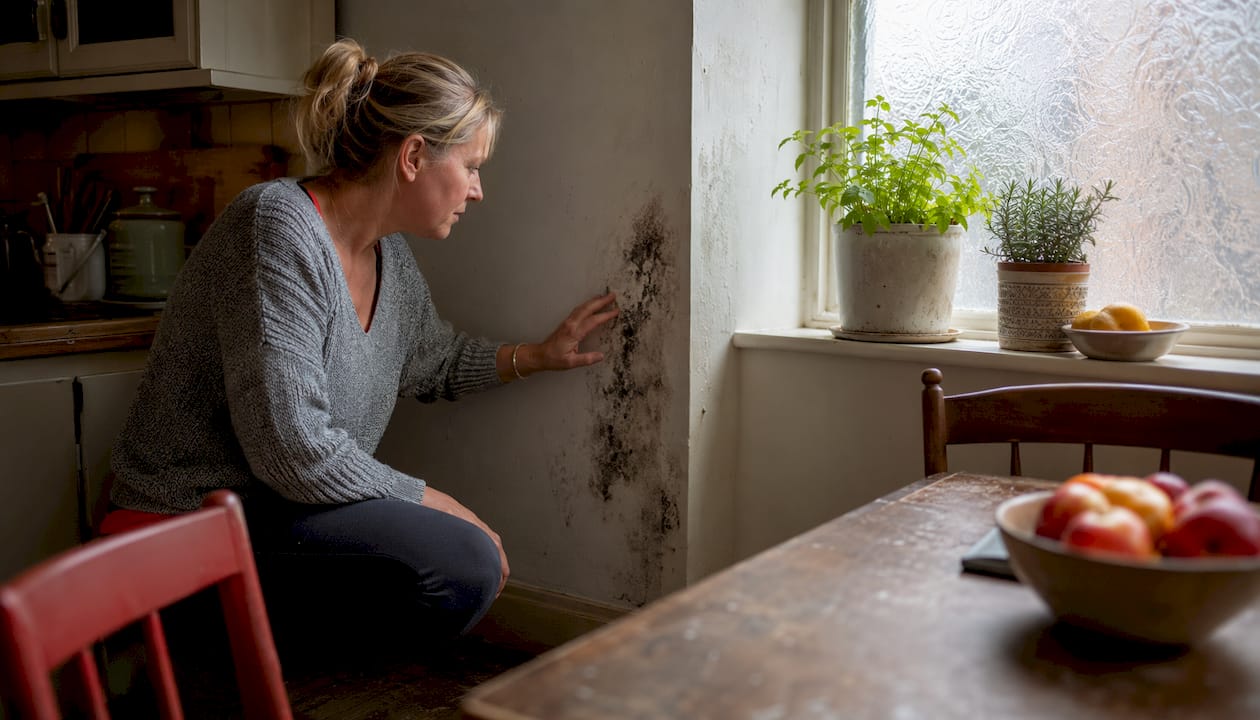
Indoor black mould is a genuine health risk, and the NHS, GOV.UK, and the UK Health Security Agency (UKHSA) all say so clearly. The primary concern is not some exotic toxin but the spores, allergens and irritants that mould releases into the air you breathe every day, which can trigger or worsen asthma, cause persistent coughing, and increase the risk of respiratory infections, particularly in children, older adults and anyone with a lung condition. Research summarised by the National Institute of Environmental Health Sciences found that infants in mould-affected homes have an increased risk of developing asthma by age seven compared to those in mould-free homes. The UKHSA’s burden-of-disease research confirms a substantial respiratory illness burden in England attributable to residential damp and mould.
The most important thing you can do right now is reduce exposure and address the moisture source. Everything else follows from that.
Immediate actions to take today:
- Move vulnerable household members (infants, anyone with asthma, older adults, pregnant people) away from the affected room where possible.
- Open windows and improve ventilation in the affected area.
- Do not disturb large patches of mould by scrubbing or dry-brushing — this releases spores into the air.
- Photograph the mould and record the date. Note any musty smells, water stains or condensation patterns.
- If you rent, report the problem to your landlord in writing and keep a copy.
- Arrange a professional survey if the mould covers more than a small area, keeps returning, or if a household member’s health is already affected.
Table of Contents
- What people actually mean by ‘black mould’
- How indoor mould affects your health — what the evidence shows
- Who is most at risk in UK homes?
- What symptoms suggest mould exposure?
- How mould gets into your home — common sources and hotspots
- What UK guidance and law say — GOV.UK, NHS, UKHSA and Awaab’s Law
- When to see a GP, ask for tests, or seek emergency care
- Practical steps to reduce mould and stop it returning
- When to test for mould and how to choose a remediation professional
- What a proper survey-led remediation looks like
- Key takeaways
- The part most guides get wrong about black mould
- Survey-led mould and damp remediation in Dorset, Hampshire and Wiltshire
- Authoritative UK sources and key studies
What people actually mean by ‘black mould’
The term ‘black mould’ is a lay description, not a scientific one. When most people say it, they usually mean Stachybotrys chartarum, a dark greenish-black species that grows on wet cellulose materials such as plasterboard, wallpaper and timber. In practice, though, many different mould species can appear dark or black, including Cladosporium, Aspergillus niger and Penicillium varieties. Colour alone tells you very little about the level of risk.
This distinction matters for one practical reason: knowing the exact species rarely changes what you should do. Harvard Health’s clinical perspective is clear that prolonged exposure to any indoor mould, not only Stachybotrys, may contribute to asthma onset, lung inflammation and mood changes. Clinicians and surveyors therefore focus on exposure reduction and moisture repair rather than species identification.
A brief note on the biology:
- Spores are microscopic reproductive particles released into the air. Inhaling them is the primary route of exposure in homes.
- Hyphae are the thread-like structures that form the visible mould body and penetrate porous materials such as plaster and timber.
- Mycotoxins are chemical compounds some moulds can produce. Stachybotrys is capable of producing them, but whether household-level exposure to mycotoxins causes serious systemic illness is a separate and more contested question (covered in the next section).
The common misconception is that all black-looking mould is ‘toxic’ and uniquely dangerous. The reality is that any mould growing indoors indicates a moisture problem, and that moisture problem is what needs fixing.
How indoor mould affects your health — what the evidence shows
The principal route of harm is inhalation. When mould colonies are disturbed or simply release spores during their natural growth cycle, those particles become airborne and enter the respiratory tract. The health effects that follow are well documented across decades of epidemiological research.
Well-supported health outcomes include:
- Allergic rhinitis (persistent runny or blocked nose, sneezing, itchy eyes)
- Asthma onset in children and exacerbation of existing asthma in adults and children
- Chronic cough and wheeze
- Breathlessness, particularly on exertion
- Increased frequency of respiratory infections, including bronchitis
- Hypersensitivity pneumonitis in susceptible individuals
The WHO’s review of indoor air quality evidence, published on NCBI Bookshelf, found sufficient evidence of an association between indoor dampness-related factors and asthma development, asthma exacerbation, respiratory infections, cough, wheeze and breathlessness across studies in infants, children and adults.
The mycotoxin question deserves a direct answer, because it generates a lot of alarm online. A toxicologist’s analysis published in The Conversation explains that while Stachybotrys chartarum can produce mycotoxins, there is no strong evidence connecting normal household exposure to those mycotoxins with widespread severe systemic illness. Most of the harm from indoor mould is allergic and inflammatory in nature. That does not make it trivial, particularly for vulnerable people, but it does mean the focus should be on reducing exposure rather than treating every black-looking patch as a biohazard.
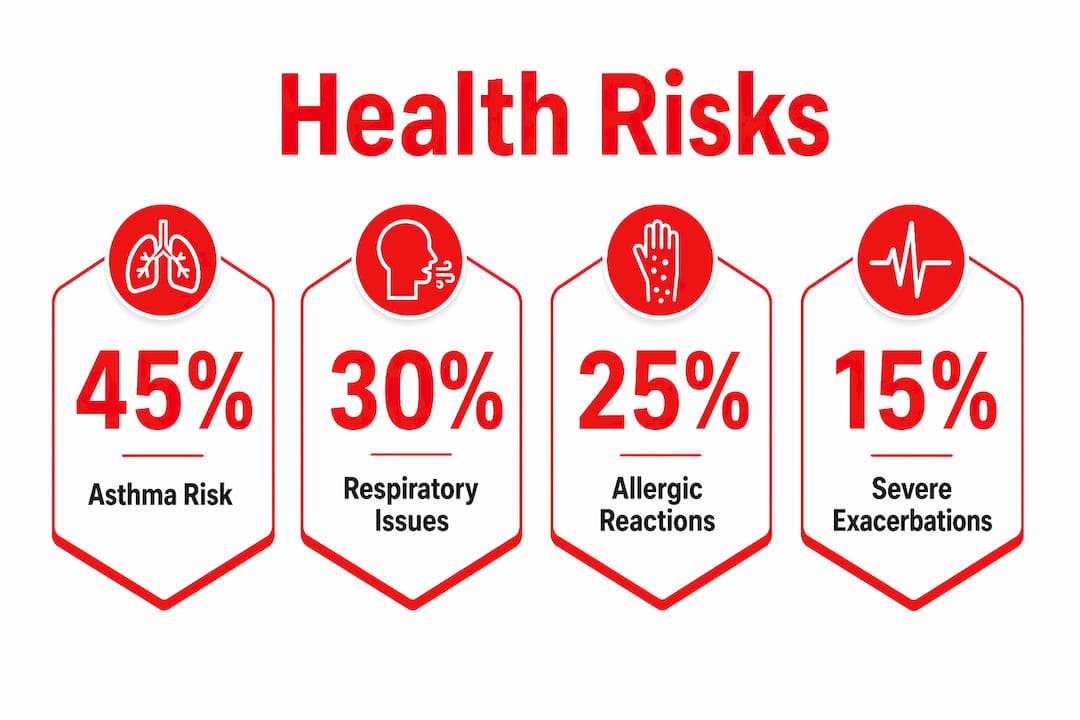
Who is most at risk in UK homes?
Mould exposure affects most people to some degree, but certain groups face a disproportionately higher risk of serious health consequences.

Infants and young children are particularly vulnerable because their immune and respiratory systems are still developing. Early-life mould exposure is linked to a significantly increased risk of asthma development, as the NIEHS research cited above demonstrates.
People with asthma or chronic lung disease — including COPD and bronchiectasis — can experience severe exacerbations from mould spore inhalation. For this group, even a small patch of mould in a bedroom can be clinically significant.
Older adults face a compounded risk: reduced immune function, greater likelihood of pre-existing respiratory conditions, and often less ability to ventilate or heat their homes adequately.
Pregnant people may be more susceptible to respiratory irritants, and there is concern about the indirect effects of stress and poor air quality on pregnancy outcomes, though the evidence here is less definitive than for respiratory outcomes.
Immunocompromised individuals — those on immunosuppressant medication, undergoing chemotherapy, or living with conditions such as HIV — face a risk of invasive fungal infections that the general population does not. This is a distinct and more serious category of risk.
People with mental health vulnerabilities or who are housebound spend more time in the affected environment, increasing cumulative exposure. The NHS and related local health toolkit guidance also notes that living in cold, damp and mouldy conditions is associated with anxiety, depression and sleep disturbance, creating a feedback loop where poor mental health makes it harder to manage the practical problem.
Social and housing factors amplify risk significantly. Fuel poverty, overcrowding, poor insulation and inadequate heating all increase the likelihood of condensation and mould growth. Households that cannot afford to heat their homes consistently are among the most exposed. Where a landlord is aware of a vulnerable occupant, GOV.UK guidance is explicit that this should accelerate the response.
What symptoms suggest mould exposure?
Symptoms from mould exposure tend to be respiratory and allergic in character, and they often improve when the person spends time away from the affected property. That pattern is itself a useful diagnostic clue to mention to your GP.
Common symptoms to watch for:
- Persistent cough, particularly at night or first thing in the morning
- Wheeze or a whistling sound when breathing
- Breathlessness that is disproportionate to activity level
- Runny or blocked nose, frequent sneezing
- Itchy, red or watery eyes
- Skin rashes or eczema flare-ups with no other obvious cause
- Fatigue and difficulty sleeping
Red-flag signs that need urgent attention:
- Severe or sudden shortness of breath
- Chest pain alongside breathing difficulty
- High fever with respiratory symptoms (possible infection)
- Sudden worsening of a known respiratory condition such as asthma
Breathing in mould spores may cause allergic reactions including sneezing, runny nose, red eyes and skin rash; people with asthma may experience severe attacks. If any of the red-flag signs above apply, call 999 or go to A&E rather than waiting for a GP appointment.
Beyond the physical, living with persistent mould causes measurable psychological harm. Anxiety about health, disrupted sleep, and the stress of dealing with an unresponsive landlord all contribute to a reduced quality of life that is often underreported in clinical consultations.
Pro Tip: Keep a simple symptom diary — note the date, the symptom, and whether you were at home or elsewhere. If symptoms consistently improve when you are away from the property, that pattern is strong supporting evidence for a GP and for any formal complaint to a landlord.
How mould gets into your home — common sources and hotspots
Mould needs moisture to grow. Remove the moisture and the mould cannot sustain itself. Understanding where that moisture comes from is the first step to stopping it.
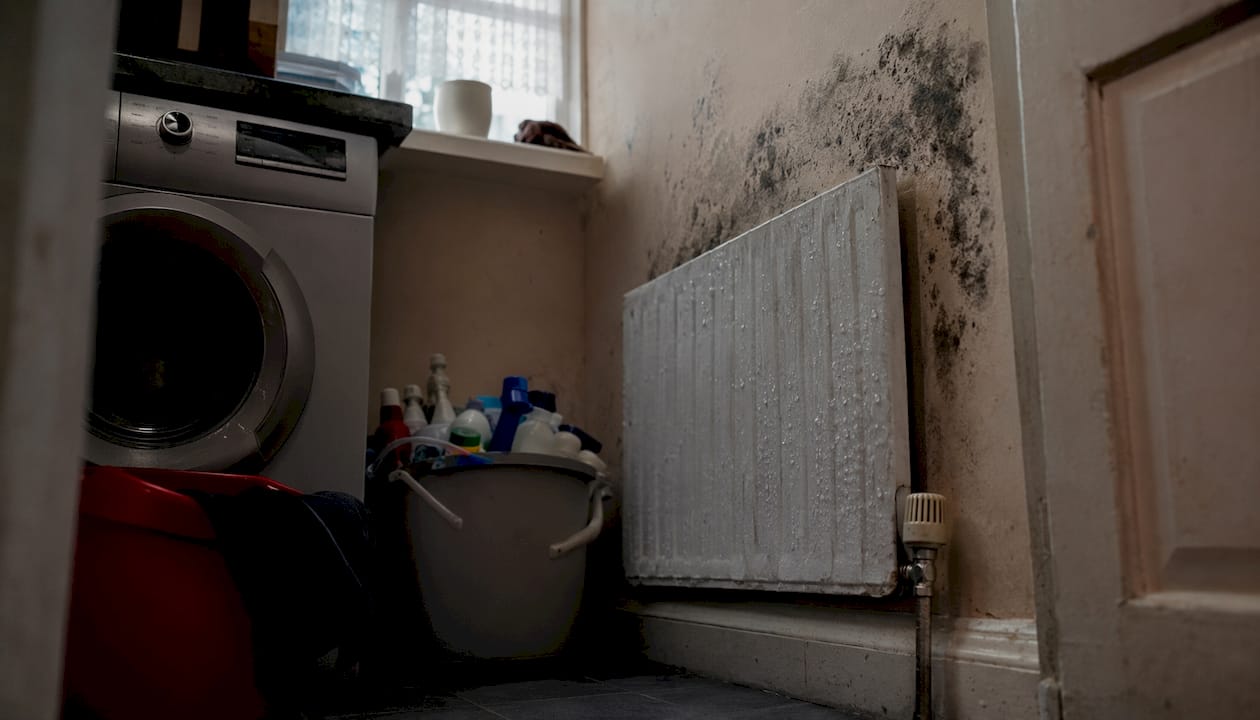
Primary moisture sources in UK homes:
Condensation is the most common cause in the UK. Warm, humid air from cooking, bathing and breathing meets cold surfaces — typically external walls, window reveals and corners — and deposits moisture. Poor ventilation traps that moisture and allows mould to establish quickly.
Leaks from roofs, guttering, plumbing or around window frames introduce water directly into wall and ceiling cavities. Mould from a leak often appears at a distance from the actual entry point, which is why it can be hard to trace without a proper inspection.
Penetrating damp occurs when water passes through an external wall, typically due to defective render, failed pointing, or damaged masonry. It tends to produce patches of mould on internal wall surfaces that worsen after rain.
Rising damp is less common but occurs when ground moisture travels up through a wall or floor where the damp-proof course has failed or is absent. It usually produces a characteristic tide mark and associated mould at low level.
Common hotspots in UK homes:
- Behind wardrobes and furniture pushed against external walls (reduced airflow, cold surface)
- Around window frames and in window reveals
- In loft spaces with inadequate ventilation or insulation
- Under sinks and around pipework
- In basements and cellars
- In internal corners of external walls, particularly in north-facing rooms
A musty smell without visible mould is a reliable indicator of hidden growth. Mould inside wall cavities, under flooring or behind plasterboard can be extensive before it becomes visible on the surface. Surface cleaning alone will not resolve it. You can read more about why condensation-driven mould tends to recur without addressing the underlying cause.
What UK guidance and law say — GOV.UK, NHS, UKHSA and Awaab’s Law
Official UK guidance is unambiguous: damp and mould in the home are a health risk and action should not wait for medical proof.
The NHS advises that if you have damp and mould in your home, you should contact your landlord if you rent, or seek advice from your local council if the landlord does not act. The UKHSA’s research programme has documented a substantial burden of respiratory disease in England attributable to residential damp and mould, reinforcing why this is treated as a public health priority rather than a maintenance inconvenience.
The Awaab Ishak case and what changed
The death of two-year-old Awaab Ishak in Rochdale, attributed to a respiratory condition caused by prolonged mould exposure in his family’s social housing flat, prompted significant policy attention. BBC coverage of the case brought the issue to national prominence and accelerated legislative action. Awaab’s Law, introduced through the Social Housing (Regulation) Act 2023, requires social landlords in England to investigate and begin repairs within defined timeframes once a hazard such as damp and mould is reported.
Practical steps for tenants:
- Report the problem to your landlord in writing (email creates a dated record).
- Include photographs, dates of first appearance and any health symptoms you or household members are experiencing.
- You do not need a medical letter or formal diagnosis to require your landlord to act. Photographic evidence and a written description are sufficient.
- If your landlord does not respond within a reasonable period, escalate to your local council’s environmental health team or, for social housing, to the Housing Ombudsman.
- For private tenants, the Homes (Fitness for Human Habitation) Act 2018 gives you the right to take legal action if your home is unfit to live in.
Landlords who need to understand their formal obligations can request a landlord damp and mould inspection to document the scope and condition before remediation begins.
When to see a GP, ask for tests, or seek emergency care
Most mould-related symptoms are manageable with GP input, but knowing when to act quickly matters.
Book a GP appointment if:
- Respiratory symptoms (cough, wheeze, breathlessness) have persisted for more than two to three weeks.
- A child in the household is developing a new wheeze or recurrent chest infections.
- You suspect asthma is developing or worsening.
- You have signs of a chest infection that is not resolving.
Go to A&E or call 999 if:
- Breathlessness is severe or came on suddenly.
- There is chest pain alongside breathing difficulty.
- A child is struggling to breathe or their lips are turning blue.
- There is a high fever with significant respiratory symptoms.
What to bring to your GP appointment:
Your symptom diary (dates, symptoms, whether they improve away from home) is the most useful thing you can bring. Add photographs of the mould or damp, a note of how long it has been present, and details of any household members with existing respiratory conditions. If you have already reported the problem to a landlord, bring that correspondence too.
A GP may consider spirometry to assess lung function, a trial of an inhaler to evaluate whether symptoms are asthma-related, allergy testing, or a referral to a respiratory clinic for more complex or persistent cases. Being specific about the housing context helps the clinician connect the symptoms to the exposure rather than treating them in isolation.
This article provides general information, not medical advice. Always consult your GP or a qualified health professional for guidance specific to your own situation.
Practical steps to reduce mould and stop it returning
Addressing mould exposure requires two parallel tracks: reducing your immediate contact with spores, and removing the moisture that sustains the mould. One without the other will not hold.
- Improve ventilation throughout the property. Open windows daily, even briefly in cold weather. Use extractor fans in kitchens and bathrooms every time you cook or shower, and leave them running for at least 15 minutes afterwards. Do not block air bricks or trickle vents.
- Control indoor humidity. Dry washing outdoors or in a well-ventilated room with the door closed and a window open. Avoid using tumble dryers that vent into the room. A hygrometer (available for a few pounds) lets you monitor humidity; aim to keep it below 60%.
- Heat your home consistently. Cold surfaces cause condensation. A steady background temperature, even when rooms are unoccupied, reduces the temperature differential that drives moisture deposition on walls.
- Fix leaks promptly. A dripping pipe under a sink or a cracked roof tile can sustain mould growth indefinitely. Report leaks to your landlord immediately and document the report in writing.
- Move furniture away from external walls. Leave a gap of at least 50mm to allow air to circulate and prevent cold spots from forming behind wardrobes and sofas.
- Clean small patches safely. For patches smaller than roughly one square metre on a non-porous surface, wear disposable gloves and an FFP2 or FFP3 mask, use a damp cloth with a mild detergent or a proprietary fungicidal wash, and seal the waste in a bag before disposing of it. Do not dry-brush or vacuum the mould.
- Stop and call a professional if: the mould covers a large area, is on porous materials such as plasterboard or timber, keeps returning within weeks of cleaning, or if there is any sign of structural damp behind it.
For persistent or recurring mould, surface treatment is rarely the answer. The reason black mould keeps returning is almost always an unresolved moisture source. Long-term solutions may include improved insulation to eliminate cold bridges, a positive input ventilation (PIV) system to manage whole-house humidity, or structural repairs to address penetrating or rising damp.
Pro Tip: A PIV installation is one of the most cost-effective long-term measures for condensation-driven mould in UK homes. It works by drawing fresh, filtered air into the property from the loft space, gently pressurising the building and pushing humid air out through natural gaps. It does not require opening windows and runs continuously at low cost.
When to test for mould and how to choose a remediation professional
Routine mould species testing is rarely necessary for most domestic cases. The CDC’s practical guidance is clear: professional diagnosis by a specialist survey is superior to DIY air sampling, and moisture control is the priority over identifying the species present. Knowing that you have Stachybotrys rather than Cladosporium does not change the remediation approach in most residential cases.
When testing does add value:
- Complex cases where the source of moisture is unclear despite visual inspection.
- Legal disputes between tenants and landlords where documented evidence of species and concentration is required.
- Persistent recurrent mould after repairs have been completed, where a baseline measurement helps assess whether the remediation worked.
- Cases involving immunocompromised occupants where clinical teams want specific species data.
What different tests can show:
Air sampling captures spore counts in the ambient air and can indicate whether levels are elevated relative to an outdoor baseline. Surface sampling identifies species present on a specific area. Moisture mapping uses a combination of surface moisture meters and thermal imaging to locate damp within wall and floor structures without destructive investigation. Of these, moisture mapping is the most directly useful for planning remediation, because it identifies the source rather than just confirming the symptom.
How to choose a remediation professional:
Look for a surveyor who starts with a thorough visual inspection and moisture mapping before recommending any treatment. A reputable contractor will provide documented findings, a defined scope of work, and a written guarantee on the remediation. Ask specifically whether the quote addresses the moisture source or only the visible mould. If the answer is only the surface, the mould will return. Check for local experience, references from similar properties, and clarity about what the guarantee covers and for how long.
A healthy home standard framework can also help you understand what a properly remediated property should look like in terms of ventilation, thermal performance and moisture control, which is useful context when assessing a contractor’s proposed scope.
What a proper survey-led remediation looks like
A professional survey is not simply a visit to look at the mould. It is a structured diagnostic process that identifies the moisture source, documents the findings, and produces a defined scope of work before any treatment begins.
What a thorough survey should include:
- Visual inspection of all affected areas, including loft, subfloor and external elevations where relevant.
- Moisture mapping using calibrated surface meters and, where indicated, thermal imaging to locate damp within the structure.
- Confirmation of the moisture source: condensation, penetrating damp, rising damp, or a leak.
- Photographic documentation of all findings.
- A written report with recommended scope of work and a clear explanation of why each element is needed.
- A written estimate with defined timescales.
Typical remedial options, depending on the diagnosis:
| Moisture source | Typical remedial approach |
|---|---|
| Condensation | Ventilation improvement (PIV, extractor fans), insulation to eliminate cold bridges, heating advice |
| Penetrating damp | External repair (render, pointing, masonry), cavity investigation, internal tanking where necessary |
| Rising damp | Damp-proof course injection or replacement, replastering with salt-resistant render |
| Leak (roof/plumbing) | Source repair, drying out period, plaster replacement and anti-mould finish |
| Hidden mould (porous materials) | Strip and replace affected plasterboard or timber, treat substrate, reinstate with appropriate finishes |
What a written guarantee should cover:
A credible workmanship guarantee states the scope of work it applies to, the timescale (typically 10–20 years for damp-proof treatments), what is excluded, and how to make a claim. It should be issued on headed paper and reference the specific property and works completed.
Quaypointplastering’s approach starts with a survey-led diagnosis: visual inspection, moisture mapping, a written report and a defined scope of work before any treatment is agreed. Every remediation is backed by a written guarantee, and the team carries over 35 years of local experience across Dorset, Hampshire and Wiltshire. That process means you are not paying for treatment until the cause is confirmed.
Pro Tip: Always ask a contractor to show you the moisture readings before and after remediation. A professional who cannot or will not provide before-and-after moisture data has not verified that the repair has worked.
Key takeaways
Black mould in UK homes is primarily a respiratory risk driven by damp conditions, and the most effective response is to reduce exposure, fix the moisture source, and arrange a professional survey where the problem is persistent or a vulnerable person is affected.
| Point | Details |
|---|---|
| Mould is a respiratory risk | Spores and allergens from indoor mould trigger asthma, rhinitis, cough and respiratory infections, particularly in children and vulnerable adults. |
| Infants face elevated asthma risk | Research summarised by the NIEHS found infants in mould-affected homes were three times more likely to develop asthma by age seven. |
| Colour does not determine danger | Many species appear black; species identification rarely changes health advice or remediation scope. |
| Tenants do not need medical proof | GOV.UK guidance confirms that photographic records and a written description are sufficient to require landlord action. |
| Quaypointplastering offers survey-led remediation | Serving Dorset, Hampshire and Wiltshire, Quaypointplastering diagnoses the moisture source first and provides written guarantees on all remedial work. |
The part most guides get wrong about black mould
Most online articles about black mould focus on the wrong thing. They spend paragraphs on mycotoxin horror stories and species identification, which generates clicks but rarely helps the person sitting in a damp bedroom wondering what to do. The practical reality, after years of surveying properties across Dorset, Hampshire and Wiltshire, is that the species name almost never changes the answer.
What does change the answer is the moisture source. A property with condensation-driven mould needs different remediation from one with penetrating damp or a failed damp-proof course. Treating the surface without identifying the source is the single most common reason mould returns within months of a clean or repaint. Homeowners and tenants deserve to know that upfront, not after they have paid for a treatment that did not hold.
DIY cleaning is appropriate for small, isolated patches on non-porous surfaces, with proper PPE and a fungicidal product. For anything larger, anything on plasterboard or timber, or anything that has come back more than once, a professional survey is the right next step. Not because the mould is necessarily dangerous to touch, but because without knowing what is driving the moisture, you cannot fix it permanently.
Survey-led mould and damp remediation in Dorset, Hampshire and Wiltshire
If you have persistent mould, recurring damp, or a property where a vulnerable person is living with these conditions, Quaypointplastering offers a structured, survey-led service across Dorset, Hampshire and Wiltshire. The process starts with an on-site inspection: visual assessment, moisture mapping, and a written report that confirms the source before any treatment is recommended.

There are no assumptions and no guesswork. Every job begins with documented findings and a defined scope of work, so you know exactly what is being done and why. All remediation work is backed by a written guarantee. Whether the issue is condensation mould, penetrating damp, rising damp or a combination, the team has the local experience and the diagnostic process to address it properly.
For black mould removal or a full damp and timber survey, contact Quaypointplastering to arrange an inspection. Tell us what you can see, where it is, and how long it has been there, and we will take it from there.
Authoritative UK sources and key studies
The following sources were used in preparing this article and are recommended for further reading.
- GOV.UK — Understanding and addressing the health risks of damp and mould in the home: The primary UK government guidance document covering health risks, landlord responsibilities and tenant rights. The most important single reference for anyone in rented housing.
- NHS — Can damp and mould affect my health?: Clinical advice on health effects, who is most at risk and when to seek medical help.
- UKHSA — The burden of disease caused by damp and mould in English housing: Public health research quantifying the respiratory disease burden attributable to residential damp and mould in England.
- BBC — Black mould: How dangerous is it in the home and how can it be treated?: Reporting on the Awaab Ishak case and the policy response; useful context on how UK housing law has changed.
- NIEHS — Mould and your health: US federal summary of the epidemiological evidence linking early mould exposure to childhood asthma risk.
- WHO / NCBI Bookshelf — Health effects associated with dampness and mould: The most comprehensive international review of the epidemiological evidence; covers asthma, respiratory infections, wheeze and the limits of current evidence on causality.
- The Conversation — Is black mould really as bad for us as we think? A toxicologist explains: A toxicologist’s assessment of the mycotoxin evidence and why most household harm is allergic and inflammatory rather than systemic.
- Harvard Health — Mould in the home: identifying and treating the issue to prevent health problems: Clinical perspective on why species identification is less important than moisture control and duration of exposure.
- CDC — Mould and your health: Practical public health guidance on testing limitations and the priority of moisture removal over species identification.