
Stop Recurring Mould Behind Furniture: Gaps, 50% RH and When to Survey
Stop Recurring Mould Behind Furniture: Gaps, 50% RH and When to Survey
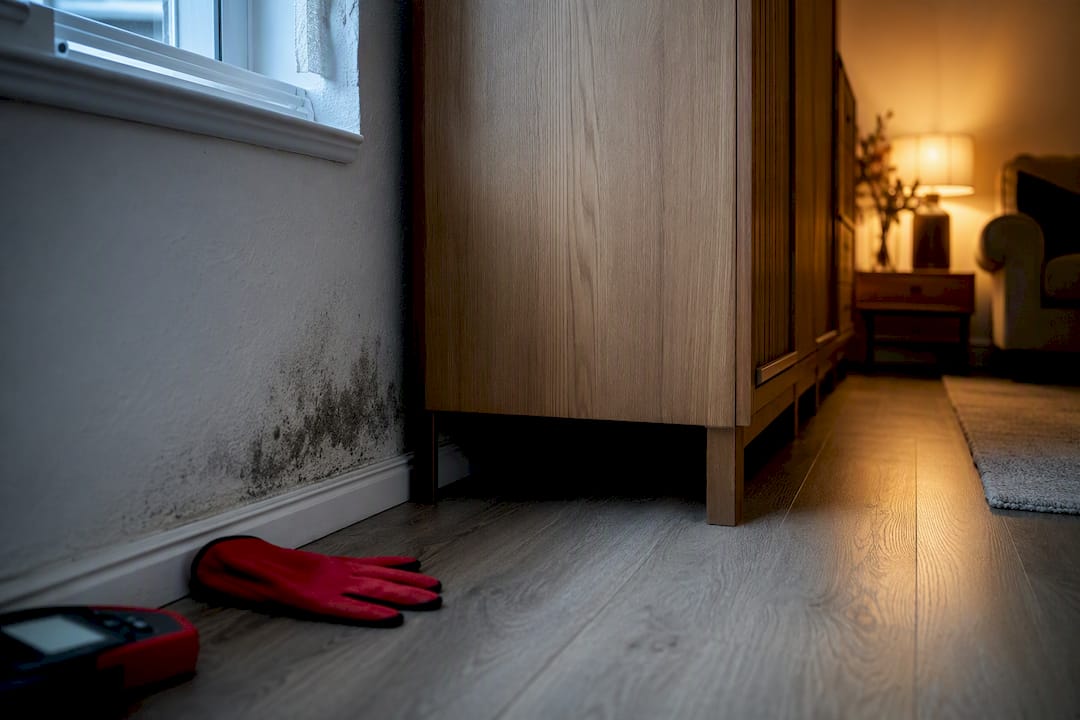
Small patches of mould behind furniture are usually caused by condensation and can be cleaned and prevented with ventilation. Pull the item forward, air the room, and check for damp signs straight away. If the patch covers more than a square metre, keeps coming back, or sits alongside soft plaster or flaking paint, treat it as a job for a survey rather than a sponge.
TL;DR:
- Moving furniture away from external walls and improving ventilation often solves simple condensation-related mould without further work.
- Sealing gaps behind wardrobes, sofas, or beds prevents moisture buildup and reduces the risk of mould recurrence.
- For large or persistent patches, a professional survey is necessary to distinguish condensation from other damp issues like rising or penetrating damp.
- Proper PPE, including gloves, masks, and eye protection, is essential for safe mould cleaning, especially on porous surfaces or larger infestations.
- Contaminated porous materials should be sealed and discarded, as cleaning rarely renders them safe again, and thorough disposal is critical for health.
Table of Contents
- Why does mould grow behind furniture?
- What should you do in the first two hours?
- How do you clean mould behind furniture safely?
- How much space should you leave behind furniture?
- When should you stop cleaning and book a survey?
- What are the different types of mould and how risky are they?
- How do you dispose of mould-contaminated materials safely?
- What PPE do you actually need for a mould job?
- Practitioner perspective: what surveys actually reveal
- Book a survey with Quay Point Plastering
- Sources
- FAQ
Why does mould grow behind furniture?
A wardrobe pushed against an external wall blocks the airflow that would otherwise keep that patch of wall dry. Room air can’t circulate behind it, so the wall surface cools faster than the air in front of it. Once that surface drops below the room’s dew point, moisture condenses out of the air and settles on the plaster, and mould spores that are always present in household air have the damp surface they need to establish a colony.
This is why the problem is so location-specific. The risk concentrates in a handful of predictable spots:
- External or north-facing walls, which lose heat fastest and stay coldest
- Built-in wardrobes and sealed kitchen units, where trapped air never mixes with the room
- Sofas and beds pushed tight against a cold outer wall
- Alcoves and chimney breasts with limited airflow on either side
Mould can appear within 24 to 48 hours of the right damp, cold, stagnant conditions coming together, particularly in winter when heating cycles on and off and walls swing through a wider temperature range. If what you find is limited to a black or green surface bloom that wipes away, condensation is almost certainly the cause. Flaking paint, soft or crumbling plaster, or white salt deposits point to something deeper, and that changes what you should do next.
What should you do in the first two hours?
Acting fast limits how far spores spread and gives you the information you need to judge whether this is a DIY job.
- Open a window and, if you have one, run an extractor fan or a portable air purifier to get air moving through the space.
- Carefully pull the furniture forward, away from the wall, without shaking, brushing, or knocking loose material into the air.
- Check the wall by touch for dampness, and look for blistering paint, a musty smell, or staining on the skirting board and neighbouring walls.
- Remove any fabric that’s touched the affected area (curtains, throws, clothing from a wardrobe) and wash it separately.
- If the patch is extensive, seal badly affected soft items in a bag rather than carrying them through the rest of the house.
- Keep children, anyone with asthma, and anyone with a weakened immune system out of the room until you’ve assessed the extent of it, in line with NHS guidance on minimising mould exposure for vulnerable people.
Pro Tip: Take two or three photos before you touch anything. If this turns out to be more than a surface issue, that record of exactly where and how the mould was growing helps a surveyor understand the pattern faster.
Pulling the wardrobe forward, checking for damp, and letting the wall air out is often all it takes to resolve a purely condensation-driven case, without any further work.
How do you clean mould behind furniture safely?
Before you start, gear up properly. You’re disturbing a colony of live spores, and cheap protection makes the job both safer and less likely to spread the problem to another room.
- Disposable gloves (nitrile rather than latex, if you have a choice)
- A well-fitted mask rated FFP2 or above, particularly if the plaster looks dry and flaky
- Eye protection if you’re working above head height or on a ceiling line
- A window open and a fan running for the whole job, not just at the start
For the cleaning itself, white vinegar remains one of the simplest and most reliable household methods. Applying undiluted white vinegar directly to the mould, leaving it to sit for the recommended contact time, then wiping and rinsing the surface, kills the spores rather than just smearing them across the wall. For light, fresh patches, a mild detergent and warm water can do the same job. If the mould has returned more than once, or covers a wide area, a registered fungicidal wash designed for masonry will do more than a kitchen-cupboard solution.
A few things to avoid entirely:
- Dry scraping or sanding, which throws spores into the air you’re breathing
- Bleach on porous plaster, especially anywhere near food preparation surfaces, since it can bleach the surface without killing the root of the growth
- Rushing to put furniture back before the wall is completely dry
Let the wall dry fully, which can take a day or more depending on ventilation, before anything goes back against it.
How much space should you leave behind furniture?
Fixing the cleaning is only half the job. If the wall never gets air behind it again, the mould comes back.
- Leave a gap behind wardrobes, sofas, and beds that is large enough for air to circulate freely.
- Use simple risers or small blocks under heavy furniture if you can’t reasonably drag it forward permanently.
- Keep indoor humidity below around 50%, using extractor fans in the kitchen and bathroom and a dehumidifier in bedrooms that struggle to dry out.
- Avoid drying clothes on radiators or airers indoors where possible, since this pushes a surprising volume of moisture straight into the room’s air.
- Check that kitchen plinths have working vents; sealed cupboard bases trap moisture just as effectively as a wardrobe against a cold wall.
Pro Tip: A £15 hygrometer from any hardware shop tells you your room’s actual humidity in seconds. Most people are guessing at “feels damp” when a number would settle the question outright.
For solid-wall properties that stay stubbornly cold no matter how well you ventilate, a layer of internal insulation or a thermal liner behind the worst-affected furniture can raise the wall’s surface temperature enough to stop condensation forming in the first place. That’s a bigger step than moving a sofa, so it’s worth getting a professional opinion before any structural work goes ahead. If you’re rethinking a room layout anyway, general guidance on furniture placement can also help you plan spacing that works with airflow rather than against it.
When should you stop cleaning and book a survey?
Some warning signs mean the problem has moved beyond condensation, and no amount of vinegar and ventilation will fix it.
- The affected area covers more than roughly one square metre
- Mould keeps returning within weeks of a proper clean and correct prevention
- You notice soft or crumbling plaster, white salt staining, or paint lifting off in sheets
- There’s a persistent musty smell even when the visible mould has gone
- The wall stays damp to the touch long after you’d expect it to have dried
A proper survey goes well beyond a visual look. It typically includes moisture mapping across the wall, thermal imaging to spot cold bridging, and a written diagnosis that sets out exactly what’s causing the problem and what work would fix it permanently. That documented approach matters because it separates condensation from rising or penetrating damp, which need completely different treatments.
While you wait for that visit, keep the area contained, photograph any changes, and resist the urge to paint over the patch or reseal the joint. Covering the symptom hides the evidence a surveyor needs and almost always lets the underlying issue carry on unseen.
What are the different types of mould and how risky are they?
Household mould behind furniture is almost always one of three families, and they don’t carry equal risk. The black, sooty patches most homeowners encounter tend to be species from the Cladosporium or Alternaria groups, common on cold, damp walls and generally an irritant rather than a serious hazard for a healthy adult. Greenish or white powdery growth is often a milder mildew, frequently the first visible sign before a colony darkens.
The one that gets attention in the press, Stachybotrys chartarum, sometimes called toxic black mould, needs sustained, heavy moisture to establish, which usually means a leak or long-standing penetrating damp rather than simple condensation. It’s slimy rather than powdery to the touch and tends to appear on soaked plasterboard or timber.
Health risk scales with exposure and individual sensitivity more than with which species is on the wall. The NHS notes that damp and mould can affect breathing, and that people with asthma, allergies, weakened immune systems, and young children should have their exposure minimised. Symptoms to watch for including a persistent cough, wheezing, skin irritation, or worsening allergy symptoms that ease when you’re away from the room. None of that requires you to identify the exact species before you act. Treat any patch you can’t confidently clean and keep clean as a reason to get it properly assessed.
How do you dispose of mould-contaminated materials safely?
Anything porous that mould has taken hold in, plasterboard, wallpaper, fabric backing, or badly affected timber, generally can’t be cleaned back to a safe state. Trying to salvage it usually just relocates the spores.
Bag contaminated material immediately, ideally in a heavy-duty rubble sack or thick bin liner, and seal it before carrying it through the house. Don’t shake it out or brush it down first; that’s exactly when spores become airborne. Small offcuts of plasterboard or skirting can usually go in general household waste once sealed, but larger quantities, particularly from a structural repair, should go to a household waste recycling centre rather than a standard bin collection, since most UK councils cap the volume of building waste they’ll take at the kerbside.
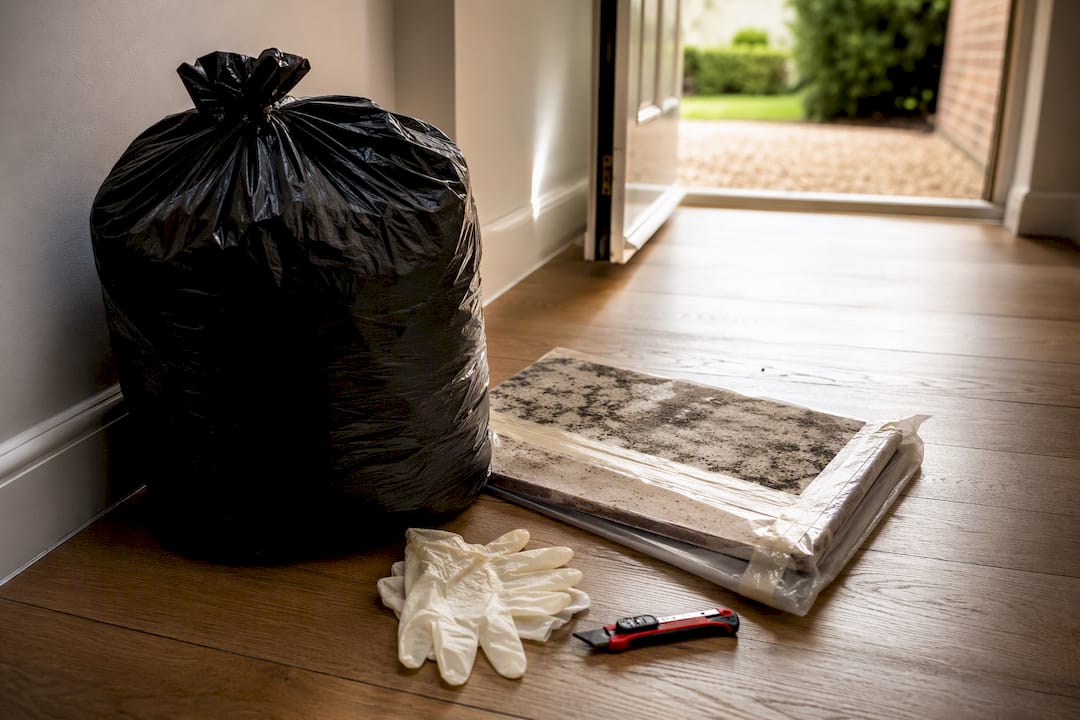
Fabrics worth keeping, curtains, cushion covers, clothing, should be laundered on the hottest wash the material allows, ideally with the item hung to dry outdoors or somewhere well ventilated. Anything heavily saturated or that still smells musty after washing is safer discarded than kept. Wipe down the outside of any sealed bag before it leaves the room, and wash your hands and forearms thoroughly once the job’s done, even if you wore gloves throughout.
What PPE do you actually need for a mould job?
Kitchen rubber gloves and an open window aren’t enough once you’re dealing with anything beyond a light surface bloom.
For a small, fresh patch, disposable nitrile gloves and a well-fitted FFP2 mask cover most of the risk. Step up to an FFP3 respirator if the plaster is dry, flaky, or you’re working overhead, since dry mould disturbs far more easily into the air you’re breathing than a damp patch does. Add eye protection whenever you’re working above shoulder height or scrubbing at an awkward angle, since splashback from vinegar or a fungicidal wash stings.
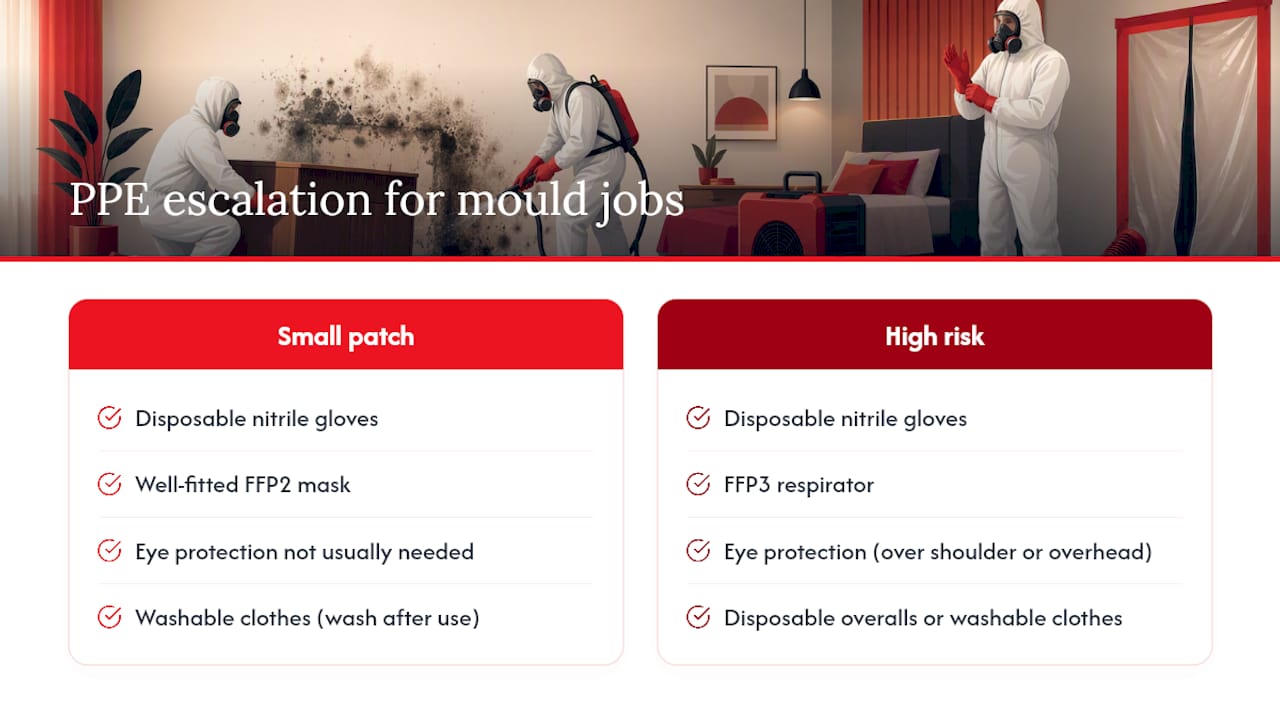
Clothing matters more than most homeowners assume. Wear something you’re happy to wash immediately afterwards, or better, disposable overalls if the area is large, and remove footwear before walking mould-affected dust through the rest of the house.
Once you’re finished, dispose of gloves and masks as you would any other contaminated waste, sealed in a bag rather than loose in the bin. Wipe down any tools, buckets, or brushes you used with the same cleaning solution before storing them, and never reuse a cloth from a mould job on another surface without washing it on a hot cycle first. If you’ve used a fungicidal product, check the label for its own disposal guidance. Some concentrates shouldn’t go down a domestic drain undiluted.
Practitioner perspective: what surveys actually reveal
In most cases we’re called to, moving the furniture and fixing the airflow behind it solves the problem outright. The recurring mistakes are sealing a wardrobe tight against the wall, relying on bleach as a permanent fix rather than a cosmetic one, and ignoring mould that keeps returning after a clean. Before booking a survey, check the gap behind the item, note whether the patch has come back before, and look for any soft plaster nearby.
— Quay
Book a survey with Quay Point Plastering
A reliable alternative to guesswork: rather than selling you a treatment before anyone’s confirmed what’s actually causing the mould, every job starts with a survey that maps the moisture and documents the cause in writing. This means condensation, rising damp, and penetrating damp each get diagnosed correctly before any work is scoped, and the resulting recommendation comes with a written guarantee on the workmanship.

If your case matches any of the thresholds above, a patch over a square metre, mould that keeps returning, or plaster that’s gone soft, the next step is a proper damp and timber survey rather than another round of cleaning. At the first visit, a surveyor checks the affected wall, takes moisture and thermal readings, and talks you through what they’re seeing before anything is proposed. For cases that turn out to be condensation-driven rather than structural, the team also handles black mould removal directly, with the same documented, guaranteed approach. Get in touch to arrange a visit and find out exactly what’s happening behind your walls.
This article is general information, not a substitute for advice from a qualified doctor. Consult a qualified healthcare professional about your own circumstances before acting on anything here.
Sources
- Homes & Gardens — Hidden spot harbouring mould in winter
- HomeDamageHelp — Mould behind wardrobes: why it happens and what to do
FAQ
What are the warning signs of mould exposure in a home?
Persistent coughing, wheezing, skin irritation, and worsening allergy or asthma symptoms that ease when you leave the room are the main signs to watch for. The NHS advises that vulnerable people, including young children and those with respiratory conditions, should have their exposure minimised rather than simply managed.
Is mould on furniture harmful to health?
Mould on furniture can trigger allergy symptoms and breathing problems, particularly for anyone with asthma or a weakened immune system. Fabric surfaces are harder to clean fully than plaster, so a badly affected sofa or mattress is often safer replaced than scrubbed.
Is it safe to sleep in a room with mould?
It isn’t advisable, especially for children, older people, or anyone with a respiratory condition, since ongoing exposure while sleeping means hours of uninterrupted contact with airborne spores. Clean small patches and ventilate the room before returning to normal use, and treat a large or recurring patch as a reason to sleep elsewhere until it’s assessed.
Does black mould ever go away permanently?
Surface mould goes away with correct cleaning and stays away once the underlying moisture problem is fixed, whether that’s better ventilation, more airflow behind furniture, or insulation on a cold wall. If it keeps returning despite doing all of that correctly, the cause usually isn’t condensation, and a survey-led diagnosis is the only reliable way to find out what is.