
100–500mm, Not Metres: Rising Damp Myth for UK Homeowners
100–500mm, Not Metres: Rising Damp Myth for UK Homeowners
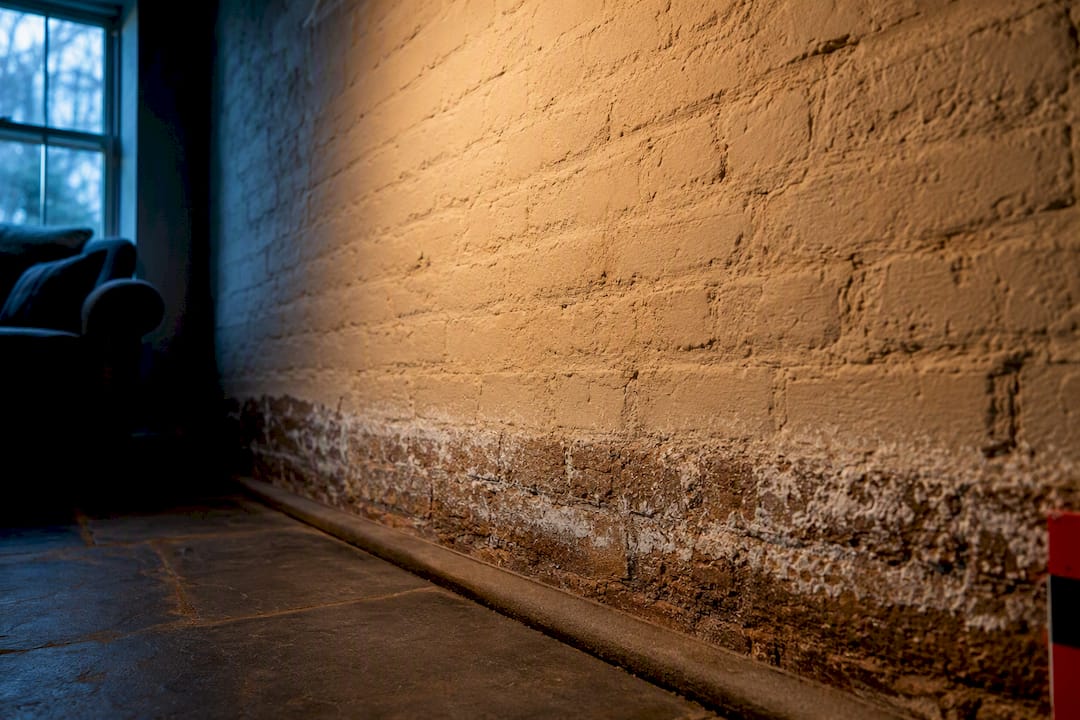
Rising damp is a genuine physical process, but true cases are far rarer than the damp-proofing industry has led homeowners to believe. Capillary action does pull moisture up through masonry, though only to a limited height, and most damp at skirting-board level turns out to be condensation, penetrating damp, or bridging instead. Before anyone recommends chemical injections or new plaster, insist on an evidence-led survey — tide marks, salt profiling, and moisture mapping, not a single meter reading.
TL;DR:
- Rising damp typically only reaches 100 to 500 millimeters, making high tide marks more often caused by external factors or salt contamination.
- Moisture meters frequently provide misleading results because they respond to salts and wall materials, not actual water content.
- Proper diagnosis involves external inspection, salt profiling, moisture mapping, and ruling out condensation and penetration causes first.
- Chemical damp-proof courses are unnecessary in many cases and can cause damage if applied to traditional, breathable building materials.
- A thorough inspection and targeted testing save money and prevent unnecessary treatments by accurately identifying the true cause of dampness.
Table of Contents
- What rising damp technically is and where capillary action stops
- Why the diagnosis is often called a myth
- How a competent survey distinguishes the real cause
- Signs that point to genuine rising damp
- Evidence-based treatments and their real limitations
- Preventative maintenance that avoids unnecessary treatment
- What survey-led practice looks like in the real world
- Historical background and origin of the rising damp myth
- The evidence against widespread rising damp
- How the myth has shaped property sales and building practice
- Modern approaches to diagnosing and treating damp
- When to call a professional versus checking it yourself
- Why the survey-first argument holds up
- Book a survey-led damp assessment with Quay Point Plastering
- Sources
What rising damp technically is and where capillary action stops
Rising damp happens because masonry is porous. Groundwater moves upward through tiny channels in brick, stone, and mortar by capillary action, a process governed by the material’s sorptivity, or how readily it draws in liquid. Evaporation from the wall surface eventually balances the upward pull, and that balance point is what determines how high the damp actually travels.
That ceiling is lower than most people assume. Monitored studies of capillary rise dynamics show that evaporation and material sorptivity settle into a steady-state height that matches what surveyors see on site, rather than the metre-high tide marks often pictured in damp-proofing brochures. Technical guidance from the Society for the Protection of Ancient Buildings puts the typical range at 100 to 500 millimetres, occasionally reaching a metre in unusually porous or poorly ventilated walls.
Several factors decide where a wall sits within that range:
- Wall material: soft, permeable brick or lime mortar draws water further than dense modern engineering brick.
- Evaporation rate: a well-ventilated, heated room dries a wall faster, capping the rise to a relatively low height.
- Ground saturation: persistently wet soil against the footing pushes moisture harder into the base.
- Existing finishes: dense cement render or gypsum plaster traps moisture rather than letting it evaporate, which can push visible symptoms higher up the wall than the water itself has travelled.
Why the diagnosis is often called a myth
A former RICS chief made headlines by stating plainly that rising damp is largely a misnomer in the way it is commonly diagnosed, and the criticism has stuck because the pattern is so consistent. Homeowners see a damp patch, call a damp-proofing firm, and receive a rising damp diagnosis and a quote for chemical injection within twenty minutes. The reasoning behind that scepticism usually comes down to three recurring problems.
- Electrical moisture meters get misread. These meters measure conductivity, not water content directly, and hygroscopic salts left in old plaster can produce a high reading on a wall that is otherwise dry. A meter alone cannot tell you whether the moisture is rising, penetrating, or simply condensing on a cold surface.
- Commercial incentives favour the diagnosis that sells a treatment. Chemical damp-proof course injection has been marketed since the 1960s as a fix for almost any low-level damp, and that history still shapes how some surveys are written up.
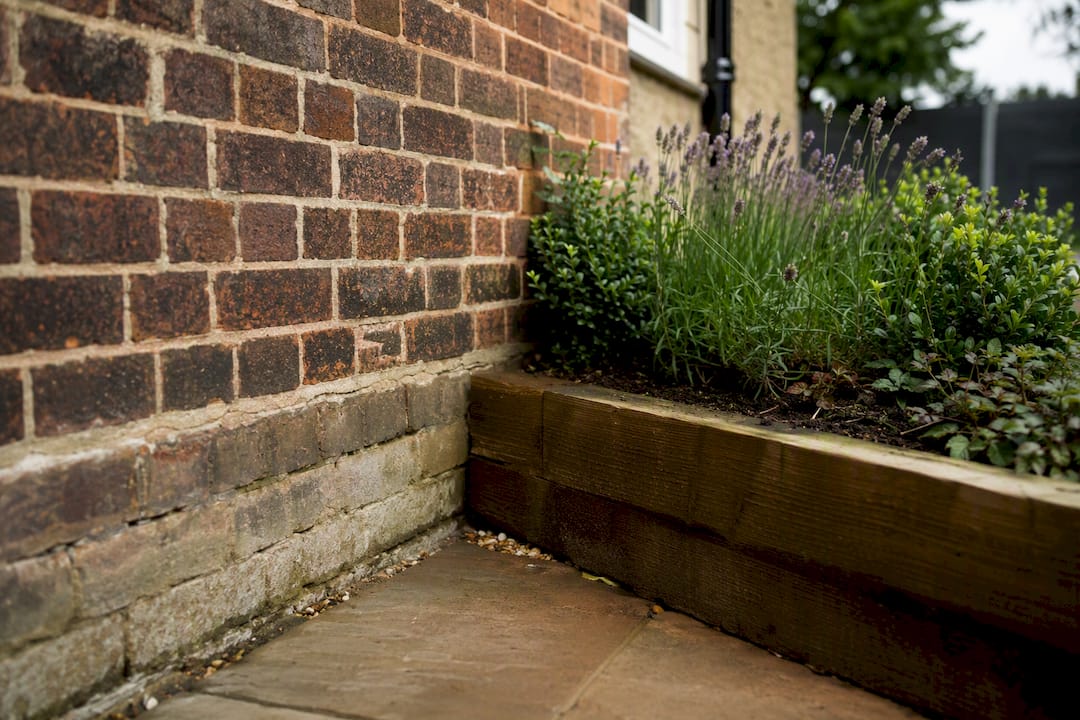
- The real cause usually isn’t rising damp at all. Condensation on cold, poorly ventilated walls, penetrating damp from failed pointing or a leaking gutter, and bridging from a raised patio or flower bed touching the wall above the damp-proof course all produce symptoms that look identical to rising damp from a glance.
A good condensation versus rising damp assessment separates these causes before any treatment is proposed, and that sequencing matters more than the treatment itself.
How a competent survey distinguishes the real cause
A proper investigation starts outside, not with a meter against the internal wall. Surveyors look for the physical conditions that create false positives before they even step inside the property.
- Ground levels and paths butting up against the wall above the original damp-proof course.
- Blocked, cracked, or overflowing gutters and downpipes soaking the base of the wall.
- Failed pointing, cracked render, or missing weep vents allowing water to track in laterally.
- Vegetation or ivy holding moisture against the brickwork.
Inside, the pattern of wetting tells its own story. Genuine capillary rise produces a fairly even band low on the wall with a visible tide line and salt bloom, while penetrating damp tends to follow a localised patch traceable to a specific defect outside, and condensation shows up as generalised dampness on cold surfaces, often the worst on north-facing walls or behind furniture.
Targeted tests confirm which pattern you’re dealing with: salt profiling to check for the nitrates and chlorides associated with ground salts, moisture mapping across the wall rather than a single spot check, and occasionally probe holes or lab-analysed samples where the picture is unclear.
Pro Tip: Ask any surveyor quoting for rising damp treatment to show you the salt profile results and the moisture map, not just a single meter reading. If they can’t produce either, get a second opinion before signing anything.
Signs that point to genuine rising damp
Some indicators do genuinely correlate with capillary rise rather than a lookalike problem, and a competent surveyor weighs several of them together rather than relying on any single sign.
- A clear, roughly horizontal tide line low on the wall, usually within the 100 to 500 millimetre range referenced by SPAB’s technical guidance.
- Fluffy white or yellowish salt efflorescence concentrated at that same low level, consistent with ground salts carried up by moisture rather than airborne condensation.
- Wetting that persists at low level even after external bridges, leaks, and ventilation issues have been ruled out or corrected.
- A wall backing onto consistently saturated ground, a high water table, or a failed or absent damp-proof course confirmed by inspection or building age.
By contrast, damp that worsens sharply after heavy rain and dries out within days points to penetration, not capillary rise. Damp that peaks in winter, clings to cold corners, and eases when heating and ventilation improve is condensation, not rising damp, however similar the staining looks at first glance.
Evidence-based treatments and their real limitations
Treatment should follow diagnosis, not precede it, and the sequence matters. Once bridging, leaks, and ventilation problems are corrected, many low-level damp symptoms resolve without any chemical intervention at all.
- Remove bridges and fix drainage first. Lowering ground levels, clearing gutters, and improving airflow and heating resolves a substantial share of cases that were never rising damp in the first place.
- Consider chemical DPC injection only where capillary rise is confirmed. Property Care Association guidance notes that chemical injection remains the only method with widespread third-party accreditation, yet it carries real limitations. Rubble-filled or flint walls have a discontinuous capillary network that often prevents the chemical from distributing evenly, so an accredited installer should assess wall construction before recommending it.
- Replaster with breathable materials, not gypsum. Where salts have contaminated old plaster, removal followed by a breathable lime-based render lets the wall continue to dry naturally, whereas dense modern plaster traps residual moisture behind it.
- Reserve structural work for confirmed structural causes. A failed physical damp-proof course, bridged cavity, or below-ground defect sometimes needs a physical DPC or masonry repair rather than a chemical fix.
Be wary of any guarantee that promises a permanent fix regardless of the underlying cause. A written guarantee is only meaningful when it follows a documented diagnosis; a blanket promise offered before any survey has taken place isn’t a guarantee, it’s a sales tactic. Conservation guidance is blunt about the risk of getting this wrong: impermeable modern fixes applied to traditional breathable fabric routinely trap moisture rather than resolve it, making the problem worse over time.
Preventative maintenance that avoids unnecessary treatment
Most of the damp problems mistaken for rising damp are preventable with routine maintenance rather than remedial treatment.
- Keep soil, mulch, and paving at least 150 to 200 millimetres below the internal floor level and away from the wall base.
- Clear gutters and downpipes twice a year, and check they discharge well away from the foundation, not against it.
- Cut back climbing plants and ivy that hold moisture against brickwork, and clean splashback surfaces where rain bounces off hard landscaping onto the wall.
- Use breathable lime-based finishes on traditional solid-wall construction rather than cement render or gypsum plaster.
- Improve background ventilation and consistent low-level heating in older properties to help walls dry naturally rather than trapping moisture.
Pro Tip: If a damp patch appears every winter and vanishes by summer, check your gutters and ground levels before booking any treatment. Seasonal damp that tracks the weather is rarely rising damp.
What survey-led practice looks like in the real world
A genuine survey-led approach starts with a visual record of the property, both inside and out, followed by moisture and salt profiling rather than a single meter sweep. Findings get documented and a defined scope of work follows only once the cause is established, not before.
This is deliberately the opposite of quote-first damp-proofing. It means fewer unnecessary chemical injections, because bridging, leaks, or condensation get identified and fixed at a fraction of the cost. Reputable firms back the resulting work with written guarantees and aftercare, because a documented diagnosis is what makes a guarantee meaningful rather than decorative. Homeowners weighing up conflicting advice should treat that documentation trail, survey first, findings second, scope third, as the baseline expectation, not a bonus.
Historical background and origin of the rising damp myth
Chemical damp-proofing as a mass-market trade took off in Britain from the 1960s onwards, as new synthetic injection products gave contractors a fast, standardised sell for almost any damp complaint. Before that, older buildings simply lived with seasonal dampness, managed through ventilation, lime plaster, and drainage rather than chemical intervention.
The commercial model that grew up around injection DPCs rewarded speed over diagnosis. A surveyor employed by, or commissioned to sell for, a damp-proofing company had every incentive to find rising damp, because that’s the fault their product treated. Independent commentary from building professionals has long noted that routine damp-proofing claims were made to justify expensive injections and replastering well beyond the cases where capillary rise was actually present.
That commercial pattern, repeated across tens of thousands of surveys over several decades, is what embedded rising damp so firmly in the public imagination. It became the default explanation for almost any damp patch near skirting board height, regardless of whether the physical evidence supported it. The myth isn’t that rising damp never happens. It’s that the word became a catch-all diagnosis detached from the narrow physical conditions actually required to produce it.
The evidence against widespread rising damp
The strongest pushback against routine rising damp diagnosis has come from within the surveying profession itself, not from outside critics. A former chief of the Royal Institution of Chartered Surveyors stated publicly that rising damp as commonly diagnosed is largely a myth, arguing that condensation, penetrating damp, and bridging account for the overwhelming majority of cases labelled as rising damp on standard surveys.
Capillary modelling backs up the physical limits involved. Monitored studies of capillary rise dynamics in masonry show that evaporation and sorptivity settle into a predictable steady-state height, and that field observations of real walls generally match those modelled limits rather than exceeding them. That’s a meaningful constraint: it means the metre-plus tide marks sometimes used to justify large-scale remedial work aren’t physically consistent with how capillary action actually behaves in most wall constructions.
Surveyors also point to the meter problem as a recurring source of false positives. Electrical moisture meters respond to salt contamination and certain wall materials, not water content alone, so a reading taken in isolation can flag a wall as “wet” when the actual moisture source is condensation or residual hygroscopic salts from a problem fixed years earlier. None of this proves rising damp never occurs. It shows the diagnosis has been applied far more often than the physics or the evidence supports.
How the myth has shaped property sales and building practice
The rising damp myth has real financial consequences of the point of sale. A rising damp mention on a homebuyer survey can trigger a retention, a price renegotiation, or a demand for remedial work, even when the underlying cause is a blocked gutter or a bridged flower bed that costs a fraction of a full chemical DPC installation to fix. Buyers and sellers alike often accept the diagnosis without questioning the evidence behind it, because “rising damp” carries more perceived authority than “poor drainage.”
That dynamic has shaped building practice too. Retrofitting damp-proof courses into perfectly sound period properties became routine trade practice for decades, sometimes damaging traditional lime and brick construction that was never designed to be sealed with impermeable modern materials. Conservation bodies have pushed back hard on this, warning that breathable repair strategies suit historic fabric far better than modern waterproof treatments.
The commercial legacy also affects how mortgage lenders and surveyors treat older housing stock. Pre-1919 solid-wall properties, common across Dorset, Hampshire, and Wiltshire, are disproportionately flagged for rising damp on standard valuation surveys, partly because their construction naturally produces some capillary movement and partly because meter readings on lime-based walls are notoriously unreliable. That flag can affect valuations and lending decisions even where a proper investigation would show the moisture is manageable or entirely unrelated to capillary rise.
Modern approaches to diagnosing and treating damp
Diagnostic practice has moved well beyond the single-meter check that defined damp surveys for decades. Salt profiling, which tests for the specific chlorides and nitrates associated with ground salts, now distinguishes genuine capillary rise from residual salt contamination left by a long-resolved leak. Moisture mapping across a wall, rather than a handful of spot readings, reveals whether wetting follows a pattern consistent with rising damp or one that points to a localised external defect.
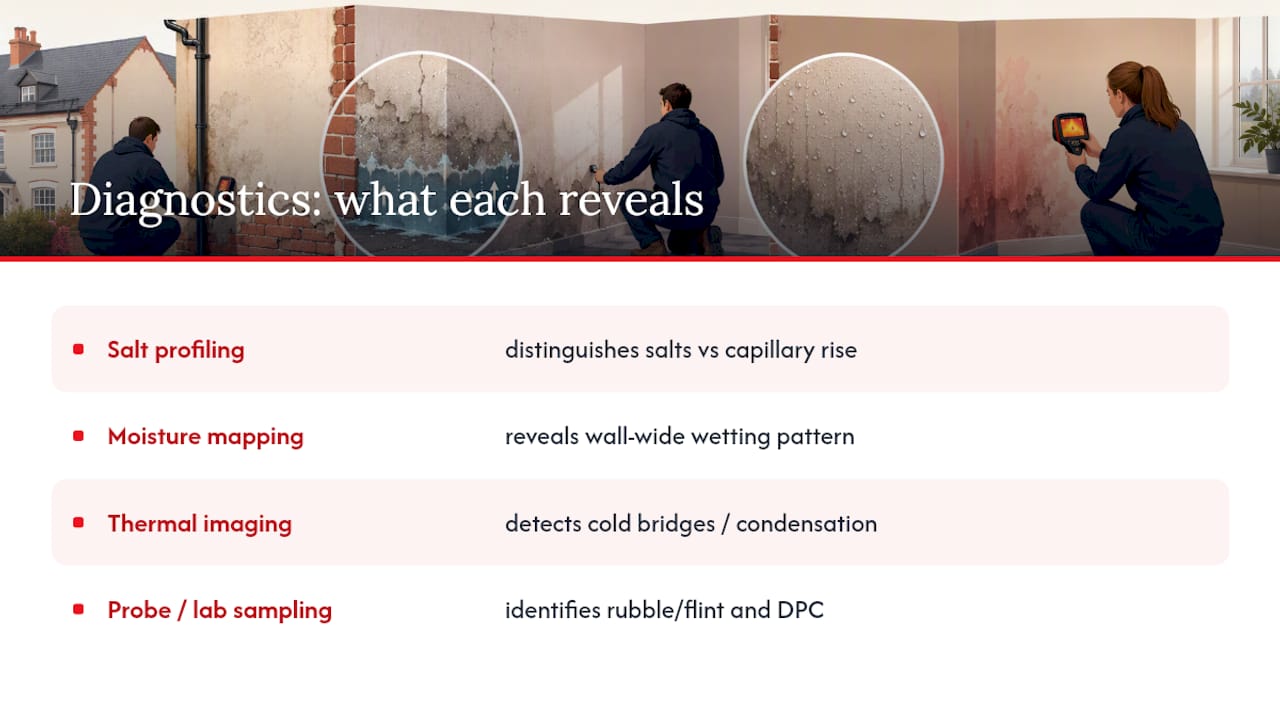
Thermal imaging has also become a practical tool for separating condensation from other causes, since cold bridging and poor insulation show up clearly on an infrared scan in ways a moisture meter simply cannot capture. Where wall construction is uncertain, probe holes or small extracted samples sent for laboratory analysis remove the guesswork around rubble-fill and flint walls, which behave very differently to solid brick when it comes to chemical DPC distribution.
On the treatment side, the shift has been toward proportionality. Ventilation improvements, drainage correction, and breathable lime-based renders are now the accepted starting point rather than the last resort, with chemical or physical damp-proof courses reserved for cases where investigation genuinely confirms capillary rise. A structural and masonry assessment sits alongside this where the damp has caused or coincided with masonry deterioration, since treating the moisture without addressing structural damage rarely produces a lasting result.
When to call a professional versus checking it yourself
Some checks are genuinely worth doing before you pick up the phone. Walk the outside of the property and look for raised ground levels, blocked gutters, cracked render, or vegetation touching the wall above the damp-proof course. These are often the actual cause, and correcting them costs little and might resolve the problem outright.
What you shouldn’t do yourself is diagnose the cause from a hardware-store moisture meter reading. Those meters are genuinely useful in a surveyor’s hands as one input among several, but read in isolation they mislead more often than they clarify, particularly on older lime-plastered walls. Bring in a professional once you’ve ruled out the obvious external causes and the damp persists, once you notice tide marks or salt bloom that don’t correlate with anything visible outside, or if you’re buying a period property and want clarity before committing to a purchase. A pre-purchase damp survey at that stage is considerably cheaper than a post-completion dispute over remedial costs.
Landlords face a slightly different calculus. A tenant reporting damp or mould needs a documented response promptly, both for the tenant’s wellbeing and for the landlord’s own liability, which makes a professional inspection the safer route from the outset rather than a DIY assessment that might miss a penetrating damp source hidden behind a wardrobe.
Why the survey-first argument holds up
The research here supports a fairly uncomfortable conclusion for an industry built on quick diagnoses: most of what gets called rising damp isn’t rising damp at all, and treating it as if it were wastes money without fixing anything. The conventional advice, get a quote, book the injection, replaster, fails precisely because it skips the step that actually matters, working out what’s causing the moisture in the first place.
What’s overrated is the moisture meter treated as a verdict rather than a clue. What’s underrated is patience, walking the outside of a property, checking gutters and ground levels, and taking a salt sample before touching a wall with a drill. Homeowners should prioritise the survey over the solution every time. A three-figure investigation that correctly identifies a bridged flower bed saves thousands compared with a chemical DPC installed on the wrong diagnosis, and it protects a period property’s fabric from treatments it never needed. Get the diagnosis right first. The treatment, whatever it turns out to be, is the easy part.
— Quay
Book a survey-led damp assessment with Quay Point Plastering
Quay Point Plastering is the alternative to the quote-first damp-proofing model this article has been picking apart, an investigation before any treatment is proposed, not after. Across Dorset, Hampshire, and Wiltshire, that means a documented survey identifies whether you’re actually dealing with rising damp, condensation, penetrating damp, or bridging before anyone talks about chemical injections or replastering costs.

Booking starts with a damp and timber survey, which includes external checks, moisture and salt profiling, and a written record of findings. From there, you receive a defined scope of work and a quotation, so you know exactly what’s being treated and why, rather than a generic price for a diagnosis nobody has confirmed. Where the cause turns out to be penetrating damp rather than capillary rise, the penetrating damp investigation service covers the follow-up remedial work, and any resulting damp re-plastering uses breathable materials suited to the wall construction. Every job carries a written guarantee tied to the documented diagnosis, not a blanket promise made before the survey.
If you’re in Dorset, Hampshire, or Wiltshire and want a straight answer before spending on treatment, book a specialist survey and get the evidence first.
Sources
- Rising damp is a myth, says former RICS chief
- Control of dampness (SPAB technical advice)
- Capillary rise dynamics in walls (Hall & Hoff / monitored study)