
UK Tenants' Mould Checklist: Legal Deadlines and What Surveyors Check
UK Tenants’ Mould Checklist: Legal Deadlines and What Surveyors Check
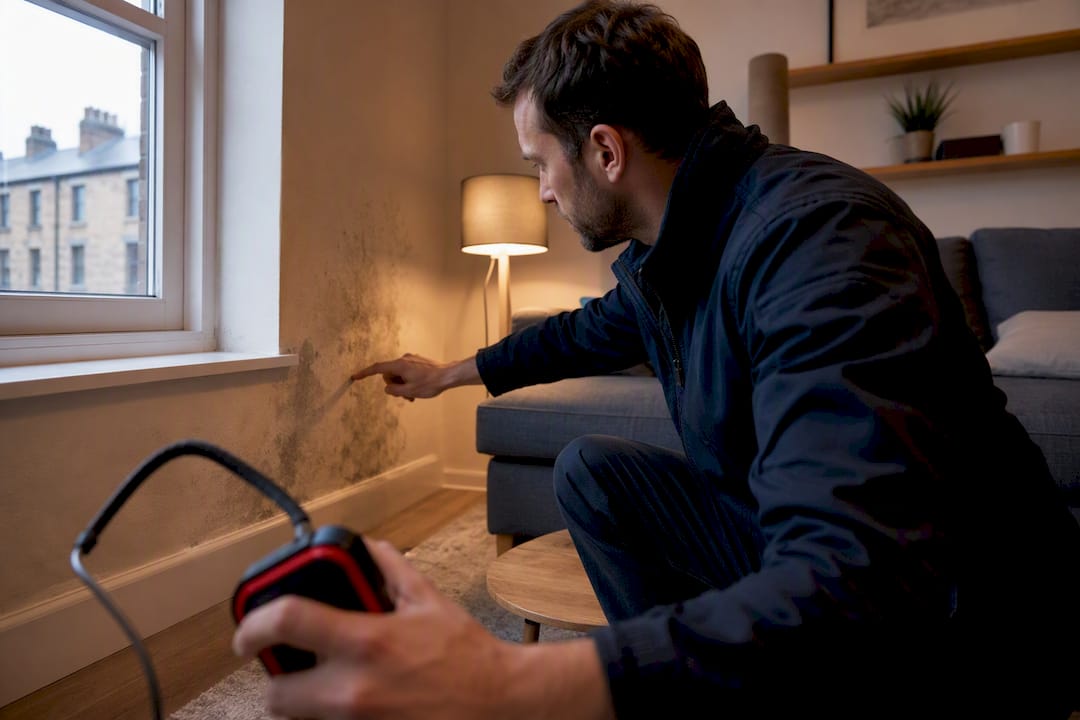
If mould in your rented home comes from a leaking roof, faulty guttering, rising damp or a broken boiler, your landlord is responsible for fixing it. Condensation can involve shared responsibility, but your landlord must still provide working ventilation and heating. Right now: report the problem in writing, photograph it with a date visible, and ask for an inspection. If anyone in the property has breathing difficulties, contact your GP or NHS 111 and consider whether you need to leave immediately.
TL;DR:
- Landlords are responsible for fixing penetrating damp, rising damp, and structural issues causing mould, all of which are defined by specific causes and visible signs.
- Tenants should report mould in writing, photograph it with a date, and keep records, including receipts and witness accounts, to strengthen legal or council actions.
- Immediate health risks from persistent mould warrant contacting a GP or NHS 111, especially for those with breathing difficulties or vulnerable household members.
- Local councils can inspect, score hazards under HHSRS, and enforce repairs through notices if landlords are unresponsive after reasonable warnings.
- Surface cleaning of mould is ineffective without resolving underlying structural or ventilation faults, which often require a professional survey and targeted repairs.
Table of Contents
- Types of damp in rental homes and who is liable
- How to report mould to your landlord and build your evidence
- Legal timelines: Section 11, HHSRS and Awaab’s Law
- What you can safely do while you wait for repairs
- When to call environmental health and what happens next
- Health risks that mean you need to act today
- What a professional damp survey actually checks
- What tenants and landlords both get wrong
- How Quay Point Plastering can help with a professional survey
- Key resources for tenants dealing with mould
- Sources
Types of damp in rental homes and who is liable
Mould in rental homes across the UK almost always traces back to one of three causes, and each one points to a different party.
Penetrating damp comes through the building’s external fabric. A cracked render, a missing roof tile, a blocked or leaking gutter, or a failed seal around a window frame lets water travel inward, and it usually shows as damp patches that get worse after rain. This is structural. It falls squarely on the landlord.
Rising damp happens when ground moisture climbs up through a wall because the damp-proof course has failed or was never installed correctly. You’ll often see it as a tide mark low on internal walls, rarely higher than a metre. Again, this is a fabric defect, not something a tenant caused or can fix with better airing habits.
Condensation is different. It forms when warm, moist air (from cooking, showering, drying laundry indoors) meets a cold surface, and it’s the most common type of damp in flats and older properties with poor ventilation. Here responsibility gets blurred, but not as much as some landlords claim. Government guidance is direct on this point: it’s unreasonable to blame a tenant’s normal household habits as the sole cause of a persistent mould problem, and landlords are expected to make sure ventilation and insulation are adequate.
Under Section 11 of the Landlord and Tenant Act 1985, landlords must keep the structure, exterior, and key installations in proper working order. That duty covers:
- The roof, guttering, and external walls
- Windows, window seals, and frames
- The boiler and heating system
- Extractor fans and any mechanical ventilation
- The damp-proof course and below-ground drainage
If any of those fail and mould follows, the repair bill and the responsibility sit with the landlord’s mould responsibilities under UK housing law, not with you. Genuinely uncertain which type you’re dealing with? A visual guide on identifying rising, penetrating or condensation damp is a useful starting point before you write to your landlord.
How to report mould to your landlord and build your evidence
A verbal complaint is easy to forget and impossible to prove later. Everything from here needs a paper trail.
- Email or use the letting portal, never just a phone call. Written contact creates a timestamp and a record your landlord can’t dispute later.
- Photograph every affected area with the date visible, either through your phone’s metadata or by including a dated newspaper or note in the shot.
- Log every symptom and every contact in a simple calendar or notes app: when the mould appeared, when you reported it, and what response you got.
- Keep every reply, including “we’ll look into it” texts. Silence is evidence too, so note the dates you sent follow-ups and received nothing back.
- Retain receipts for anything you’ve bought to manage the problem, such as dehumidifiers or mould sprays, since these may support a claim later.
- Note any witness accounts, particularly if a neighbour in a similar flat has reported the same issue.
Shelter’s guidance on reporting damp and mould confirms this written, dated approach is exactly what strengthens a tenant’s position if the case escalates to environmental health or a tribunal.
Pro Tip: Resist the urge to repaint or deep-clean the area before a surveyor sees it. Removing the visible mould can also remove the evidence your landlord or an inspector needs to diagnose the actual cause.
A short template helps: state the location of the problem, the date it first appeared, the date of this report, and a request for an inspection within a reasonable timeframe. Attach your photos and ask for a written response confirming next steps.
Legal timelines: Section 11, HHSRS and Awaab’s Law
Three frameworks govern how fast a landlord must act, and which one applies depends on who your landlord is.
Section 11 sets the general repairing obligation for most tenancies, covering the structure and installations mentioned above, but it doesn’t specify exact response times.
HHSRS, the Housing Health and Safety Rating System, is the tool local councils use to assess whether damp and mould in a property amount to a genuine hazard. An environmental health officer scores the severity and likelihood of harm, and a high score can trigger enforcement action against the landlord.
Awaab’s Law adds firm deadlines, but only for social housing tenants. Under this framework, social landlords must:
- Investigate significant damp and mould hazards within a specific short timeframe
- Make the hazard safe shortly after the investigation
- Respond to emergency hazards within 24 hours
These Awaab’s Law timeframes came about after the death of a two-year-old from prolonged mould exposure in a social flat, and they’re the sharpest legal deadline currently in force anywhere in UK rented housing. Private renters don’t get this specific protection yet, though Section 11 and HHSRS still apply to their landlords.
If your home is genuinely unsafe while repairs are pending, your landlord should offer interim measures, such as a dehumidifier, temporary heating, or alternative accommodation while structural work is carried out. Awaab’s Law strengthens the timing expectations in social housing, but it works alongside HHSRS and Section 11 rather than replacing either one.
What you can safely do while you wait for repairs
You shouldn’t have to live with mould for weeks, but there’s a difference between sensible interim steps and treatments that make things worse.
For cleaning, stick to a proper mould-rated cleaning product and wear gloves and a mask. Avoid bleach on porous plaster or wallpaper, since it can bleach the surface without killing the spores underneath, and never sand mould off a wall dry, as that releases spores into the air you’re breathing.
For ventilation and moisture control:
- Run extractor fans in the kitchen and bathroom every time you cook or shower
- Open windows for ten to fifteen minutes after showering, even in winter
- Dry laundry outdoors where possible, or use a vented or condenser dryer rather than radiators
- Keep a low background heat running if you can afford it, since cold walls attract condensation faster than warm ones
Pro Tip: If mould keeps returning within weeks of cleaning it, that’s not a sign you’re cleaning wrong. It usually means there’s an underlying structural or ventilation fault that surface cleaning can never fix.
Ask your landlord to provide or fund a dehumidifier as a temporary measure while permanent repairs are arranged, particularly if a room is unusable. If the property is genuinely unsafe, ask whether decanting to alternative accommodation is appropriate, especially where children, older residents, or anyone with a respiratory condition lives there.
When to call environmental health and what happens next
If your landlord has been notified in writing and hasn’t acted within a reasonable period, typically a few weeks for non-urgent issues, it’s time to bring in your local council.
- Contact your council’s environmental health team and explain that you’ve already reported the issue to your landlord with evidence and dates.
- An officer may inspect the property and assess it under HHSRS, scoring the hazard for severity and likelihood of harm to occupants.
- If the hazard is confirmed, the council can issue an improvement notice ordering the landlord to carry out specific works within a set timeframe, or in serious cases, an abatement notice under statutory nuisance law.
- If your landlord still ignores enforcement action, councils have the power to carry out emergency works themselves and recover the cost from the landlord.
This route, confirmed in Shelter’s guidance on environmental health enforcement, is often more effective than continuing to chase an unresponsive landlord directly.
If your landlord is a housing association or council, and you’re not satisfied with their response, the Housing Ombudsman handles complaints once you’ve exhausted the landlord’s own complaints process. Private tenants dealing with a letting agent should check whether that agent belongs to a redress scheme, which can investigate independently. For serious cases involving financial loss or lasting harm, get advice from Citizens Advice or a solicitor before pursuing a small claims case or a rent repayment order.
One important caution: don’t simply move out. Shelter is clear that leaving a property without seeking council advice first risks being classed as intentionally homeless, which can affect your right to council housing help later.
Health risks that mean you need to act today
Damp and mould aren’t just cosmetic. Government estimates suggest mould affects somewhere between 4% and 27% of homes in England, a range equivalent to roughly 962,000 to 6.5 million households, with private and social renters disproportionately affected.
Mould spores are allergens and irritants. They can trigger or worsen asthma, cause respiratory infections, and pose a heightened risk to young children, older people, and anyone with a compromised immune system. The severity of harm tends to rise with how long and how intensely someone is exposed, so a small patch left untreated for months is more dangerous than a fresh outbreak spotted early.
Treat these as red flags requiring urgent escalation: anyone in the household developing breathing problems, mould covering a large or spreading area, or visible water damage to plaster or ceilings. If you see any of these, contact your GP or NHS 111, keep a written record of any medical advice given, and raise the health impact explicitly in your next written report to your landlord.
What a professional damp survey actually checks
A proper survey goes well beyond spotting the black patch on the wall. A competent surveyor maps where the moisture is visually, then confirms it with moisture meter readings rather than guesswork, tracing the likely ingress route back to its source, whether that’s a failed gutter, a cracked render, or a ventilation gap.
The external fabric gets checked alongside the internal symptoms, because a damp patch on a bedroom wall often has nothing to do with the bedroom itself. Findings should be documented, not just described verbally, and the resulting report should set out the cause, the recommended works, and a realistic timescale and cost.
This matters because surface treatments often fail. Painting over mould or applying a mould-resistant paint without fixing the underlying cause almost always means it returns within months. Typical remedial actions once a cause is confirmed include:
- Damp-proof course (DPC) injection for rising damp
- Structural repairs to render, pointing, or roofing for penetrating damp
- Controlled drying of affected masonry before reinstatement
- Insulation improvements to reduce cold spots that trigger condensation
A genuine professional report comes with a written scope of work and, ideally, a workmanship guarantee, so you know exactly what’s being fixed and what happens if the problem persists.
What tenants and landlords both get wrong
The most common mistake isn’t ignorance of the law. It’s misdiagnosis. Landlords frequently assume mould is a tenant’s fault before anyone has actually traced where the moisture is coming from, and tenants sometimes accept that explanation because they don’t know enough to push back. Every week that misdiagnosis goes unchallenged is a week the underlying fabric defect keeps getting worse, and the eventual repair bill climbs with it.
Two things make a real difference. First, when you email your landlord, ask a direct question: “Will you be arranging an inspection, and by what date?” Vague complaints get vague replies. Second, if a survey does go ahead, ask for the report in writing with a stated cause, not just a list of jobs. A report that says “condensation, improve ventilation” without explaining how that conclusion was reached isn’t worth much if you need to dispute it later.
— Quay
How Quay Point Plastering can help with a professional survey
If you’re a landlord who’s received a mould report, or a tenant who’s asked permission to bring in an independent surveyor, specialist companies carry out survey-led damp and mould inspections across many regions. Inspections typically start with diagnosis, not treatment: visual mapping, moisture readings, and a check of the external fabric, followed by documented findings and a clear scope of work before any remedial work is priced or agreed.

A written report offers important advantages over a quick patch-up job, providing evidence of exactly what’s wrong and why, often backed by a workmanship guarantee once the work is done. For landlords facing a tenant complaint, the landlord damp and mould inspection service gives you a defensible record for compliance purposes. For tenants dealing with black mould specifically, it’s worth understanding what the remediation process actually involves before treatment starts, and landlords unsure how to respond to a tenant’s first report can check what to do if your tenant reports mould. If you’d like a survey booked for a Dorset, Hampshire, or Wiltshire property, get in touch to arrange an inspection and a written scope of work.
Key resources for tenants dealing with mould
For further reading beyond this guide, GOV.UK’s guidance on damp and mould health risks covers the health evidence in detail. Shelter England sets out tenant reporting rights step by step, and their guidance on moving out is essential reading before you consider leaving a property. Anyone conducting or requesting a formal property inspection may also find this property inspection checklist a useful general reference for what to document.
This article is general information, not a substitute for advice from a qualified doctor. Consult a qualified healthcare professional about your own circumstances before acting on anything here.
Sources
- Understanding and addressing the health risks of damp and mould in the home
- Damp and mould in private rented homes - Shelter England