
Landlord mould responsibilities UK: the law, timelines and fixes
Landlord mould responsibilities UK: the law, timelines and fixes
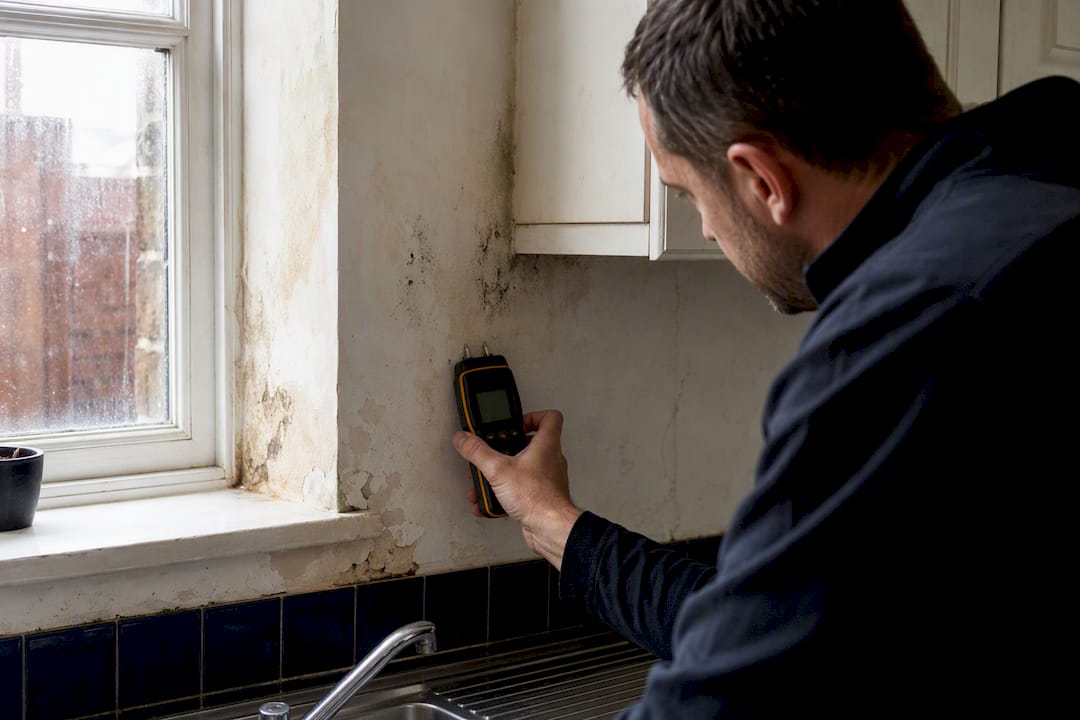
In the UK, landlords are generally responsible for mould caused by structural failures, maintenance faults or inadequate building fabric. Where a property lacks proper ventilation, insulation or a working heating system, the landlord usually carries the liability even if condensation looks like the immediate trigger. Tenants should report the problem in writing, date the message, and keep everything that follows.
That single principle sits behind most disputes over landlord mould responsibilities UK wide: who caused the damp, and who had the power to stop it. The law backs this up. Section 11 of the Landlord and Tenant Act 1985 obliges landlords to keep the structure, exterior and installations for water and heating in good repair. The Homes (Fitness for Human Habitation) Act 2018 lets tenants take unfit conditions to court directly. The Housing Health and Safety Rating System (HHSRS) gives local authorities a formal method for scoring damp and mould as a hazard. And Awaab’s Law, now in force for social housing with wider implications on the horizon, sets hard deadlines for investigation and repair.
If you’ve just spotted mould creeping across a bedroom wall, here’s what to do in the first 24 to 48 hours:
- Report it in writing to your landlord or letting agent, and keep a copy with the date.
- Photograph the mould, the affected area, and any damaged belongings.
- Ventilate the room safely, but don’t treat this as a substitute for reporting the cause.
- Note down any health symptoms, especially in children, older residents or anyone with respiratory conditions.
- Keep every reply, or non-reply, from your landlord in one folder or email thread.
Pro Tip: A text message counts as written notice, but an email or letter creates a clearer timestamp. Whichever you choose, always ask for acknowledgement so there’s no argument later about when the clock started.
Key Takeaways
Landlords are legally responsible for mould caused by structural defects, failed installations or inadequate heating and ventilation, and must act within increasingly strict timeframes to avoid enforcement action.
| Point | Details |
|---|---|
| Report in writing, always | Date every mould report and keep photos, correspondence and health notes together. |
| Know your legal anchors | Section 11, HHSRS, the Fitness for Human Habitation Act and Awaab’s Law all shape landlord liability. |
| Cause determines liability | Rising and penetrating damp point to structural failure; condensation depends on the property’s ventilation and heating. |
| Diagnose before treating | Fix the underlying cause first, then remediate the mould, then verify the fix has worked. |
| Escalate methodically | Use internal complaints, then Environmental Health, then the Ombudsman or courts if needed. |
| Document everything | Written findings, contractor reports and follow-up checks are the strongest defence against enforcement. |
Table of Contents
- Landlord mould law UK: how to report it and what response times apply
- Mould legal obligations landlord must meet under UK housing law
- Rising, penetrating or condensation: why the cause changes who pays
- What a proper landlord inspection and repair process looks like
- What to do if your landlord won’t fix a mould problem
- Preventing mould before it becomes a legal problem
- What a credible specialist damp survey actually delivers
- An enforcement-aware view of who really carries the risk
- Sources
Landlord mould law UK: how to report it and what response times apply
Reporting mould properly matters more than most tenants realise. A vague comment to a letting agent in passing (“there’s a bit of damp in the bathroom”) rarely triggers a landlord’s legal obligations in any provable way. A dated, detailed written report does.
What to include in your report
- The room or rooms affected, and roughly how far the mould has spread.
- Clear photographs showing the extent and pattern of the mould.
- Any health effects you or household members have noticed, particularly coughing, breathing difficulties or skin irritation.
- A note of any previous times you’ve reported damp or mould in the same property.
- A request for a response and, ideally, an inspection date.
Once that report lands, timescales start to matter. Awaab’s Law, introduced following Awaab Ishak’s death from prolonged exposure to mould, now requires social landlords to investigate reported hazards within strict windows and to act immediately where there’s an emergency risk to health. Investigations must begin quickly, emergency hazards need attention within 24 hours, and significant hazards typically require remediation to start within days rather than weeks.
These duties currently bind social housing providers most tightly. Private landlords aren’t yet held to the exact same statutory clock, but the direction of travel is clear: the Renters’ Rights Act extends comparable protections into the private rented sector, and Awaab’s Law is expected to widen its reach from 2026 onwards. In practice, most tribunals and Environmental Health teams already treat a similar standard as reasonable for any landlord, social or private.
A landlord who takes reporting seriously does a few things immediately:
- Acknowledges the report in writing within a day or two, confirming what’s been received.
- Books an inspection promptly rather than requesting more photos as a delaying tactic.
- Sets out, in writing, what will happen next and roughly when.
That acknowledgement isn’t just good manners. It starts the clock that later determines whether a landlord met their obligations if the case ever reaches Environmental Health, the Housing Ombudsman, or a tribunal. Landlords who ignore reports, or who reply with nothing more than “run a dehumidifier,” tend to fare badly once a case is examined properly. If you’re a landlord unsure how to respond to a first report, Quay Point Plastering’s guidance on what to do when a tenant reports mould sets out a clearer sequence than most letting agents provide.
Mould legal obligations landlord must meet under UK housing law
Three pieces of law do most of the heavy lifting here, and understanding how they interact explains why so many mould disputes end up favouring tenants once they escalate.
Section 11 of the Landlord and Tenant Act 1985 is the foundation. It requires landlords to keep the structure and exterior of a dwelling, plus installations for water, gas, electricity, and space and water heating, in proper working order. If mould traces back to a leaking roof, failed guttering, a broken damp proof course, or an inadequate heating system that leaves a home too cold to ventilate properly, that’s a structural or installation failure. Section 11 puts the responsibility for damp in rentals squarely on the landlord’s desk in those cases.
HHSRS, the Housing Health and Safety Rating System, is the tool Environmental Health officers use to assess whether damp and mould pose a genuine hazard rather than a cosmetic nuisance. Officers score the likelihood and severity of harm, and where a property scores as a Category 1 hazard, the local authority has a duty to act. That can mean an improvement notice forcing the landlord to carry out works within a set period, or, in urgent cases, emergency remedial action carried out by the council itself, with costs recovered from the landlord afterwards.
The Homes (Fitness for Human Habitation) Act 2018 gives tenants a more direct route: the ability to take a landlord to court if the home is unfit to live in, without waiting for the council to intervene first. Courts can order landlords to carry out repairs and award damages. Where a landlord has taken rent while a property was genuinely unfit, rent repayment orders can follow in serious cases, alongside potential fines that can run into thousands of pounds for the worst breaches.
The consequences for landlords who ignore all of this go beyond compensation. A confirmed Category 1 hazard, an improvement notice, or a fitness-for-habitation judgment against a landlord’s name is a matter of public record in some cases, and it makes future mortgage applications, insurance renewals and licensing checks harder. Environmental Health inspections under HHSRS remain the most decisive enforcement route in practice. Landlords who can demonstrate a paper trail of timely inspections and completed remedial works are far less likely to face formal notices at all.
Rising, penetrating or condensation: why the cause changes who pays
Not all damp is the same, and the type usually tells you who’s responsible before a surveyor even arrives.
Rising damp shows itself as tide marks near skirting board height, crumbling plaster, and white salt deposits on lower walls. It’s caused by groundwater moving up through masonry where the damp proof course has failed or was never installed correctly. This is a structural issue, squarely within a landlord’s Section 11 duties.
Penetrating damp appears as damp patches that worsen after rainfall, often higher up a wall, around window reveals, or near roof junctions. Look for staining that tracks a specific path from an external defect, cracked render, a missing roof tile, a blocked gutter overflowing onto brickwork. Again, this points to a fabric failure the landlord is obliged to fix.
Condensation is different in character: it appears as black speckled mould on cold surfaces, often in bathrooms, on north-facing walls, around window frames, and behind wardrobes pushed against external walls. It results from warm, moist air meeting a cold surface, and its causes sit in a genuinely grey area.
GOV.UK’s own guidance for rented housing providers is explicit that landlords should identify the root cause rather than assume tenant behaviour is to blame. Where a property has no working extractor fan, single glazing that streams with condensation every winter, or heating too expensive to run consistently, the landlord typically remains liable even if the tenant is drying washing indoors. Investigators are increasingly sceptical of “lifestyle” defences unless the property itself gives tenants a realistic way to avoid the problem.
Pro Tip: If you’re a tenant unsure which type you’re dealing with, take a photo now and check it against a proper comparison. Quay Point Plastering’s guide to rising, penetrating or condensation walks through the visual differences in more detail than most letting agents will explain over the phone.
What a proper landlord inspection and repair process looks like
A landlord who takes a phone photo, decides it’s “just condensation,” and posts a mould spray through the letterbox hasn’t inspected anything. Real diagnosis takes a bit more rigour, and it’s the difference between a genuine fix and a repeat call-out six months later.
GOV.UK guidance is clear that in-person inspections are preferable to assessing photos alone, because photographs can’t show air movement, surface temperature, or the smell that often gives away an active moisture source. The sequence that actually resolves mould looks like this:
- Inspect in person. Walk the affected rooms, check behind furniture, and look at ventilation, heating and insulation as a whole system rather than at the mould patch in isolation.
- Diagnose the cause. Bring in a qualified surveyor if the source isn’t obvious, particularly where rising or penetrating damp is suspected.
- Fix the building fabric or system first. Repair the roof, clear the gutter, renew the damp proof course, fit or repair an extractor fan, upgrade inadequate heating or add insulation, whatever the diagnosis points to.
- Remediate the mould itself. Clean or treat affected surfaces, replaster where mould has taken hold in the plaster, and redecorate.
- Verify the fix worked. A follow-up visit weeks later confirms whether the underlying cause has actually been addressed, not just masked.
Typical remedial works include gutter and roof repairs, damp proof course installation or renewal, wall and loft insulation, extractor fan fitting, and heating system upgrades. In the rare cases where a property is genuinely unliveable during works, particularly where black mould has affected a large area or a vulnerable resident’s health is at risk, temporary rehousing may be the responsible option rather than asking someone to live through a full remediation.
Documentation throughout this process isn’t optional paperwork, it’s the landlord’s main defence if the case ever reaches a tribunal. Keep written findings from the inspection, contractor quotes, invoices for completed work, and notes from the follow-up check. Documenting the full repair chain, from the original tenant report through to the completion date, is consistently the strongest evidence landlords can produce if a rent repayment order or improvement notice is ever threatened.

Pro Tip: Ask any contractor for a written scope of works before treatment begins, not after. A report that states the probable cause, lists the necessary works in priority order, and gives a timetable is the standard you should expect, not a bonus.
What to do if your landlord won’t fix a mould problem
Most disputes never need to reach this stage, but if a landlord has ignored written reports or done cosmetic patching without addressing the cause, escalation follows a fairly predictable path.
Step one: exhaust the internal complaints procedure. Most letting agents and larger landlords have a formal complaints process. Use it, and keep copies of everything. This step matters even if it feels pointless, because both the Housing Ombudsman and the courts expect to see that you gave the landlord a fair chance to respond first.
Step two: contact your local authority’s Environmental Health team. You can ask for an HHSRS inspection directly. An Environmental Health Officer can visit, assess the hazard, and issue an improvement notice compelling the landlord to act within a set timeframe. In serious cases, the council can carry out emergency remedial work itself and recover the cost from the landlord.
Step three: use the right redress scheme for your landlord type. Tenants of social landlords can escalate unresolved complaints to the Housing Ombudsman, which has published specific expectations around damp and mould policies. Private tenants generally pursue redress through their landlord’s mandatory scheme, or, for the most serious cases, through the county court or First-tier Tribunal under the Homes (Fitness for Human Habitation) Act.
Build your case with a clear evidence file before you escalate:
- Every written report and the landlord’s response (or lack of one).
- Dated photographs showing progression over time.
- Medical notes if health has been affected.
- Any contractor reports commissioned independently.
- Receipts for anything you’ve had to buy or replace because of the mould.
Landlords who can show timely inspections and a documented remedial programme are far less likely to face improvement notices or fines once a case is properly examined. That cuts both ways: tenants with a thorough, dated paper trail are in a far stronger position too, whichever route they end up using.
Preventing mould before it becomes a legal problem
Most mould disputes are entirely avoidable, and the landlords who avoid them tend to follow a similar pattern of routine, unglamorous maintenance rather than reactive firefighting.

An annual inspection schedule that specifically checks high-risk areas, bathrooms, kitchens, window reveals, and behind large furniture against external walls, catches condensation issues while they’re still a wipe-clean problem rather than a replastering job. Industry guidance from bodies including the National Residential Landlords Association consistently points to these same trouble spots as the places small issues turn structural if left unchecked.
Cost-effective prevention rarely requires major capital works:
- Fit or service extractor fans in bathrooms and kitchens so moist air actually leaves the building.
- Check loft and wall insulation isn’t missing or compressed, since cold spots are where condensation forms first.
- Test that heating systems work across the whole property, not just the rooms a landlord happens to see.
- Clear gutters and downpipes every autumn before penetrating damp gets a chance to start.
- Deal with minor repairs, a cracked render patch, a loose tile, promptly rather than letting them become bigger jobs.
If a dispute ever reaches Environmental Health or a tribunal, an inspection log, a documented maintenance programme, and evidence that tenants were given clear guidance on ventilation all demonstrate due diligence. That paper trail is frequently the difference between a landlord who’s treated fairly and one who isn’t.
What a credible specialist damp survey actually delivers
A tenant’s mould report deserves more than guesswork, and a landlord acting on guesswork usually ends up paying twice. Quay Point Plastering’s approach starts with a visual symptom map, recording the location, pattern and spread of damp before reaching for a moisture meter. Targeted testing follows only where the visual evidence doesn’t already answer the question, which keeps landlords from paying for unnecessary invasive works.
A competent contractor’s report, whoever carries it out, should give you:
- A stated probable cause, not a vague reference to “damp” or “condensation” as a catch-all.
- A prioritised list of remedial works, distinguishing urgent structural fixes from cosmetic finishing.
- A realistic timetable for completion.
- A written guarantee on workmanship.
A diagnostic report that skips straight to treatment without stating the cause tells you almost nothing about whether the problem will return. The scope of work only means something once the cause has been established and written down.
Landlords who commission this kind of survey aren’t just solving the immediate problem. They’re building the exact documentation that protects them if Environmental Health or a tribunal ever asks how the property has been maintained. Quay Point Plastering’s landlord damp and mould inspection service is built around that documented, survey-first process across Dorset, Hampshire and Wiltshire.
If you’re a landlord facing recurring damp after wet weather, or a property that’s never quite dried out since a leak, a proper damp and timber survey identifies the cause before any treatment is proposed, and every scope of work comes with a written guarantee. That’s the standard worth insisting on, whoever you instruct.
An enforcement-aware view of who really carries the risk
The conventional advice on mould, “improve ventilation, run a dehumidifier, wipe it down with bleach,” treats a legal and structural problem as a housekeeping one. That’s where most disputes go wrong. The law, from Section 11 through to Awaab’s Law, is built around cause, not symptoms. A landlord who cleans mould without diagnosing why it appeared hasn’t discharged their duty; they’ve delayed the next complaint.
What’s genuinely underrated is documentation. Tenants who keep a dated, photographic record from the first report tend to get faster resolutions, not because landlords are shamed into acting, but because a proper paper trail removes the ambiguity that lets slow responses drag on. Landlords who commission a proper survey rather than a quick patch-up protect themselves the same way.
If you take one thing from this: get the cause identified in writing before anyone touches a paintbrush. Everything else, timelines, remedies, enforcement, follows from that single step.
— Quay
This article is general information, not a substitute for advice from a qualified doctor. Consult a qualified healthcare professional about your own circumstances before acting on anything here.