
Homeowners: Damp proof paint myths that prompt repainting in 18 months
Homeowners: Damp proof paint myths that prompt repainting in 18 months
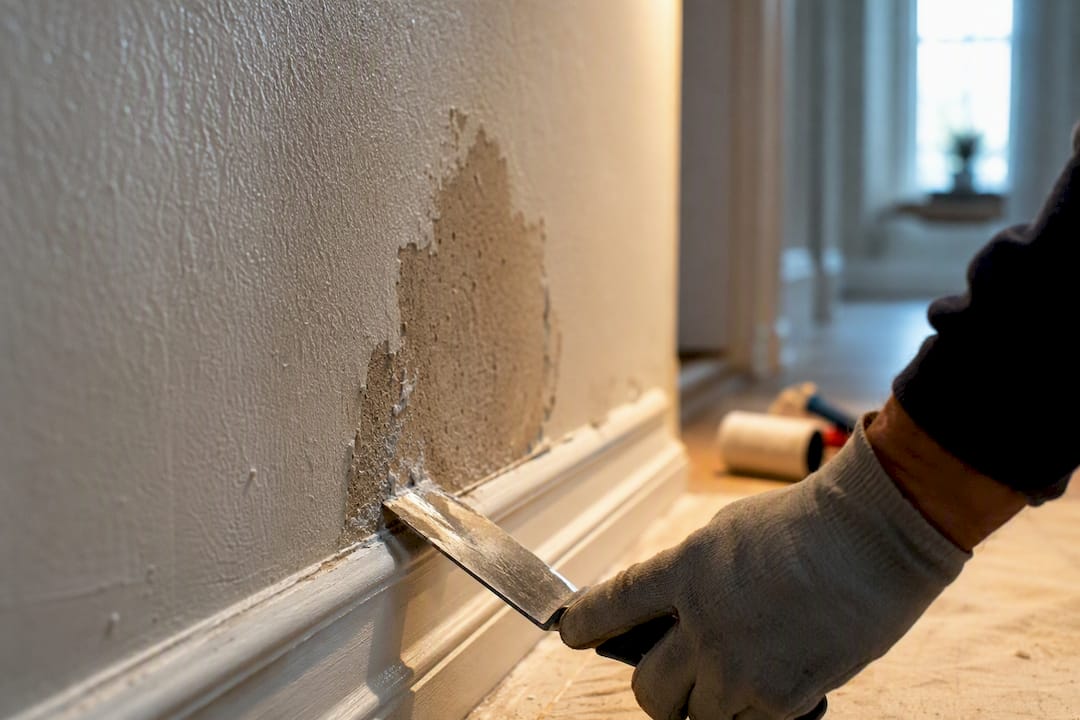
Damp proof paint slows moisture that’s already passing through a wall, and it isolates the salts left behind, but it never stops water getting in. It’s a finishing product, not a repair. If your wall is actively wet, painting over it just hides the problem while it keeps growing behind the surface. Sort the source first. Paint comes after, if at all.
TL;DR:
- Damp proof paint only isolates residual moisture and salts but does not address the underlying cause of active damp or water ingress.
- Applying the wrong type of damp proof paint to incompatible substrates can trap moisture, causing long-term structural damage and hidden decay.
- Success in damp proofing depends on thoroughly repairing the moisture source before painting, not just cosmetic improvements from surface coatings.
- Professional damp surveys assess moisture patterns, salt deposits, and external factors, providing targeted solutions instead of quick cosmetic fixes.
- Permanent solutions like installing or repairing damp proof courses and improving ventilation are more effective than relying solely on paint.
Table of Contents
- What damp proof paint myths get wrong about how it actually works
- Debunking common myths about damp proof paint
- When damp proof paint is the right call and how to prepare for it
- Risks of misuse: how paint can make problems worse
- Alternatives and permanent fixes worth considering first
- How a professional damp survey actually works
- Why we favour diagnosis over quick fixes
- Getting a survey and quote from Quay Point Plastering
- Sources
What damp proof paint myths get wrong about how it actually works
Damp proof paint sits on the surface of a wall and forms a barrier. It doesn’t dry out masonry, seal a failed damp proof course, or stop rainwater finding its way through a cracked render. What it does well is block residual moisture vapour from reaching the decorated surface once the original cause has been dealt with, and it isolates hygroscopic salts that would otherwise pull dampness back through fresh plaster for months.
Manufacturer guidance is consistent on this point: damp proof paint forms a surface moisture barrier and isolates salts but does not cure rising damp or structural water ingress, and it works best once that moisture source has already been repaired. There are two broad families worth knowing:
- Impermeable damp blocking paints create a hard, non porous film, useful on cellar walls or masonry with no breathable finish to protect.
- Breathable, fungicidal emulsions allow vapour to escape while resisting mould growth, which suits older or solid wall properties.
Getting that choice wrong is one of the most common damp proof paint misconceptions we see. Applying the wrong type to the wrong substrate doesn’t just waste a tin of paint; it changes how the wall behaves for years afterwards.
Debunking common myths about damp proof paint
Most damp proofing myths trace back to one habit: judging success by whether the staining disappears, not by whether the water stopped. Here’s where that goes wrong.
- Myth: paint cures rising damp. Reality: rising damp needs a functioning damp proof course, not a coating. Paint can mask the tide line for a season, but the moisture will find a new route, often higher up the wall or through the skirting.
- Myth: any damp proof paint stops condensation. Reality: condensation is caused by warm, moist air meeting a cold surface. Ventilation, extract fans, and insulation address the cause. Paint alone changes nothing about the humidity in the room.
- Myth: penetrating damp will dry out once painted. Reality: if water is entering through a defective gutter, cracked render, or failed flashing, painting the inside wall traps that water behind an impermeable layer instead of stopping it.
- Myth: paint is a like-for-like alternative to a damp proof course. Reality: a DPC is a physical or chemical barrier built into the wall structure. A tin of paint on top of plaster has no equivalent function, whatever the label implies.
- Myth: if the staining is gone, the job’s done. Reality: [Structured Insight: Confusion persists because temporary cosmetic improvement after painting is often mistaken for a permanent cure] Practitioners regularly see the same pattern: paint goes on, the wall looks better for months, then damp resurfaces in a new spot because the underlying ingress was never fixed.
These myths persist because paint genuinely does improve appearance in the short term, and that visible change is easy to mistake for a fix. The plausibility is real. The permanence isn’t.
When damp proof paint is the right call and how to prepare for it
Damp proof paint earns its place in three situations: sealing residual moisture after a damp proof course injection has cured, decorating a wall after a genuine repair, or lightly protecting a dry cellar wall against occasional dampness. Outside those cases, it’s the wrong tool.
Preparation decides whether it lasts. Skip a step and you’re repainting within a year.
- Confirm the wall is genuinely drying, not just cosmetically dry to the touch.
- Remove efflorescence and hygroscopic salt deposits before priming, since trapped salts will draw moisture straight back through.
- Allow proper drying time after any repair, which is often measured in weeks per centimetre of wall thickness, not days.
- Choose a breathable formulation with fungicidal additives for solid or older walls, and check the VOC content on the product label.
Pro Tip: Test a small patch first and leave it a fortnight before committing the whole wall. If salt bloom or bubbling appears, the wall isn’t ready, whatever the calendar says.
Risks of misuse: how paint can make problems worse
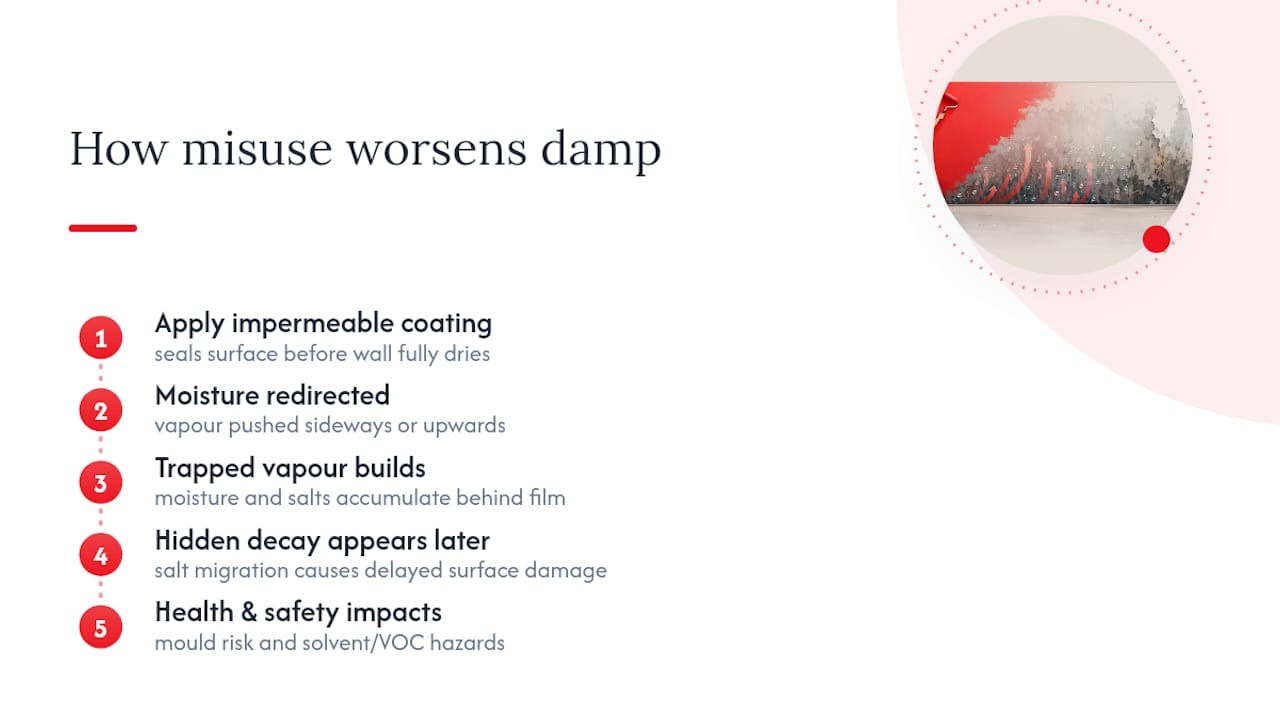
Applying an impermeable coating before a wall has fully dried, or over a substrate that was never meant to be sealed, changes how moisture moves through the structure rather than removing it. Vapour that could once escape through breathable plaster gets pushed sideways or upwards instead, often surfacing somewhere less convenient months later.
Damp proof coatings can mask surface staining, and when applied to the wrong substrates they can trap moisture and cause long term damage, particularly on lime plasters and traditional masonry built to breathe. The consequences compound over time.
Trapped vapour behind an impermeable film drives salt migration into new areas of the wall, and the resulting decay can stay hidden for months before it shows on the surface again.
Beyond structural risk, there’s a health dimension. Exposure to damp and mould is linked to increased respiratory health risks, so painting over active mould rather than removing its cause delays the fix while the air quality in that room stays compromised. There’s also a practical safety point that gets overlooked: construction coatings and solvents carry their own hazards, so always follow the product safety data sheet and favour low VOC formulations, especially in enclosed spaces like cellars.
Alternatives and permanent fixes worth considering first
Before any tin of paint goes near a wall, the question worth asking is: where is the water actually coming from? Permanent fixes address that question directly.
- A correctly installed or repaired damp proof course deals with rising damp at its source, not its symptom.
- Repointing, roof repairs, and flashing work close the gaps that let rain penetrate solid walls, often the real cause behind what looks like rising damp.
- Tanking or cavity membrane systems, followed by appropriate replastering, give below ground and cellar spaces a proper waterproofing layer rather than a cosmetic one.
- Ventilation and extract fans cut condensation at the point it forms, which no paint product can do.
On solid or period walls, breathable systems such as sprayed cork or breathable renders are often preferable to impermeable coatings, because they let moisture vapour escape rather than building up behind the surface. Working out which category your problem falls into starts with knowing the difference between rising, penetrating, and condensation damp, since each demands a different fix entirely.
How a professional damp survey actually works
A proper survey starts with what’s visible, not with a moisture meter reading in isolation. That means checking staining patterns, salt deposits, and skirting condition, then mapping moisture readings across the wall to see whether they match rising damp, penetrating damp, or condensation. External inspection follows, checking gutters, render, pointing, and ground levels against the house.
A credible report should include:
- Documented findings with photographs, not just a verbal opinion on site.
- A defined scope of work, so you know exactly what’s being fixed and why.
- Realistic timescales for drying and remedial work.
- A written guarantee on any workmanship carried out.
A good damp and timber survey exists precisely to stop cosmetic fixes turning into long term failures. If a problem has come back more than once, or you can’t identify where the moisture is entering, that’s the point to book a survey rather than reach for another tin of paint.
Why we favour diagnosis over quick fixes

Repeated cosmetic fixes on the same wall usually mean the same thing: nobody ever found the actual source. We’ve heard the pattern often enough to recognise it instantly. Paint goes on, the stain vanishes, then it reappears eighteen months later a few inches further along the wall.
Short term, dry the room out and keep it ventilated. If the problem returns, book a survey before you paint again.
— Quay
Getting a survey and quote from Quay Point Plastering
Quay Point Plastering is the alternative to guessing with a tin of paint: every job starts with a survey, not a sales pitch, so you get documented findings and a defined scope of work before anyone recommends treatment.

That survey-led approach covers rising and penetrating damp, condensation and black mould, timber decay, and cellar waterproofing, backed by written guarantees on the workmanship once repairs are agreed. With years of experience diagnosing these exact patterns, the aim is straightforward: fix the cause, not the symptom, so you’re not repainting the same wall again next year. If damp keeps appearing after rain or you’ve noticed it returning despite previous treatment, the practical next step is a proper inspection. You can book a damp and timber survey or check the damp after rain page first if that matches what you’re seeing.
Sources
- Damp proof paint: what it is, how it works & when to use it (Kingfisher Building Products)
- Damp‑proof paint for interior walls: is it the best solution? (Greencork)
- Damp and mould indoors (NHS Inform)
- Hazardous substances: solvents (HSE)