
Black mould in a bedroom: causes, health risks and fixes
Black mould in a bedroom: causes, health risks and fixes
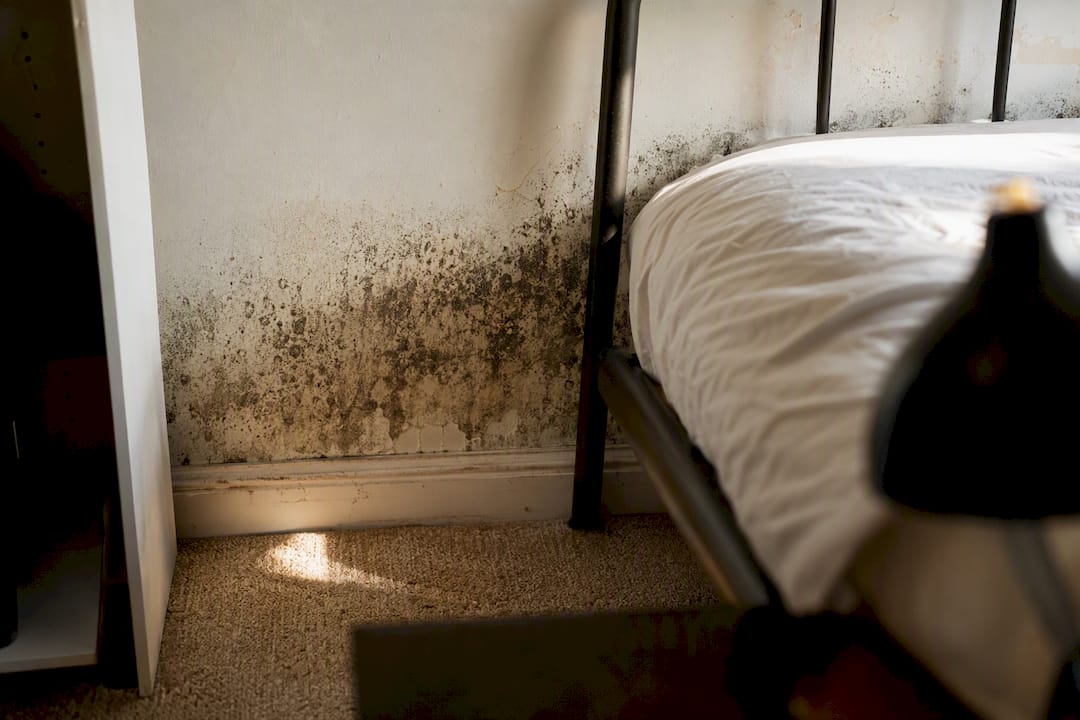
Black mould beside your bed almost always points to excess moisture, not a mystery toxin, and it should be dealt with promptly. Ventilate the room, note the size and location of the patch, and keep vulnerable occupants out of that room until it is treated. Escalate to a professional survey immediately if the patch exceeds about one square meter, keeps returning within weeks, or a child, asthmatic, or immunocompromised person sleeps there.
TL;DR:
- Mould patches over one meter squared or recurring within weeks should prompt professional investigation rather than DIY cleaning.
- Vulnerable individuals such as children, asthmatics, or immunocompromised occupants should avoid sleeping in rooms with active mould until it is fully removed.
- Moisture sources like leaks, penetrating damp, rising damp, or poor ventilation must be fixed to prevent regrowth after cleaning.
- Inspect for visual signs such as black spots, musty smell, peeling paint, or cold spots, and use moisture meters or thermal imaging for accurate assessment.
- Regular precautions include ventilating with extractor fans, controlling indoor humidity between 30% and 50%, and ensuring furniture is not blocking airflow behind walls.
Table of Contents
- What causes black mould in bedrooms
- How black mould affects health and who is most at risk
- How to inspect and assess mould in a bedroom
- How to remove small patches safely: step-by-step DIY
- When mould means a building defect: what a professional survey involves
- How to stop mould coming back: practical prevention for bedrooms
- Quay Point Plastering’s field perspective and proof points
- How Quay Point Plastering can help: services and next steps
- Sources
What causes black mould in bedrooms
Condensation is the culprit behind most bedroom mould. Each sleeping adult releases somewhere between 300 and 500 ml of moisture overnight through breathing and skin, and that warm, humid air drifts until it meets a cold surface, usually an external wall, a window reveal, or the corner behind a wardrobe. The moisture condenses, the surface stays damp, and mould spores that are already present in every home find exactly the conditions they need to establish a colony. Well-insulated, well-sealed bedrooms can actually make this worse, because modern draught-proofing traps that moist air with nowhere to go unless you ventilate deliberately.
Condensation is not the only cause, though it is the most common one:
- A slow leak from a pipe, roof, or gutter that has gone unnoticed for weeks or months
- Penetrating damp coming through an external wall, often near a window sill or chimney breast
- Rising damp affecting a ground-floor bedroom with a failed or missing damp-proof course
- Poor extraction in an adjoining bathroom or kitchen, pushing humid air into the bedroom
- Laundry dried indoors on radiators or airers, which adds moisture with nowhere to escape
Certain patterns tell you this is a building defect rather than a lifestyle habit. If the mould gets noticeably worse after heavy rain, if it stays active through a warm summer when condensation should ease off, or if the plaster nearby is bulging, soft, or crumbly, you are looking at something a fungicidal wipe will not solve. Our guide to condensation and black mould walks through how to tell the two apart before you spend money on the wrong fix.
How black mould affects health and who is most at risk
Bedroom mould exposure matters more than mould in a spare room, because you spend six to nine hours a night lying still in that air. The Sleep Foundation notes that this prolonged, stationary exposure makes even a modest patch near the bed more consequential than an identical patch somewhere you pass through for minutes a day.
The most commonly reported effects are nasal irritation, a persistent cough, wheezing, and, for people who already have asthma, harder-to-control symptoms. NHS guidance is clear that damp and mould are linked to these respiratory problems and recommends removing visible mould promptly while fixing whatever is causing the moisture. Children, older adults, people with asthma or allergies, and anyone who is immunocompromised are more vulnerable and should not sleep in a room with an active mould patch until it has been treated.
You may have seen claims about “toxic black mould” causing serious systemic illness through mycotoxins. A review referencing WHO and Institute of Medicine findings concludes there is insufficient evidence to support that broader syndrome from typical household inhalation exposure. That is why remediation focuses on stopping the moisture and removing the mould rather than chasing expensive mycotoxin lab tests. Read more in our piece on black mould health risks.
How to inspect and assess mould in a bedroom
A proper inspection takes ten minutes and tells you which route to take next. Check for these signs before deciding whether to clean it yourself:
- Visible black or dark green spotting, particularly on external walls, window reveals, or behind furniture
- A persistent musty smell, even when no spotting is visible yet
- Condensation streaming down windows most mornings
- Peeling paint, crumbly plaster, or a soft patch when you press gently on the wall
- Cold spots you can feel by hand where the wall meets an external corner
Three decision rules cut through most of the guesswork. Treat anything over roughly 1 m² as a job for a professional rather than a weekend task. If mould returns within a few weeks of cleaning, the root cause has not been fixed and cleaning again will not help. And if a vulnerable occupant sleeps in that room, do not wait to see whether a DIY clean holds.
A cheap hygrometer is worth buying: aim to keep bedroom relative humidity between 30% and 50%. Thermal imaging is only really needed when you suspect cold bridging or a hidden leak that a visual check cannot confirm.

Pro Tip: Never dry-scrape mould and avoid vacuuming it. Both actions throw spores into the air you are about to breathe. Close the door, open the window, and dampen the area first.
How to remove small patches safely: step-by-step DIY
Small, isolated patches under about 1 m², in a room without a severely affected vulnerable occupant, are reasonable to tackle yourself. Anything larger or recurring belongs with a specialist, covered in the next section.
Before you start, protect yourself and stop spores spreading through the house:
- Wear an FFP2 mask, gloves, and goggles
- Open the window fully and close the bedroom door to isolate the room
- Cover nearby soft furnishings or move them out if you can
For the clean itself, use a detergent solution or a manufacturer-approved fungicidal wash rather than dry methods. The CDC advises that hard surfaces can be cleaned with detergent or a bleach solution, but stresses that the underlying moisture problem still needs fixing or the mould returns. Wipe gently rather than scrubbing hard, which can push spores deeper into plaster. Bin any porous material that has visible mould growth through it, such as affected wallpaper, curtains, or soft furnishings, sealed in a bag before you carry it through the house. Never paint over mould while the wall is still damp; sealing in moisture almost guarantees it reappears within weeks.
Once the area is clean, let it dry fully before doing anything else. A fungicidal primer can help once the substrate is genuinely dry, not before. Then keep an eye on that exact spot for the next month.
Pro Tip: Photograph the patch before cleaning and again a month later. It is the easiest way to spot early regrowth before it spreads.
When mould means a building defect: what a professional survey involves
Recurring mould after a proper clean is rarely bad luck. UK government guidance for housing providers frames mould treatment as a moisture-management task first, and cosmetic cleaning second. Visible cleaning without fixing the moisture source typically leads to regrowth within two to eight weeks, and repeated bleeding through fresh paint or a soft, crumbly wall usually means the fix needs to happen behind the surface, not on top of it.
A survey-led diagnostic, the approach Quay Point Plastering has built its 35 years of trade experience around, works through a defined sequence rather than guesswork:
- A visual inspection of the room and any adjoining walls, roofline, or guttering
- Moisture meter readings taken across the affected wall, not just at the visible patch
- Thermal imaging where cold bridging or a hidden leak is suspected
- Written findings that record exactly what was found and where
- A defined scope of works before any treatment begins, so you know what you are paying for and why
Typical remedial measures range from repairing a leaking gutter or flashing, through penetrating damp repairs, to full replastering with breathable materials once the wall is dry. Where cold bridging is the root cause, targeted insulation removes the cold surface that condensation needs to form on in the first place. Book a survey once mould covers more than 1 m², keeps coming back within weeks, affects a vulnerable occupant, or the plaster itself feels compromised. The specialist damp survey page explains what that scope of work typically covers.
How to stop mould coming back: practical prevention for bedrooms
Prevention costs far less than repeated remediation, and most of it is habit rather than expense.
- Fit trickle vents if your windows lack them, and let bathroom or kitchen extractor fans run for at least fifteen minutes after use, ideally on a run-on timer that vents outside rather than into the loft.
- Keep the bedroom at a steady background temperature of around 18°C rather than letting it swing cold overnight. Cold surfaces are what condensation clings to.
- Track humidity with a hygrometer and aim for the same 30 to 50% relative humidity range mentioned earlier; a small dehumidifier helps in rooms that struggle to hold that range.
- Pull wardrobes and beds 5 to 10 cm away from external walls so air can circulate behind them, and never block a radiator or air vent with furniture. Mould growing behind furniture is one of the most common patterns we see on survey, precisely because nobody checks that space until the smell gives it away.
- Dry laundry outside or in a room with proper extraction, never on radiators in the bedroom, and keep pan lids on when cooking to cut ambient moisture at source.
If a bedroom struggles despite all of this, the wall itself may be the weak point. Continuous loft insulation and sound window seals go a long way, and understanding how insulation controls moisture in a home explains why a cold, uninsulated external wall keeps failing no matter how carefully you ventilate. Whole-house mechanical ventilation, such as PIV or MVHR systems, is worth considering where condensation affects multiple rooms rather than just one bedroom.
Pro Tip: A £15 hygrometer left on a bedside table for a week tells you more about your mould risk than any amount of guessing ever will.

Quay Point Plastering’s field perspective and proof points
Thirty-five years of survey work teaches you one lesson above all others: mould is a symptom, and cleaning the symptom without diagnosing the cause wastes everyone’s time and money. Our process moves from visual signs, to moisture readings, to a written scope of work, before a single tool touches the wall. That order matters. Documented findings and a written guarantee mean you know exactly what was wrong, what was done about it, and what happens if it returns. Aftercare, not just treatment, is what actually stops recurrence.
— Quay
How Quay Point Plastering can help: services and next steps
Quay Point Plastering is the alternative to guesswork for bedroom mould across Dorset, Hampshire, and Wiltshire: a documented, survey-led diagnosis before any treatment starts, rather than a quote based on a five-minute look at a damp patch.

If a bedroom keeps producing mould despite your best efforts, or the patch is already beyond a weekend clean, our surveys combine a visual inspection with moisture readings and, where needed, thermal imaging, resulting in written findings and a defined scope of work before anything is treated. Relevant services include black mould removal, penetrating damp repairs, and damp replastering once the substrate is dry. Every job comes with transparent pricing agreed before work starts and a written guarantee on the workmanship. If mould has returned more than once in the same spot, book a specialist damp survey and get a documented answer instead of another temporary clean.
Sources
For further reading beyond this guide, the NHS covers health effects directly, gov.uk sets out landlord obligations and remediation standards, and the CDC offers practical cleaning guidance. New Forest District Council publishes a useful local prevention checklist for UK homeowners.
This article is general information, not a substitute for advice from a qualified doctor. Consult a qualified healthcare professional about your own circumstances before acting on anything here.
- Advice on preventing condensation and mould (Mole Valley District Council)
- Can damp and mould affect my health? (NHS)
- Gov
- Mold and health (CDC)