
Woodworm frass explained: what it is and what to do
Woodworm frass explained: what it is and what to do
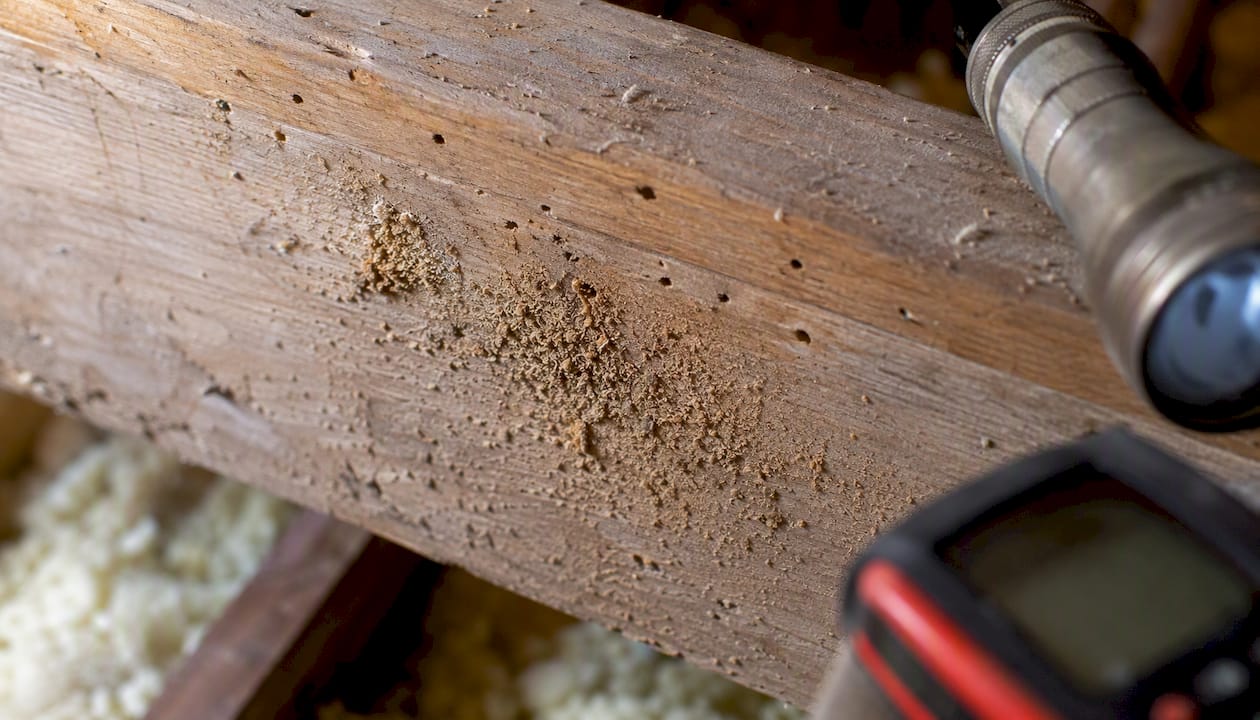
If you have found a fine, pale dust beneath a piece of timber or near small round holes in a floorboard, you are most likely looking at woodworm frass — the bore dust and faecal pellets produced by wood-boring larvae as they tunnel through timber. The most decisive clue is colour: fresh frass is cream to pale yellow and feels gritty between your fingers. Dark, compacted dust is usually old and inactive.
- Fresh frass indicators: pale cream colour, loose and gritty texture, small piles sitting directly beneath or around exit holes
- Species context: common furniture beetle (Anobium punctatum) is the most frequently encountered wood-boring species in UK properties, typically producing round holes of 1–2 mm
- Immediate safety note: do not disturb structural joists or load-bearing timbers until you know the extent of any damage
Immediate action: if you can see fresh pale frass alongside clean-edged holes, photograph the area, avoid vacuuming it away, and either begin a simple monitoring routine or book a professional damp and timber survey. If the frass is in multiple locations or near structural timbers, book a survey without delay.
Pro Tip: Preserve the frass exactly as you found it until a surveyor can inspect it. Vacuuming or applying a spray before inspection removes the primary evidence a specialist needs to confirm species and activity level.
Key takeaways
Fresh woodworm frass — pale, gritty, and sitting directly beneath exit holes — combined with clean-edged holes during the April–September emergence season is the most reliable indicator of an active infestation requiring a survey-led response.
| Point | Details |
|---|---|
| Fresh frass is the key signal | Cream to pale yellow, gritty frass beneath clean-edged holes during April–September indicates active infestation. |
| Hole size identifies species | Round holes of 1–2 mm suggest common furniture beetle; holes above 3 mm warrant urgent professional assessment. |
| Vibration displaces old frass | Old deposits can mimic fresh activity; use the paper monitoring method to confirm before committing to treatment. |
| Moisture control is the foundation | Larvae rarely survive in timber below approximately 12% moisture content; fix damp sources alongside any treatment. |
| Quaypointplastering surveys first | A documented damp and timber survey across Dorset, Hampshire, and Wiltshire provides written findings and guaranteed remedial works. |
Table of Contents
- What woodworm frass actually is
- How to recognise woodworm droppings at a glance
- How frass varies between common UK wood-boring species
- How to tell active frass from old deposits and false positives
- What to do immediately after finding frass
- Treatment options: what works and what has real limitations
- Why a survey-led approach matters in Dorset and Wessex properties
- How to prevent future infestations and keep monitoring simple
- Typical timelines and the factors that affect treatment cost
- Why survey-first practice is the only ethical approach
- Book a survey with Quaypointplastering across Dorset, Hampshire, and Wiltshire
- Sources
What woodworm frass actually is
Woodworm frass is the technical term for the combined waste material that wood-boring larvae produce as they feed. It consists of two components: fine wood particles shaved from the tunnel walls, and the faecal pellets the larvae excrete as they digest cellulose. Together, these form the powdery or gritty deposits you find near exit holes.
The material appears because larvae do not simply consume wood and stay put. As they tunnel towards the timber surface in preparation for emergence, they push accumulated waste behind them or eject it through the exit hole when the adult beetle breaks through. That ejection is what creates the characteristic small pile you see on a floorboard or beneath a joist.
Frass composition varies by species:
- Wood particles: fine shavings from the tunnel walls, making up the bulk of the deposit
- Faecal pellets: compressed digestive waste, often lemon-shaped under magnification for Anobium punctatum
- Fibrous debris: present in species that attack harder or more resinous timbers, such as the house longhorn beetle
- Moisture content: fresh frass retains a slight tackiness in humid conditions; old frass is dry and crumbles easily
According to English Heritage’s pest fact sheet, fresh light-coloured frass is one of the clearest indicators of active larval feeding, with peak emergence in the UK occurring between April and September.
Pro Tip: Do not inject proprietary woodworm fluid into holes before a survey. Many products contain solvents that can obscure frass colour and make species identification harder. Photograph first, treat later.
How to recognise woodworm droppings at a glance
Identifying woodworm damage correctly comes down to a short checklist of visual and tactile traits. Run through these before drawing any conclusions.
Visual and tactile identification checklist:
- Colour: cream to pale yellow when fresh; darkens to tan or grey-brown as it ages and oxidises
- Texture: fine and flour-like for some species; gritty and slightly pellet-like for Anobium punctatum
- Pellet shape: under a 10x hand lens, common furniture beetle frass often shows a distinctive lemon or oval shape
- Pile location: fresh frass sits in a loose cone or scatter directly beneath or around the exit hole, not spread across a wide area
- Hole edge condition: fresh exit holes have clean, pale, sharp edges; older holes look darkened and slightly rounded at the rim
Where to check in your home:
- Beneath floorboards and along the top faces of joists
- Loft timbers, purlins, and rafters (particularly in older properties with softwood roof structures)
- Furniture joints, the underside of chairs, and the backs of drawers
- Beneath skirting boards and near windowsill timbers
- Structural beams in cellars or subfloor voids where ventilation is poor
Seasonality matters here. AXA’s homeowner guidance notes that frass alongside small holes is a practical sign of active woodworm, and the emergence window of April to September is when fresh deposits are most likely to appear. Checking suspect areas in late spring gives you the clearest picture.
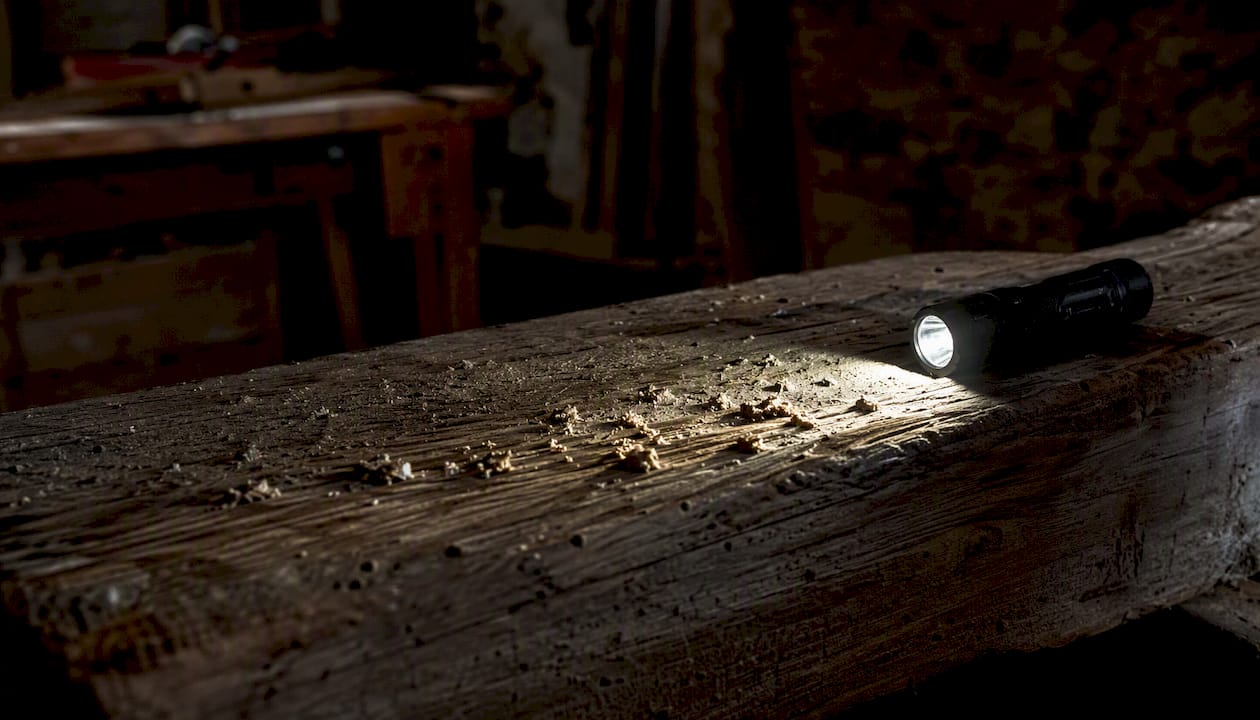
Pro Tip: Shine a torch at a low angle across the timber surface. This raking light technique makes small frass piles cast a shadow and become far easier to spot than under overhead lighting.
How frass varies between common UK wood-boring species
Not all woodworm droppings look the same, and the differences tell you a great deal about the likely risk to your timber. Frass texture differs by species: gritty pellets, flour-like powder, or fibrous debris each point to a different beetle, and matching frass type to hole size helps you prioritise urgency.
Common UK wood-boring species and their frass characteristics:
- Anobium punctatum (common furniture beetle): gritty, lemon-shaped pellets; round holes of 1–2 mm; attacks softwood joists, floorboards, and furniture; the most widespread species in UK properties
- Deathwatch beetle (Xestobium rufovillosum): coarser, bun-shaped pellets; round holes of 2–3 mm; favours old hardwood structural timbers, particularly oak; associated with damp, historic buildings
- House longhorn beetle (Hylotrupes bajulus): fibrous, elongated frass; oval holes up to 10 mm; attacks softwood roof timbers; more common in parts of Surrey and the south-east under a statutory control zone, though occasionally found elsewhere
- Bark borer and ambrosia beetles: very fine dust; irregular or oval holes; usually confined to recently felled or green timber and rarely a structural concern
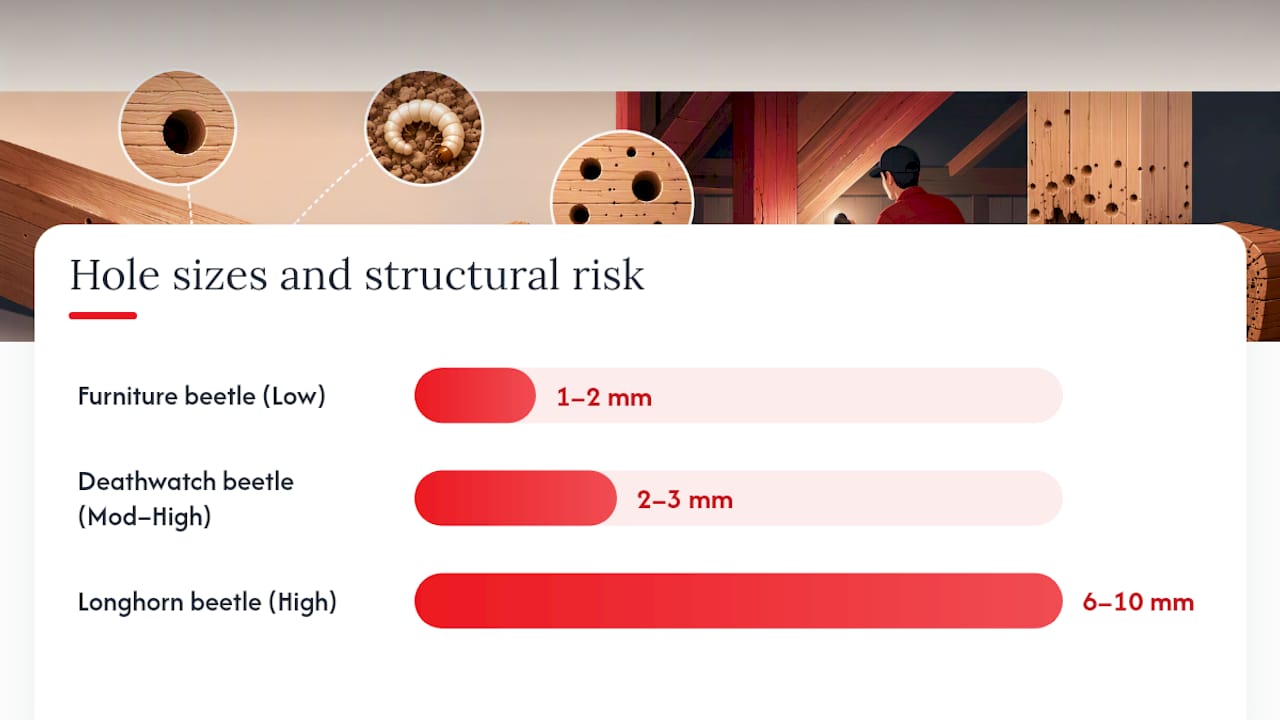
Hole size as a risk indicator:
| Hole diameter | Likely species group | Structural risk |
|---|---|---|
| 1–2 mm round | Common furniture beetle | Low to moderate (surface timbers) |
| 2–3 mm round | Deathwatch beetle | Moderate to high (hardwood beams) |
| 6–10 mm oval | House longhorn beetle | High (softwood roof timbers) |
Species identification matters because it directly affects the urgency and method of any remedial work. Common furniture beetle in a piece of furniture is a very different proposition from deathwatch beetle in a structural oak beam. If the holes are noticeably larger than those typically caused by common furniture beetle or the frass is fibrous, treat it as a priority and book a survey rather than monitoring.
Lemon-shaped pellets almost always confirm Anobium punctatum; bun-shaped ones suggest deathwatch beetle and warrant specialist attention.*
How to tell active frass from old deposits and false positives
Exit holes alone do not confirm a current infestation. Old frass can be displaced from dormant tunnels by vibration, producing fresh-looking deposits that mimic active feeding. This is one of the main reasons historic over-treatment occurred in UK buildings: a vibration from foot traffic or a slammed door shook old frass out of long-dead tunnels, and it was mistaken for new activity.
Comparison of fresh frass, old frass, and common false positives:
| Feature | Fresh frass | Old frass | Plaster dust | General sawdust |
|---|---|---|---|---|
| Colour | Cream to pale yellow | Tan, grey, or dark brown | White to grey | Variable, often pale |
| Texture | Gritty, slightly tacky | Dry, compacted, crumbles | Chalky, very fine | Coarse, irregular |
| Pellet shape | Lemon-shaped (under lens) | Rounded, degraded | No pellets | No pellets |
| Location | Directly beneath exit holes | Spread or displaced | Near walls, ceilings | Near cut timber |
| Reappears after cleaning | Yes, if active | No | No | No |
| Hole edge condition | Clean, pale, sharp | Darkened, rounded | No holes | No holes |
The single most reliable test is the paper monitoring method. Clean a small area around the suspect holes, place a sheet of white paper beneath the timber, and photograph it. Recheck weekly during the April–September emergence season. If fresh pale frass appears on the paper, the infestation is active. If nothing appears after several weeks of monitoring during peak season, the activity has likely ceased.
Watch out for these false positives:
- Plaster dust falling from a ceiling crack near old holes
- Fine sawdust from recent DIY work or a nearby cut
- Frass displaced by vibration from heavy foot traffic or building work
Warning: vibration from building work, heavy furniture being moved, or even repeated foot traffic on old floorboards can dislodge frass that has sat in tunnels for decades. Always combine the paper monitoring test with an assessment of hole edge condition before concluding that an infestation is active.
Pro Tip: Photograph the paper monitor with a ruler in frame. This gives you a scale reference and a dated record that a surveyor can use to confirm activity without needing to start from scratch.
For a detailed guide on reading historic holes, see are old woodworm holes active?
What to do immediately after finding frass
Finding frass does not mean you need to act in a panic, but it does mean you need a clear sequence of steps. Work through these in order before spending money on any treatment.
Step-by-step checklist:
- Photograph everything — capture the frass piles, the exit holes, and the surrounding timber surface. Include a coin or ruler for scale.
- Do not vacuum yet — preserve the frass until you have completed the monitoring step below, or until a surveyor has inspected.
- Mark the holes — use a small piece of low-tack tape or a pencil dot beside each visible hole so you can identify new ones later.
- Place white paper — slide a sheet beneath the suspect timber and leave it for at least two weeks during the emergence season. This monitoring protocol is the most practical way to confirm ongoing activity before committing to treatment.
- Take a moisture reading — if you have a moisture meter, check the timber. Readings consistently above 12% suggest conditions that favour larval survival and point to an underlying damp issue worth investigating.
- Check for adult beetles — small brown beetles (roughly 3–5 mm long for Anobium punctatum) near windows in May to August are a strong secondary confirmation of active emergence.
When to monitor vs. when to book a survey:
- Monitor if: frass is in one small area, holes are 1–2 mm, timber feels firm, and no structural timbers are involved
- Book a survey if: frass appears in multiple locations, holes are larger than 3 mm, any joist or beam feels soft when probed, or you are a landlord with a legal duty of care to tenants
A professional damp and timber survey provides documented findings, moisture mapping, species identification where possible, and a written scope of work. That documentation is also useful if you are selling the property or managing it on behalf of a landlord.
Landlord obligations: under the Homes (Fitness for Human Habitation) Act 2018, landlords in England are required to maintain properties in a condition that is fit for habitation. Active woodworm in structural timbers can constitute a hazard under the Housing Health and Safety Rating System (HHSRS), particularly where load-bearing elements are compromised. If you manage a rented property and find signs of active infestation in structural timbers, a documented survey is not optional.
Treatment options: what works and what has real limitations
Once you have confirmed active infestation, the treatment pathway depends on species, location, and the extent of damage; for professional guidance, see Pest Control Tips & Prevention | Bradford VA. There is no single answer that fits every situation.
Treatment options and their realistic scope:
- Water-based insecticidal sprays (DIY): suitable for accessible, bare, unfinished timber with confirmed surface activity; products containing permethrin are commonly used for furniture-level treatment, as AXA’s guidance notes. Apply during the emergence season for best uptake.
- Professional boron-based or permethrin treatments: applied by a specialist to prepared timber surfaces; more consistent coverage than DIY application and usually backed by a guarantee
- Fumigation: rarely used in domestic settings; reserved for severe, inaccessible infestations in heritage buildings or where other methods are impractical
- Timber consolidation: where structural strength is compromised but replacement is not feasible, specialist consolidants can stabilise the wood
- Timber replacement: necessary where joists, beams, or boards have lost structural integrity; always combined with addressing the underlying moisture source
Limitations you need to know:
- Surface sprays cannot reach larvae deep within thick timbers; they work by killing emerging adults and larvae near the surface
- Painted, varnished, or wax-finished timber significantly reduces chemical uptake; bare timber is a prerequisite for effective treatment
- Killing the beetles without fixing the moisture conditions that enabled the infestation invites recurrence; practitioners consistently recommend addressing moisture causes alongside or before insecticidal work
- Online home remedies such as white vinegar have no reliable evidence base for woodworm control; authorised, labelled insecticidal products applied to prepared timber are the professionally recommended approach
Pro Tip: Before applying any product, check whether the timber is painted or varnished. If it is, the treatment will sit on the surface film rather than penetrating the wood. A surveyor can advise on preparation — sometimes light sanding is all that is needed.
For woodworm treatment options specific to your property type, Quaypointplastering’s timber service pages set out what each stage of a survey-led remedial programme involves.
Why a survey-led approach matters in Dorset and Wessex properties
Properties across Dorset, Hampshire, and Wiltshire share a set of characteristics that make woodworm assessment more nuanced than a simple spray-and-go job. Older softwood roof timbers, suspended timber floors with limited subfloor ventilation, and the region’s variable humidity all create conditions where both active infestations and historic, long-dead ones are common. The challenge is telling them apart.
Building conservation specialists have documented how widespread unnecessary retreatment occurred historically because vibration-displaced frass was misread as fresh activity. A focused, evidence-led survey avoids that cycle and addresses the moisture conditions that actually drive infestation risk.
What a Quaypointplastering damp and timber survey includes:
- Photographic mapping of all visible exit holes and frass deposits
- Moisture readings across suspect timbers and adjacent materials
- Species identification where frass and hole characteristics allow
- Assessment of ventilation, roof condition, and other structural factors that affect infestation risk
- A written scope of work with documented findings
- A written guarantee on any remedial works carried out
Larvae rarely thrive when timber moisture content stays below approximately 12% or relative humidity remains below approximately 55%. That means fixing a blocked air brick, repairing a leaking roof, or improving subfloor ventilation can be as important as any chemical treatment. Quaypointplastering’s survey process identifies those root causes rather than treating the symptom alone.
For local coverage across Bournemouth and Poole, Quaypointplastering’s regional service pages set out what to expect from an initial visit.
How to prevent future infestations and keep monitoring simple
Prevention is largely a matter of moisture control. Wood-boring beetles need timber with sufficient moisture content to support larval development; keep the wood dry and the conditions become inhospitable.
Prevention checklist:
- Fix roof leaks, blocked gutters, and failed flashings promptly — these are the most common sources of elevated moisture in roof timbers
- Clear and maintain subfloor air bricks to keep suspended timber floors ventilated
- Address any penetrating damp through walls that could raise moisture levels in adjacent timbers
- Keep timber moisture content below 12% where possible, using a moisture meter to check periodically
- Seal cracks in external masonry and maintain window and door frames to prevent moisture ingress
- In cellars and subfloor voids, consider a dry rot treatment assessment alongside any woodworm work, as both are moisture-driven
Simple monitoring schedule:
- Quarterly check: walk through loft, subfloor void (if accessible), and any rooms with exposed timber. Look for fresh pale dust, new holes, or dead beetles near windows.
- Spring check (March/April): place white paper beneath any previously suspect timbers before the emergence season begins. Photograph and date the paper.
- Summer check (July/August): review the paper monitors. Fresh pale frass on the paper during this window is a reliable confirmation of active emergence.
- Annual moisture check: use a moisture meter on roof timbers, joists, and any timber in contact with masonry. Log the readings so you have a baseline to compare year on year.
Tools you need:
- A basic pin-type moisture meter (widely available from builders’ merchants)
- White A4 paper and low-tack tape
- A 10x hand lens or jeweller’s loupe
- A torch for raking-light inspection
Typical timelines and the factors that affect treatment cost
Woodworm infestations do not resolve quickly, and treatment costs vary considerably depending on what the survey finds. Setting realistic expectations before you book a survey helps you plan and budget appropriately.
Infestation and treatment timeline:
- Larval stage: commonly 2–5 years for Anobium punctatum, longer for deathwatch beetle; this is the period during which damage accumulates
- Emergence season: April to September; this is when adults exit, mate, and lay eggs on or near timber surfaces
- Monitoring period: a minimum of one full emergence season (April to September) is recommended before concluding that an infestation has ceased after treatment
- Treatment application: a single professional treatment session for accessible timbers; structural repairs may require a separate programme
Factors that affect cost:
- Species involved and extent of infestation across the property
- Accessibility of affected timbers (open joists vs. boarded-over subfloor voids)
- Whether roof or ventilation repairs are needed before or alongside treatment
- Requirement for timber consolidation or replacement where structural integrity is affected
- Survey fee, written report, and guarantee costs
When requesting a quote, provide:
- Dated photographs of frass deposits and exit holes
- The locations affected (loft, ground floor, specific rooms)
- Any moisture meter readings you have taken
- Details of any previous treatments and when they were carried out
This information allows a surveyor to give you a more accurate scope and avoids the cost of a preliminary visit just to gather basic information. For a timber survey that covers all of these points, Quaypointplastering provides a documented assessment with a written scope before any remedial work begins.
Why survey-first practice is the only ethical approach
The temptation when you find frass is to reach for a spray and treat the whole house. After 35 years of working on properties across Dorset, Hampshire, and Wiltshire, the pattern is consistent: blanket whole-house treatments applied without a survey frequently miss the actual cause, waste money, and leave the underlying moisture problem untouched.
Evidence-led inspection is not a commercial preference. It is the only way to distinguish active infestation from historic activity, identify the species correctly, and recommend a proportionate response. Treating a piece of furniture with a permethrin spray is a reasonable DIY step when the evidence supports it. Injecting chemicals into structural joists without a moisture survey and a documented scope is not.
Quaypointplastering commits to documented inspections, written findings, and written guarantees on all remedial works. No treatment is recommended without evidence to support it. That approach protects the property, protects the client’s budget, and produces outcomes that last.
Book a survey with Quaypointplastering across Dorset, Hampshire, and Wiltshire
Quaypointplastering’s damp and timber survey gives you a documented picture of what is actually happening in your timber before a single treatment decision is made. With over 35 years of experience across Dorset, Hampshire, and Wiltshire, the team combines photographic mapping, moisture readings, and species assessment into a written report with a defined scope of work and a written guarantee on all remedial works.

On a site visit, you can expect a thorough inspection of all accessible timbers, moisture checks across suspect areas, and a clear explanation of findings before any quotation is issued. Preserve your frass evidence and any paper monitors until the survey takes place — they are the primary record a surveyor will use to confirm activity and species.
To book a timber survey or discuss what you have found, contact Quaypointplastering directly. Do not treat or disturb structural timbers in the meantime.
Sources
The sources below are the primary references used throughout this article. Each covers a distinct aspect of woodworm identification, treatment, and conservation practice.
- Pest Fact sheet No 2 Furniture beetle or Woodworm
- Buildingconservation
- How to treat woodworm and common furniture beetles - Which?
- What Is Woodworm & How to Treat It
- Signs of Woodworm: UK Identification & Treatment Guide
- Frass – damp.aï