
Trace and access leak investigation: a guide for homeowners
Trace and access leak investigation: a guide for homeowners
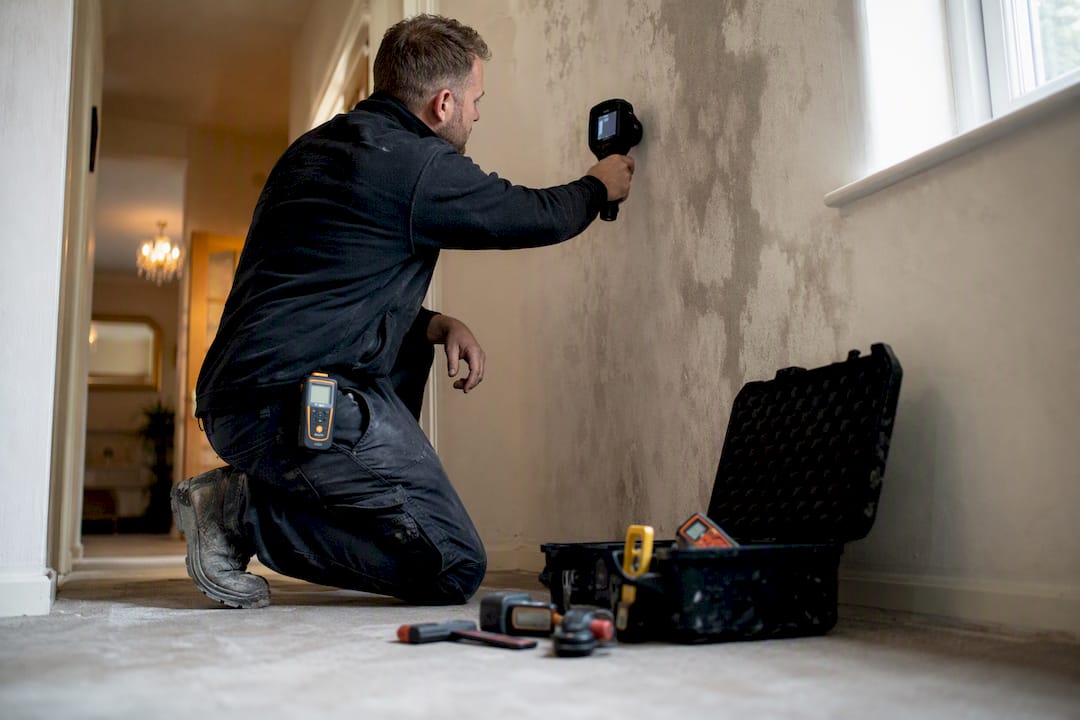
Trace and access is the part of your buildings insurance that pays to locate a hidden water leak and open up the fabric needed to reach it. It usually does not pay to fix the pipe itself; repairing the leak is normally handled under separate buildings cover, once the source is confirmed. Most UK buildings policies include this cover, typically capped at £5,000 to £10,000, with your excess deducted from any payout.
Before you touch a floorboard or ring a plumber, do this:
- Turn off the stopcock if you can do so safely, to stop further water damage.
- Photograph the wet patch, stain, or damage as soon as you notice it.
- Call your insurer before commissioning any invasive work, since many require an approved tradesperson.
Key Takeaways
Trace and access cover pays to find and reach a hidden leak, not to repair it, and contacting your insurer before any invasive work is the single decision that protects your claim.
| Point | Details |
|---|---|
| Know the cover boundary | Trace and access pays for detection and access; repairing the leaking pipe is usually separate buildings cover. |
| Check your limit first | Typical trace and access limits sit between £5,000 and £10,000, minus your policy excess. |
| Call before you cut | Notify your insurer before invasive work starts, since unapproved work can reduce or void reimbursement. |
| Insist on evidence | A genuine investigation combines methods like thermal imaging and acoustic testing before opening any fabric. |
| Choose survey-led specialists | Quay Point Plastering documents findings and provides written guarantees, giving insurers and homeowners a clear, insurance-ready report. |
Table of Contents
- What does trace and access cover mean under UK buildings insurance?
- Which leak detection methods do specialists actually use?
- What happens during a trace and access investigation?
- How much does trace and access cost, and who actually pays?
- What should you ask your insurer and your tradesperson?
- How Quay Point Plastering supports trace and access claims
- What most guides get wrong about trace and access
- Get a survey-led investigation from Quay Point Plastering
- Frequently asked questions
- Sources
What does trace and access cover mean under UK buildings insurance?
Trace and access sits inside your buildings insurance as a specific, limited benefit. It covers the diagnostic work: the surveys, detection equipment, and the careful opening of a wall, floor, or ceiling void needed to find an escape of water. It does not cover replacing the burst pipe, the failed joint, or the corroded valve that caused the leak in the first place. That repair usually falls under the main buildings insurance, subject to its own terms.
Three things shape what you actually get paid:
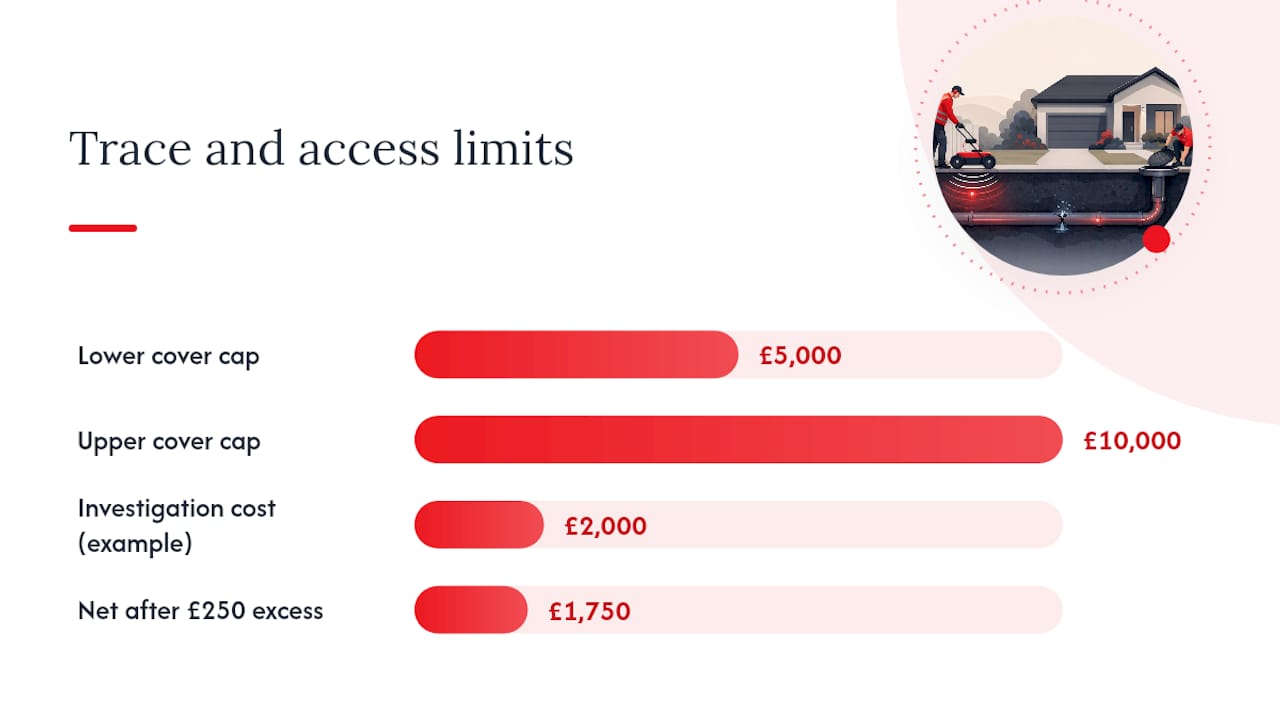
- Cover limits. Most insurers cap trace and access at somewhere between £5,000 and £10,000 per claim, though this varies by provider and policy tier.
- Your excess. This is deducted before you see a penny, so a £250 excess on a £2,000 investigation leaves you £1,750 better off, not £2,000.
- What caused the leak. Cover generally applies only to an internal “escape of water” from burst pipes, appliances, or heating systems. Water coming in from outside, or damage linked to poor maintenance, is often excluded.
Statistic to remember: if your policy sits at the lower end of that £5,000–£10,000 range and the investigation involves ceiling and floor access across two rooms, costs can climb close to the limit quickly, particularly on older properties with concealed pipework.
Contact your insurer before any invasive work starts. Many reserve the right to send their own approved contractor, and skipping that call can mean a reduced payout, or none at all.
Which leak detection methods do specialists actually use?
A competent trace and access investigation rarely starts with a hammer. It starts with non-invasive detection, narrowing the search area before anyone opens up fabric.
- Thermal imaging picks up temperature differences on walls and floors, useful for recent leaks or active hot water escapes. It struggles with older, slow leaks where the surrounding material has equalised in temperature, and thick insulation can mask a hotspot entirely.
- Acoustic testing uses listening equipment and pressure tests to pick up the sound of water escaping a pressurised pipe, effective on mains-fed supply pipes where thermal imaging falls short.
- Tracer gas involves introducing a harmless gas into an empty pipe and tracking where it escapes at the surface, a reliable option for concealed pipe runs under solid floors.
- CCTV drain surveys send a camera down soil and waste pipes to spot cracks, blockages, or root ingress in underground runs.
- Electronic locators trace the physical route of buried supply or service pipes, helping pinpoint exactly where to dig or open up.
Thermal and acoustic methods are often used together: thermal imaging flags the general area, acoustic testing confirms an active leak within it. That combination is usually what keeps a job to one neat access point instead of three exploratory holes.
Pro Tip: Ask your specialist which two methods they are combining before they open anything. A single detection method proposing a large area of access is a fair reason to ask more questions.
What happens during a trace and access investigation?
A properly run investigation follows a fairly predictable sequence, even though every property and leak is different.
- Triage and isolation. The specialist checks it is safe to proceed, and confirms whether the stopcock or an isolation valve needs to stay off.
- Non-invasive detection. Thermal imaging, acoustic testing, or tracer gas narrows the search to a specific area rather than a whole room.
- Targeted access. Only the confirmed location gets opened, whether that is a section of ceiling, a floorboard, or a small area of plasterboard.
- Visual confirmation. The technician physically confirms the leak source and photographs it before anyone touches a repair.
- Repair handover. The leak itself gets fixed, often by a plumber, sometimes by the same firm if they hold the right qualifications.
- Reinstatement. The opened fabric, plaster, flooring, or ceiling gets made good, which may be covered separately under your buildings policy.
Timelines vary with property type and how concealed the pipework is, but a straightforward domestic case often runs from initial call-out to reinstatement within one to three weeks, longer if insurer approval and scheduling add delay. Keep every photograph and report; insurers routinely ask for this evidence when assessing the claim.
How much does trace and access cost, and who actually pays?
Investigation costs vary with the property and the number of detection methods needed, but they typically run into hundreds of pounds for a straightforward single-room job and can approach the policy limit on more complex properties. That limit, commonly £5,000 to £10,000, is what the insurer will pay towards detection and access, not an unlimited budget.
- Your excess applies first, so a £10,000 limit with a £500 excess leaves £9,500 of usable cover.
- Pre-authorisation matters: insurers can refuse or reduce reimbursement if invasive work goes ahead without their sign-off.
- You may end up paying yourself if you have no trace and access cover at all, the insurer declines the claim, or you use a tradesperson outside their approved network without agreement.
Worth checking: if the leak involves a private supply or service pipe on your land, your water company may contribute to repairs or offer a goodwill fix, which can reduce what you claim against buildings insurance altogether.
What should you ask your insurer and your tradesperson?
Getting the right questions answered early avoids disputes later, particularly around what counts as reasonable access.
- Ask your insurer: does my policy include trace and access, what is the limit, and do I need pre-authorisation before work starts?
- Ask your specialist: which detection methods will you use, and how will you justify the exact access point in your report?
- Confirm guarantees: what written guarantee covers the reinstatement work once the leak is fixed?
- Check approval status: is this contractor on my insurer’s approved list, or will using them affect my claim?
Watch for red flags: a proposal to strip out large sections “to be sure,” no written findings, or reluctance to hand over test results. A genuine investigation produces a documented, insurance-ready report, not a guess dressed up as a diagnosis.
Pro Tip: Ask to see a sample report before booking. A specialist confident in their process will happily show you how they document evidence and justify access points.
How Quay Point Plastering supports trace and access claims
Quaypointplastering approaches every damp, timber, or leak-related enquiry the same way: diagnose first, document thoroughly, then agree a defined scope of work before anything is repaired. That sequence matters most when a claim is involved, because insurers want evidence, not assumptions.
- Survey-led diagnostics that identify visual symptoms before recommending any leak detection or repair work.
- Written findings and a clear scope of work, giving you something concrete to hand to your insurer.
- Written guarantees on workmanship, covering reinstatement once access work and repairs are complete.
- Local knowledge across Dorset, Hampshire, and Wiltshire, from period cottages to modern flats.
A trace and access claim moves faster and costs less when the report justifies every access point with evidence, not guesswork. That principle sits behind how we structure every survey.
If you are dealing with damp appearing after a suspected leak, or need reinstatement plastering once the source has been fixed, get in touch to discuss a survey.
What most guides get wrong about trace and access
Most advice on this topic treats trace and access as a straightforward insurance formality: notify the insurer, get a specialist, claim the money. In practice, the biggest cost to homeowners is not the excess. It is unnecessary reinstatement, caused by contractors who open up more of the property than the evidence justified.
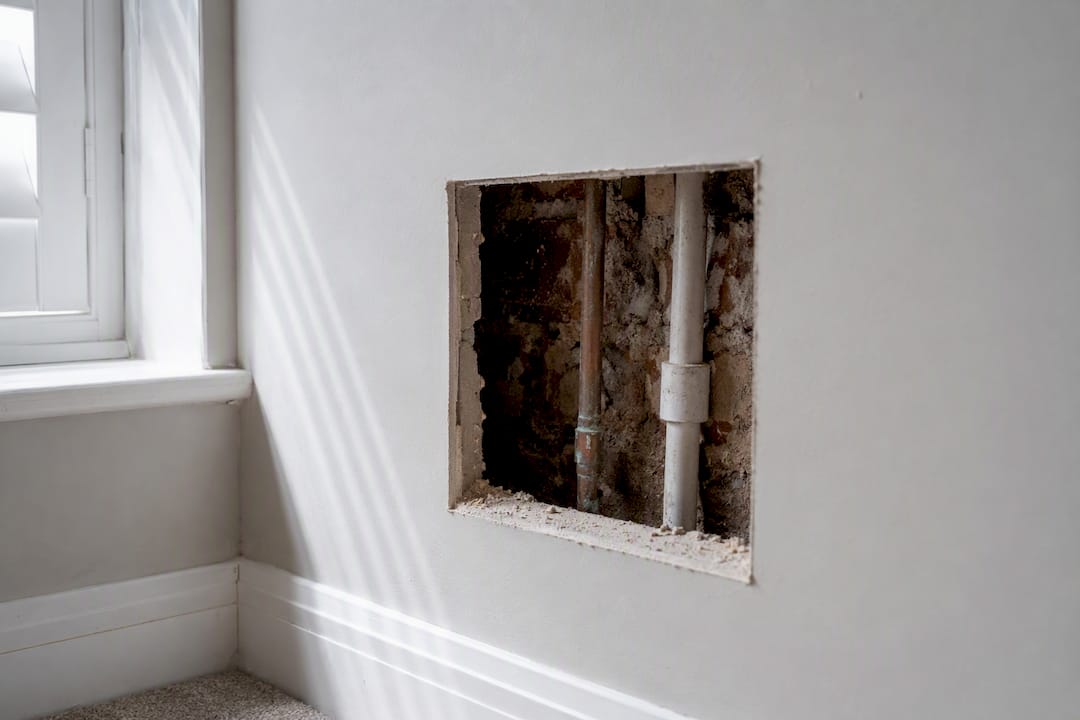
Conventional advice focuses heavily on the insurance mechanics and barely mentions the diagnostic discipline that keeps a claim small in the first place. A specialist who runs thermal imaging and acoustic testing before touching anything will usually open one neat access point. One who skips that step, or lacks the equipment, tends to guess, and guessing means bigger holes, more plaster, and a bigger reinstatement bill.
If you take one thing from this guide, prioritise the quality of the detection evidence over the speed of the fix. A slower, better-documented investigation almost always costs less overall than a fast one that opens the wrong section of wall twice.
Get a survey-led investigation from Quay Point Plastering
Quaypointplastering is the practical alternative to a guesswork “rip it out and see” approach for homeowners across Dorset, Hampshire, and Wiltshire: you get a documented diagnosis and a defined scope of work before any repair goes ahead, not after.
That matters most when insurance is involved. A vague quote or an undocumented repair can slow down or weaken a trace and access claim, whereas a proper survey gives you the evidence an insurer actually wants to see. Whether the leak has left damp patches on a ceiling, salt staining on a wall, or softened timber nearby, Quaypointplastering diagnoses the visible symptoms first and only then proposes treatment, backed by a written guarantee on the workmanship.
If you suspect a hidden leak or have been left with damp after one, book a damp and timber survey and get a documented starting point for your claim.
Frequently asked questions
Does trace and access cover the cost of fixing the leak? No. It covers locating and accessing the leak; repairing the pipe or fitting usually falls under your separate buildings insurance, subject to its own terms and excess.
What is the typical trace and access limit on a UK policy? Most policies set a limit between £5,000 and £10,000, though this varies between insurers and policy tiers, so check your own documents.
Do I need my insurer’s permission before hiring a leak detection specialist? Yes, in most cases. Contacting your insurer first avoids disputes over reimbursement, since many require an approved tradesperson for the work to be covered.
What detection methods will a specialist use before opening up my walls? Expect thermal imaging, acoustic testing, tracer gas, CCTV drain surveys, or electronic locators, often combined to narrow the access point down to one targeted area.
Will my water company help pay if the leak is on a private supply pipe? Sometimes. Water companies occasionally contribute to repairs or offer a goodwill fix for private supply pipes, which can reduce what you need to claim through buildings insurance.
Sources
- Trace and access insurance | MoneySuperMarket
- Confused
- What is trace and access insurance cover? | Compare the Market
Always check your own policy wording and speak to your insurer before commissioning any invasive investigation work.