
Basement waterproofing cost: survey-led guide for Dorset
Basement waterproofing cost: survey-led guide for Dorset
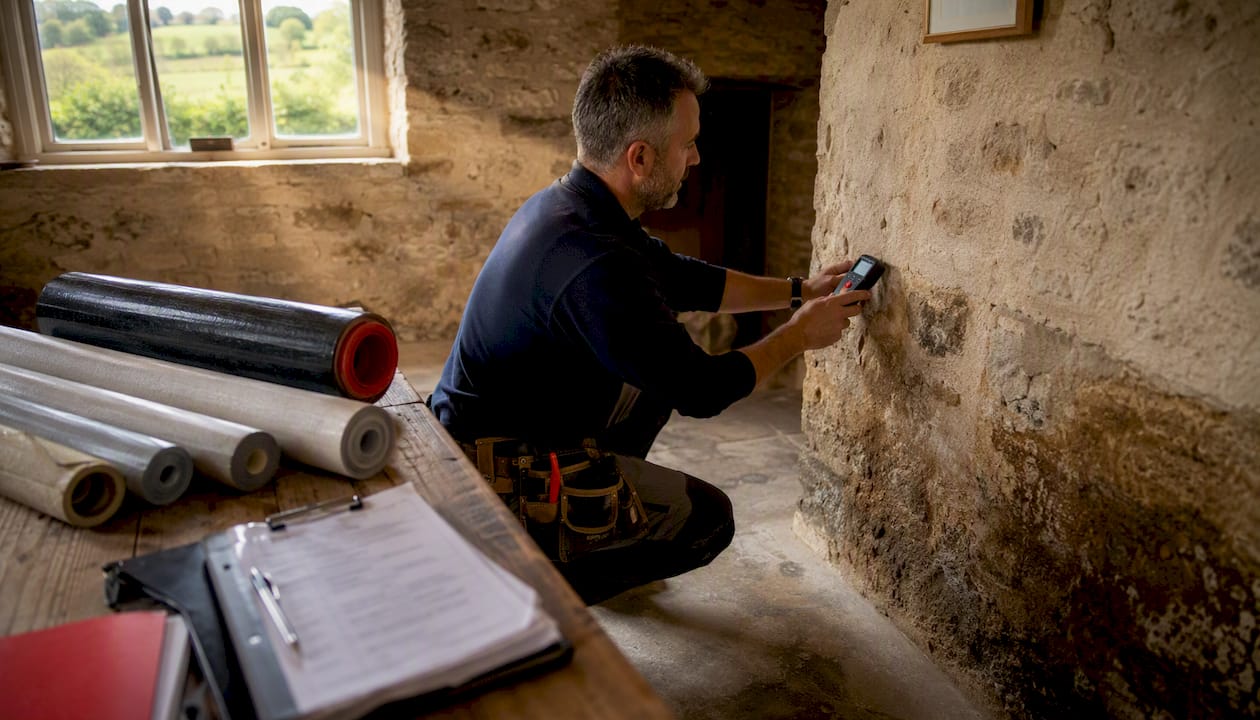
Basement waterproofing in the UK typically costs between £40–£100 per m² for cementitious tanking slurry and £80–£150 per m² for a cavity drain membrane system. Full project costs commonly run from £10,000 to £30,000 depending on scope, access, and whether structural repairs are needed. Before you request a single quote, the one step that prevents wasted money is booking a specialist survey that delivers a written scope of works and a clear guarantee.
A reliable survey quote should include:
- A fixed or clearly stated survey fee
- Written findings with a recommended diagnosis
- A provisional cost band for each method option
- An itemised schedule of works
- Proposed workmanship guarantee terms
Pro Tip: Never accept a verbal estimate alone. A written scope protects you if the contractor later claims additional works were always included.
Table of Contents
- What drives basement waterproofing cost?
- Which waterproofing method suits your basement?
- What does a professional basement survey include?
- Three example cost breakdowns
- Guarantees, BS 8102:2026, and what your contract must include
- Questions to ask contractors and red flags to watch for
- How to reduce costs without risking system failure
- Typical timelines and what to expect on site
- Long-term maintenance costs after waterproofing
- DIY versus professional waterproofing: an honest comparison
- Financing and payment options for waterproofing projects
- Key takeaways
- A local specialist’s perspective
- Quaypointplastering: survey-led waterproofing across Dorset, Hampshire, and Wiltshire
- Useful sources and standards
What drives basement waterproofing cost?
Preparatory works, waste disposal, and structural repairs frequently drive the final bill higher than the waterproofing materials themselves. Understanding each cost driver helps you compare quotes on a like-for-like basis.
Core cost drivers to check in every quote:
- Survey and diagnosis: specialist site visit, moisture mapping, and written findings
- Preparatory works: surface preparation, removal of existing plaster or render, crack stitching
- Structural repairs: masonry and structural repairs to walls, floors, or lintels before any membrane is applied
- Access and site complexity: restricted access, low headroom, or multi-storey excavation
- Drainage and sump systems: channel installation, sump chamber, pump and discharge pipework
- Ventilation and reprofiling: floor build-up, wall battening, and ventilation provision
- Waste removal: skip hire, spoil disposal, and site reinstatement
- Labour rates: regional labour variations affect quotes across Dorset, Hampshire, and Wiltshire
Pro Tip: Ask each contractor to break out preparatory works as a separate line item. If they bundle everything into a single figure, you cannot tell whether structural repairs have been properly priced.

Which waterproofing method suits your basement?
BS 8102:2022 classifies below-ground waterproofing into three main types. Each suits different conditions, and choosing incorrectly is one of the most common causes of system failure.
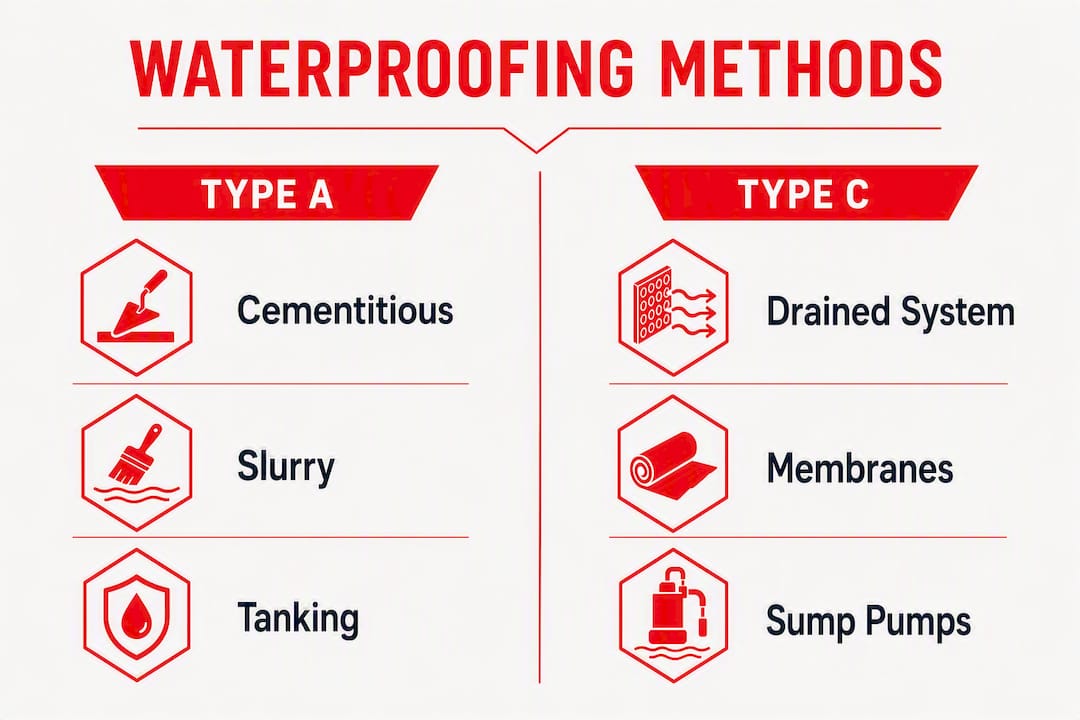
| Method | Typical cost per m² | Typical project cost | Best suited to |
|---|---|---|---|
| Type A — cementitious tanking slurry | £40–£100 | — | Minor damp, dry cellars, low hydrostatic pressure |
| Type C — cavity drain membrane + sump | £80–£150 | £10,000–£30,000 | Habitable conversions, active water ingress |
| External excavation + membrane | £80–£150 | £10,000–£30,000 | New build, severe ingress, no internal access |
| Hybrid (Type A + Type C combined) | £40–£100 | £10,000–£30,000 | High-risk sites requiring redundancy |
All figures are indicative. A survey is required for a firm price.
Type A (tanking slurry) applies a cementitious barrier directly to the masonry. It must physically hold back hydrostatic water pressure. Where that pressure is significant, tanking alone carries a high failure risk — the barrier can crack or delaminate.
- Pros: lower cost, minimal floor build-up, faster installation
- Cons: vulnerable to hydrostatic pressure, requires sound substrate, no redundancy if barrier fails
Type C (cavity drain membrane) fixes a studded membrane to walls and floor, channelling any water that passes through into a perimeter drain and sump pump. BS 8102:2022 supports Type C systems for most habitable below-ground conversions.
- Pros: manages rather than resists ingress, tolerates minor structural movement, inspectable
- Cons: requires ongoing pump maintenance, adds floor height, higher upfront cost
External excavation exposes the outer face of the structure and applies a waterproof membrane before backfilling. Highly effective but expensive and disruptive.
Hybrid solutions combine a Type A barrier with a Type C drained system, reducing dependence on a single line of defence and offering the best long-term performance for high-risk sites.
Pro Tip: Slurry is often quoted because it is cheaper to install. If your surveyor identifies active water ingress or significant hydrostatic pressure, insist on understanding why a drained system has or has not been recommended.
What does a professional basement survey include?
Inadequate specification and poor workmanship are the most common causes of waterproofing failure, not the method itself. A thorough survey prevents both.
A specialist damp and timber survey for a basement or cellar typically follows these steps:
- Visual inspection of all accessible walls, floors, and ceiling surfaces
- Moisture mapping using calibrated meters and probes
- Assessment of external drainage, ground levels, and water sources
- Structural inspection for cracks, movement, and substrate condition
- Photography and measurements to support the written report
- Review of any existing waterproofing or previous repair attempts
You should receive the following in writing after the survey:
- A clear diagnosis identifying the water source and ingress mechanism
- Options with pros, cons, and indicative costs for each approach
- An itemised quotation with a schedule of works
- Proposed guarantee terms and maintenance responsibilities
A surveyor holding a CSSW (Certificate in Structural Waterproofing) qualification, or equivalent specialist accreditation, demonstrates that the specification meets recognised industry standards. Written scope protects you legally and commercially before any deposit changes hands.
Three example cost breakdowns
These scenarios illustrate how cost drivers combine into real project prices. They are estimates only; a survey is required for a firm quotation.
| Line item | Scenario A: minor tanking | Scenario B: cavity drain conversion | Scenario C: complex hybrid |
|---|---|---|---|
| Waterproofing system (materials + labour) | — | £10,000–£30,000 | £10,000–£30,000 |
| Indicative total | — | £10,000–£30,000 | £10,000–£30,000 |
Scenario A covers a small, dry cellar with minor damp addressed by cementitious tanking. Scenario B is a medium habitable conversion using a full Type C system. Scenario C involves structural crack repairs, external excavation, and a hybrid system on a high-risk site.
Guarantees, BS 8102:2026, and what your contract must include
Correct commissioning, documented sump and pump testing, and clear maintenance responsibilities are as important as the installation itself. A credible contract reflects this.
Before signing, check your contract includes:
- Reference to BS 8102:2022 and the specific Type classification used
- Full itemised scope of works with materials specified by name
- Warranty length for both materials and workmanship (typically 10–20 years for system installations)
- Clear maintenance responsibilities (pump servicing intervals, inspection access)
- Commissioning and test results to be provided on completion
- Contractor’s public liability and professional indemnity insurance details
- Procedure for raising a warranty claim
Manufacturer system guarantees (where a named membrane or drainage system is installed) are separate from the contractor’s workmanship guarantee. Both should be documented. A workmanship-only guarantee with no system warranty is a weaker protection.
Questions to ask contractors and red flags to watch for
Ask these questions before booking and at the survey itself:
- What qualification does the surveyor hold (CSSW or equivalent)?
- Can you provide references for similar projects in Dorset, Hampshire, or Wiltshire?
- Who carries out the physical installation — your own team or a subcontractor?
- Will you provide a commissioning report and pump test results on completion?
- How will water be discharged from the sump pump, and is a building regulations notice required?
Walk away if you encounter any of these:
- A quote with no itemised breakdown or a single lump-sum figure
- Refusal to provide a written scope of works before taking a deposit
- No written workmanship guarantee offered
- Recommendation of the cheapest option without a site survey
- Vague or absent insurance details
Pro Tip: Insist on receiving the written scope and guarantee terms before paying any deposit. A contractor who resists this is telling you something important about how disputes will be handled later.
How to reduce costs without risking system failure
Legitimate savings are available without compromising the waterproofing system.
- Combine plastering and redecoration with the waterproofing contract to avoid a second mobilisation cost
- Address external drainage issues before work starts — reducing water pressure at source lowers the specification required
- Accept a Type C drained system where appropriate rather than paying for external excavation
- Stage non-critical secondary works (storage fit-out, flooring) to a later phase
Savings to avoid:
- Choosing the cheapest barrier system without a survey to confirm it suits the hydrostatic conditions
- Partial DIY tanking on a site with active water ingress
- Omitting a sump and pump where a drained system has been specified
Pro Tip: Ask your contractor to structure payment milestones around commissioning stages: survey completion, preparatory works signed off, system installed and tested. This reduces upfront cash exposure and gives you clear hold points.
Typical timelines and what to expect on site
Job duration varies significantly by method and site complexity.
- Minor cementitious tanking (Scenario A): 1–3 days on site
- Cavity drain membrane installation with drainage and sump (Scenario B): 3–10 days
- Complex structural repairs with external excavation and hybrid system (Scenario C): 3–8 weeks
Household disruption checklist:
- Clear the cellar or basement of all stored items before work begins
- Arrange dust protection for adjoining rooms and stairwells
- Confirm temporary drainage or pumping arrangements if active water is present
- Agree working hours with the contractor in advance
- Check whether a building regulations notice is required for structural or drainage works
Before the contractor arrives, you can reduce delays and cost by clearing access, locating any existing drainage drawings, and identifying the nearest external discharge point for sump pump pipework.
Long-term maintenance costs after waterproofing
A cavity drain system with a sump pump requires ongoing maintenance. Pump servicing typically involves an annual inspection to check float switches, discharge pipework, and battery backup (where fitted). Neglecting this is the most common reason a Type C system fails years after installation.
Cementitious tanking requires less active maintenance but should be inspected every few years for cracking or delamination, particularly in older properties where structural movement is possible. If penetrating damp reappears, early investigation prevents costly remediation.
Budget for periodic redecoration of internal surfaces, particularly where a studded membrane system has been boarded and plastered. Moisture-resistant boards and breathable finishes extend the interval between redecoration cycles.
DIY versus professional waterproofing: an honest comparison
DIY cementitious tanking products are available from builders’ merchants and can reduce material costs on a small, low-pressure cellar. The risk is specification: applying a barrier system to a site with active hydrostatic pressure without a survey is one of the most reliable ways to create a more expensive problem. Failed DIY tanking often requires full removal before a professional system can be installed, adding cost rather than saving it.
Professional installation carries a higher upfront cost but includes correct diagnosis, appropriate system selection, and a written guarantee. Industry guidance is clear that failures arise from poor specification and workmanship, not from the materials alone. For any habitable conversion or property with active water ingress, professional survey-led installation is the lower-risk route.
Financing and payment options for waterproofing projects
Most specialist waterproofing contractors structure payment in stages: a deposit on contract signing, a progress payment at a defined milestone (typically preparatory works complete), and a final payment on commissioning. This is standard practice and protects both parties.
For larger projects, some homeowners use a personal loan or home improvement finance to spread the cost. Secured lending against the property is an option for significant structural works, though this requires independent financial advice. Some local authorities in Dorset and Hampshire offer discretionary improvement grants for properties with severe damp or structural issues, particularly for older or listed buildings; the relevant council’s housing team can confirm current eligibility.
Key takeaways
Professional basement waterproofing in the UK requires a survey-led approach: correct method selection, a written scope of works, and a documented guarantee are what separate a lasting repair from a costly repeat failure.
| Point | Details |
|---|---|
| UK cost bands | Tanking slurry runs £40–£100/m²; cavity drain systems £80–£150/m²; full projects £10,000–£30,000. |
| Survey first | A written scope and diagnosis prevents misspecification, the leading cause of waterproofing failure. |
| Method matters | Type A resists pressure; Type C manages ingress. Choosing incorrectly risks system failure. |
| Contract essentials | Insist on BS 8102:2022 reference, itemised costs, warranty terms, and commissioning test results. |
| Quaypointplastering | Provides survey-led diagnosis, written scope, and workmanship guarantees across Dorset, Hampshire, and Wiltshire. |
A local specialist’s perspective
The properties we survey across Dorset, Hampshire, and Wiltshire present a consistent pattern: older stone and brick cellars with a mix of hydrostatic pressure from high water tables and penetrating damp from failed external drainage. In many cases, a previous owner has applied a cementitious slurry coat without a survey, and it has delaminated within a few years because the site needed a drained system. The cost of removing that failed tanking and starting again is always higher than a correct specification would have been at the outset.
What 35 years of survey-led work has confirmed is straightforward: the method is rarely the problem. The problem is applying the wrong method to the wrong site. A written scope, a clear guarantee, and a contractor who will stand behind their work with documented commissioning results are the three things that protect your investment. If a contractor cannot provide all three before you sign, that is your answer.
Quaypointplastering: survey-led waterproofing across Dorset, Hampshire, and Wiltshire
Quaypointplastering offers a genuine alternative to the guesswork of unverified quotes: every project starts with a specialist survey, documented findings, and a written scope of works before any remedial work is agreed.
Covering Dorset, Hampshire, and Wiltshire, the team carries out on-site diagnosis, presents method options with honest pros and cons, and provides an itemised quotation with proposed guarantee terms. Written workmanship guarantees are standard, not optional extras. Whether you need a straightforward cellar waterproofing assessment or a complex structural investigation, the process is the same: survey first, scope agreed, work guaranteed.
To book a damp and timber survey or request a written quotation, contact Quaypointplastering directly. You will receive a clear diagnosis, a defined scope, and a price you can hold the contractor to.
Useful sources and standards
- BS 8102:2022 — Code of Practice for the protection of below-ground structures against water ingress; the primary standard governing method classification and specification.
- Property Care Association — Industry body guidance on waterproofing and tanking, including surveyor qualifications (CSSW) and workmanship standards.
- UK cost guidance for cellar tanking — Published cost bands for tanking slurry and cavity drain systems used to inform the figures in this article.
- CSSW qualification — Certificate in Structural Waterproofing, awarded through the Property Care Association; the recognised specialist qualification for surveyors specifying below-ground waterproofing systems.
- Manufacturer system warranties — Where a named membrane or drainage system is installed, request the manufacturer’s written warranty separately from the contractor’s workmanship guarantee. Check the warranty is transferable if you sell the property.